Your box cosmetic packaging is either building your brand or quietly undermining it. In a market where shoppers make split-second judgments based on what they see and touch first, the box surrounding your product isn’t an afterthought; it’s your first impression, your silent salesperson, and your most visible brand statement all at once.
You already know the challenge. Choosing the right packaging feels overwhelming when you’re weighing material quality, structural integrity, shelf appeal, and sustainability all at the same time. The options are vast, the stakes are real, and the last thing you want is a beautiful formula wrapped in forgettable packaging.
This guide is here to cut through that complexity. You’ll discover how to identify the ideal custom cosmetic box for your specific products, what materials and finishes actually deliver on quality, and how sustainable packaging choices can strengthen your brand rather than compromise it. From folding cartons and packaging sleeves to custom lipstick boxes and serum boxes, we’ll walk you through every key decision so you can package your products with confidence and purpose.
Key Takeaways
- The right box cosmetic solution goes beyond aesthetics – understanding the structural differences between tuck boxes, sleeve boxes, and display boxes helps you match packaging to your product’s specific protection and presentation needs.
- Customization is one of the most powerful levers in the beauty market, directly shaping how shoppers perceive your brand’s value before they ever open the product.
- Eco-friendly materials are no longer a compromise – discover which sustainable options deliver the premium look and feel your cosmetic brand demands.
- A step-by-step design process, anchored in your target audience’s preferences, can transform a packaging concept into a shelf-ready asset that converts browsers into buyers.
- Partnering with a specialist like PacksDo – with proven expertise in folding cartons, box inserts, and custom cosmetic packaging – gives your brand a structural and creative advantage from the first prototype to final production.
Understanding Different Types of Cosmetic Boxes
Not all cosmetic boxes are created equal, and choosing the wrong structure for your product can quietly cost you sales before a single customer reads your label. The box cosmetic market offers a wide range of structural formats, each engineered for different protection needs, retail environments, and brand positioning goals. Getting this foundational decision right shapes everything that follows, from your material selection to your printing strategy.
Three structures dominate the cosmetic packaging space: tuck boxes, sleeve boxes, and display boxes. Each has distinct strengths, and understanding those differences is what separates packaging that performs from packaging that simply exists on a shelf.
Tuck Boxes: The Essential Choice for Cosmetics
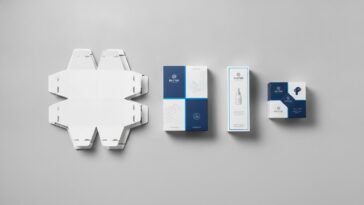
Tuck boxes are the workhorse of cosmetic packaging. Their self-locking tuck flaps create a clean, secure enclosure that assembles quickly and stores flat, making them both cost-efficient and scalable for growing brands. The straight-tuck and reverse-tuck variations give you control over how the box opens, which directly influences the unboxing experience your customer has. Printable on all four panels, tuck boxes offer generous real estate for brand storytelling, ingredient callouts, and regulatory information. Custom lipstick boxes and serum boxes frequently use this format because it balances compact elegance with practical protection.
Sleeve Boxes: Stylish and Functional
Sleeve boxes operate on a sliding mechanism: an outer sleeve wraps around an inner tray, creating a two-part reveal that feels inherently premium. That moment of sliding the sleeve off signals quality to the customer before they’ve even seen the product inside. From a design standpoint, the outer sleeve functions as a bold visual canvas, while the inner tray can carry secondary branding or a contrasting finish for added depth.
Brands that use sleeve packaging tend to position themselves in the mid-to-luxury tier, and for good reason. The structure communicates deliberate craftsmanship. Best practices for sleeve box design include:
- Tight tolerancing: The sleeve should slide smoothly without feeling loose or requiring force to remove.
- Contrast finishes: Pairing a matte sleeve with a gloss inner tray creates a tactile and visual contrast that reinforces premium positioning.
- Strategic windowing: A die-cut window on the sleeve lets the product color or texture peek through, adding sensory intrigue at the point of sale.
Beyond these two core formats, display boxes serve a different purpose entirely. They’re engineered for retail visibility, often featuring open-front or counter-display configurations that let the product sell itself. For cosmetic brands scaling into retail environments, display boxes are a strategic asset worth considering alongside your primary box cosmetic format.
The right structure isn’t just a container. It’s a signal, and customers read it instantly.
The Importance of Customization in Cosmetic Packaging
Generic packaging is a brand’s quiet surrender. In a beauty market where shelf space is competitive and online thumbnails are tiny, customization isn’t a luxury feature – it’s the mechanism that makes your product recognizable, desirable, and worth picking up. The brands that win aren’t always the ones with the best formulas; they’re the ones whose box cosmetic packaging stops the right customer at exactly the right moment.
Buying decisions in beauty happen fast. Research consistently shows that shoppers form visual impressions within seconds of encountering a product. Custom packaging works precisely because it communicates brand values before a single word is read. A thoughtfully designed box signals quality, builds trust, and creates the kind of emotional pull that drives purchase. That’s not decoration; that’s conversion strategy.
Consider how brands like Glossier and Charlotte Tilbury have built entire aesthetic identities through packaging consistency. Every color choice, every font weight, every finish reinforces a singular brand promise. That cohesion is what transforms a first-time buyer into a repeat customer who recognizes your product across every touchpoint.
Exploring Design Elements for Custom Boxes
Color is the first thing a customer processes, and it carries real psychological weight. Soft blush tones suggest femininity and approachability; deep emerald or matte black signals luxury and authority. Typography reinforces that message – a serif font reads as heritage and refinement, while a clean sans-serif communicates modern minimalism. Neither choice is inherently better; what matters is alignment with your target customer’s expectations. Brand logos and imagery should anchor the design without crowding it. White space isn’t wasted space; it’s breathing room that makes premium packaging feel intentional rather than cluttered.
Functional Features That Enhance Customer Experience
Customization extends well beyond the visual. The features inside and around the box shape how customers interact with your product – and how they feel about your brand afterward.
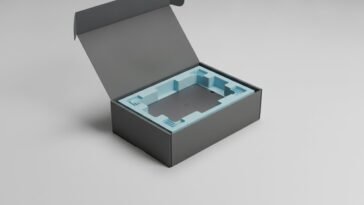
- Box inserts and compartments: Custom-fitted inserts hold products securely during shipping, eliminate movement that causes damage, and create a polished unboxing moment that feels considered rather than careless.
- Easy-open designs: Friction-fit closures, perforated tear strips, and magnetic flaps reduce frustration and signal that your brand has thought about the customer’s actual experience, not just the shelf appeal.
- Sustainable material choices: Recycled paperboard, soy-based inks, and FSC-certified stocks let eco-conscious consumers align their purchase with their values – without compromising the premium look your brand demands.
Each of these functional decisions reinforces the same message: this brand pays attention. That perception of care is what turns packaging into a brand asset rather than a cost line. If you’re ready to translate these principles into a physical product, explore PacksDo’s custom cosmetic packaging solutions to see how structural and creative expertise can work together for your brand.
Sustainable Cosmetic Packaging Solutions
Sustainability has moved from a niche preference to a mainstream purchasing driver in the beauty industry. Shoppers increasingly scrutinize the environmental footprint of the products they buy, and the box cosmetic brands choose to wrap their products in is part of that scrutiny. This isn’t a trend to chase; it’s a structural shift in consumer expectations that forward-thinking brands are already capitalizing on.
Materials That Make a Difference
The good news is that eco-friendly materials have matured significantly. You no longer have to trade premium aesthetics for a lower environmental impact. The most effective sustainable options available for cosmetic boxes today include:
- FSC-certified paperboard: Sourced from responsibly managed forests, this is the most widely adopted sustainable substrate in cosmetic packaging. It accepts high-quality print finishes without compromise and signals responsible sourcing to environmentally aware shoppers.
- Recycled content paperboard: Post-consumer waste (PCW) boards reduce virgin material use and are fully compatible with the folding carton structures that dominate cosmetic retail. The surface quality has improved considerably, making them viable for premium product lines.
- Biodegradable coatings: Traditional gloss lamination creates recycling complications. Water-based coatings and biodegradable matte finishes deliver a comparable tactile experience while keeping the box genuinely recyclable at end of life.
- Soy-based and vegetable inks: These reduce volatile organic compound (VOC) emissions during printing and are easier to de-ink during the recycling process, improving the overall lifecycle of the packaging.
Structural decisions matter here too. Right-sized packaging reduces material waste and lowers shipping weight, which compounds environmental benefits across your entire distribution chain.
Marketing Your Sustainable Packaging
Choosing sustainable materials is only half the equation. Communicating that choice effectively is what converts an operational decision into a brand asset.
Certifications do the heavy lifting when it comes to consumer trust. Recognized labels like FSC, the Sustainable Forestry Initiative (SFI), and the How2Recycle mark give shoppers a credible shorthand they can verify independently. Placing these prominently on your packaging removes the need for lengthy copy and lets the certification speak with authority.
Your messaging should be specific rather than vague. “Made with 80% recycled content” lands harder than “eco-friendly packaging.” Specificity signals that your brand has done the work rather than simply adopted the language. On secondary panels and packaging sleeves, brief callouts explaining your material choices connect the visual identity to a values story that resonates with environmentally conscious buyers.
Brands that have done this well tend to share one common thread: their sustainability story is woven into the overall brand narrative rather than treated as a separate footnote. When your box cosmetic packaging reflects your environmental commitments at every touchpoint, it doesn’t just satisfy a shopper’s values; it builds the kind of loyalty that keeps them coming back.
Designing Your Cosmetic Packaging: A Step-by-Step Guide
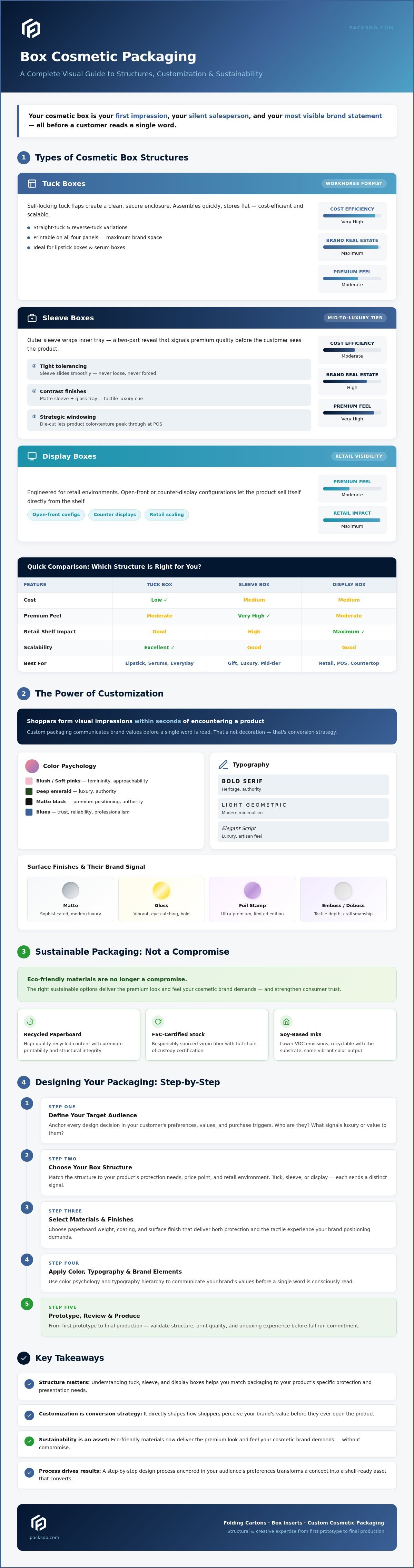
Great packaging doesn’t happen by accident. It’s the result of deliberate decisions made in sequence, each one building on the last. Whether you’re developing custom lipstick boxes or serum boxes, a structured design process keeps your creative vision grounded in what actually works on a shelf and in a customer’s hands.
Start with your target audience. Not in a vague, demographic-overview sense, but specifically: what does your ideal buyer pick up first in a beauty aisle? What finishes signal quality to them? What color palette matches the emotional space your product occupies? A skincare brand targeting minimalist wellness consumers needs a fundamentally different box cosmetic approach than a bold color cosmetics line chasing Gen Z attention. Define that customer sharply before you sketch a single concept.
From there, rough sketches come before polished mockups. Early-stage concepts should explore structure, hierarchy, and layout without getting locked into specific colors or typefaces too soon. This is where you test whether your brand mark reads clearly at a small scale, whether your key claims have enough visual breathing room, and whether the overall composition guides the eye the way you intend.
Material and finish selection follows concept development, not the other way around. Your structural choice should already be settled at this stage. Now you’re deciding whether your substrate is a coated folding board, a recycled content stock, or an FSC-certified paperboard, and whether your finish is soft-touch matte, gloss lamination, or a biodegradable water-based coating. These decisions shape the physical impression your packaging makes before a single word is read.
Prototyping is non-negotiable. A printed flat sheet never tells the complete story. A physical prototype reveals how the box assembles, how the insert fits, whether the tuck flap closes cleanly, and whether the finish holds up under handling. Build at least one physical sample before committing to a production run.
Iterating on Your Design
Feedback at the prototype stage is where good packaging becomes great. Gather input from stakeholders who understand your brand positioning and from potential customers who don’t. Those two groups will flag completely different issues, and you need both perspectives. Functional problems, a sleeve that slides too loosely, a flap that won’t stay closed, get fixed before aesthetics are finalized. Once structural integrity is confirmed, aesthetic refinements like color calibration, finish adjustments, and typography tweaks can be locked in for production.
Working with a Packaging Supplier
Your supplier relationship determines whether your design vision survives the production process intact. Look for a manufacturer with direct cosmetic packaging expertise, not a generalist printer who handles everything. Clear communication about tolerances, color matching, and material specifications isn’t optional; it’s the foundation of quality control. Request production samples before full runs, and establish review checkpoints so issues surface early rather than after thousands of units are printed.
PacksDo brings exactly this kind of specialist focus to folding cartons, packaging sleeves, and custom cosmetic box formats, combining structural know-how with a collaborative approach that keeps your brand vision on track from first proof to final delivery. Work with PacksDo on your next cosmetic packaging project and take the guesswork out of getting it right.
Why Choose PacksDo for Your Cosmetic Packaging Needs
Choosing a packaging partner is one of the most consequential decisions a cosmetic brand makes. The wrong supplier delivers boxes that look acceptable on screen and disappointing in person. PacksDo operates differently: as a direct supplier specializing in custom cosmetic packaging, the focus stays on structural precision, brand-aligned design, and production consistency that holds up across every run.
That specialization matters. A generalist printer treats your folding carton like any other job. PacksDo treats it like the brand asset it actually is, bringing cosmetic-specific expertise to every material decision, finish selection, and structural tolerance that determines whether your box cosmetic packaging performs on shelf or falls flat.
Our Packaging Solutions
PacksDo’s core offering is built around the formats cosmetic brands rely on most. Folding cartons form the foundation: engineered for clean assembly, consistent structural integrity, and print surfaces that support everything from soft-touch matte to high-gloss finishes. Custom lipstick boxes, serum boxes, bath bomb boxes, and soap boxes each carry specific dimensional and protection requirements, and PacksDo’s manufacturing process accounts for those differences rather than applying a one-size-fits-all approach.
Box inserts add another layer of value. A well-fitted insert eliminates product movement during shipping, protects fragile components, and transforms the unboxing moment from functional to memorable. Packaging sleeves round out the offering for brands that want a layered, premium reveal without moving to a fully rigid format.
Ordering flexibility is built into the process. Whether you’re a growing indie brand placing smaller initial runs or an established label scaling into high-volume retail distribution, PacksDo structures its production options to fit where your business actually is, not where a minimum order quantity forces you to be.
Client Success Stories
The clearest proof of a packaging partner’s capability isn’t what they say about themselves; it’s what their clients’ shelves look like. Brands that have worked with PacksDo consistently highlight two outcomes: packaging that accurately reflects their visual identity at production scale, and a supplier relationship that communicates clearly when adjustments are needed rather than delivering surprises at the end of a run.
Clients developing custom serum boxes have cited the structural precision of PacksDo’s folding cartons as a key factor in maintaining product integrity during fulfillment. Others working on seasonal cosmetic launches have pointed to turnaround reliability as the deciding factor in choosing PacksDo over larger, less responsive manufacturers.
The pattern across these partnerships is consistent. Brands come in with a design vision and a set of production requirements. PacksDo delivers both, without the compromises that come from working with suppliers who don’t specialize in cosmetic packaging. Connect with PacksDo today and bring that same precision to your next packaging project.
Your Packaging Decision Starts Here
Box cosmetic packaging is never just a container. It’s the first conversation your brand has with a customer, and every structural choice, material decision, and finish selection either strengthens or weakens that conversation. From matching the right box format to your product’s protection needs, to communicating your sustainability commitments with credibility, to executing a design process that holds up from prototype to production run, the decisions covered in this guide give you a clear path forward.
The brands that win in 2026 won’t be the ones that treat packaging as an afterthought. They’ll be the ones that treat it as a competitive advantage, built deliberately and executed with precision.
PacksDo brings that precision to every project as a direct supplier specializing in folding cartons, box inserts, packaging sleeves, and custom cosmetic formats. The expertise is cosmetic-specific, the commitment to quality is consistent, and the sustainability focus is genuine.
Don’t leave your brand’s first impression to chance. Get your custom cosmetic packaging solutions today and build packaging that works as hard as your product does.
Frequently Asked Questions About Box Cosmetic Packaging
What materials are best for cosmetic packaging?
FSC-certified paperboard and recycled content paperboard are the strongest choices for most cosmetic boxes. Both accept premium print finishes cleanly and hold structural integrity through shipping and retail handling. For brands with sustainability commitments, post-consumer waste boards paired with water-based coatings deliver a premium look without the recycling complications that come from traditional lamination.
Your product’s specific requirements should drive the final material decision. Heavier formulas or fragile components may need a denser caliper board for adequate protection, while lightweight products like lip balms or travel-size serums can perform well on lighter substrates that reduce material use and shipping weight simultaneously.
How can I ensure my packaging stands out on the shelf?
Shelf standout comes from a combination of structural distinctiveness and finish contrast. A soft-touch matte surface surrounded by glossy competitors immediately catches the eye through tactile and visual differentiation. Die-cut windows, spot UV treatments on key design elements, and bold typographic hierarchy all direct attention in a crowded retail environment where shoppers are scanning, not studying.
Consistency matters just as much as individual design choices. A box cosmetic line that maintains cohesive color, typography, and finish logic across every SKU builds recognition over time, so returning shoppers spot your product before they consciously search for it.
What are the benefits of using custom packaging for my beauty products?
Custom packaging gives your brand direct control over the first impression every customer forms. Off-the-shelf boxes communicate generic; custom boxes communicate intention. That distinction shapes perceived value before the product is ever opened, influencing whether a shopper picks it up, puts it back, or adds it to their cart.
Beyond aesthetics, custom packaging solves functional problems that generic boxes can’t. Properly sized boxes with fitted inserts reduce product movement during fulfillment, minimize damage claims, and create an unboxing experience that reinforces brand quality. Those functional wins translate directly into customer satisfaction and repeat purchase behavior.
How do sustainable practices impact the cosmetic packaging industry?
Sustainable packaging has shifted from a differentiator to a baseline expectation for a growing segment of beauty shoppers. Brands that use certified materials and communicate those choices clearly are building credibility with an audience that actively reads packaging claims and rewards transparency. Those that don’t are increasingly visible in their absence of action.
The operational impact is real too. Right-sized, lightweight sustainable packaging reduces shipping costs across distribution runs. Recyclable materials simplify end-of-life disposal for consumers, which reduces friction at the point of purchase for eco-conscious buyers who factor disposal into their buying decisions.
Can I order small quantities of custom cosmetic boxes?
Yes, and it’s worth confirming minimum order quantities directly with your supplier before committing to a design direction. PacksDo structures its production options to accommodate brands at different stages of growth, so you’re not forced into a high-volume run before you’ve validated a new product or packaging concept in the market.
Smaller initial runs are particularly valuable during the prototyping and launch phase. They let you test packaging performance in real fulfillment conditions, gather customer feedback on the unboxing experience, and refine your design before scaling into larger production volumes with confidence.
What design elements should I consider for my cosmetic packaging?
Start with hierarchy: what’s the first thing you want a shopper to read or see? Your brand mark, product name, and hero claim should each occupy a clear visual tier so the eye moves through the design with intention. Color palette and typography need to align with your target customer’s expectations, not just your personal preferences, since those elements carry strong signals about brand positioning and price point.
Don’t overlook the tactile layer. The finish your box cosmetic carries, whether matte, gloss, or soft-touch, communicates quality through touch before a word is read. Secondary panels are also prime real estate for ingredient callouts, usage instructions, and sustainability claims that deepen the brand story for shoppers who engage beyond the front face.
How long does it take to produce custom cosmetic boxes?
Production timelines vary based on order complexity, finish specifications, and current manufacturing capacity, so confirming lead times directly with your supplier is essential before setting a launch date. As a general framework, custom folding cartons typically move through prepress, print, finishing, and quality review stages, and building buffer time into your project plan is always the smarter approach.
Prototyping adds time upfront but saves significantly more time downstream. A physical sample review before full production catches structural and color issues that digital proofs miss, reducing the risk of costly reprints or delayed launches. Factor that prototype stage into your timeline from the start rather than treating it as optional.