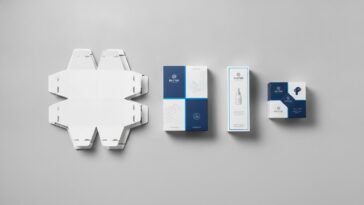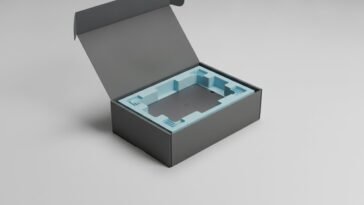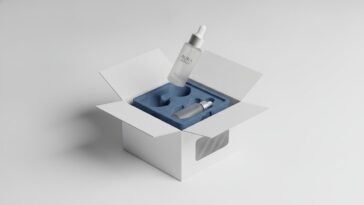
Your packaging is either a silent salesperson or a hidden tax on your bottom line. It’s a hard truth: a flimsy box or a blurry logo does more than just fail to protect your product; it erodes the premium value you’ve worked so hard to build. You’re likely tired of overpaying for shipping on bulky, oversized containers or dealing with the headache of transit damage that leaves customers disappointed. We understand that finding the perfect balance between industrial durability and high-end aesthetics feels like a moving target.
This definitive guide empowers you to take control of your brand’s physical presence. You’ll discover how to select the ideal custom printed boxes, materials, and printing techniques to elevate your unboxing experience while slashing unnecessary overhead. We’ll explore the strategic use of folding cartons, the precision of custom inserts, and the latest sustainable trends to ensure your packaging is as efficient as it is beautiful. By the end of this guide, you’ll have a clear roadmap to transform your logistics into a powerful branding asset.
Key Takeaways
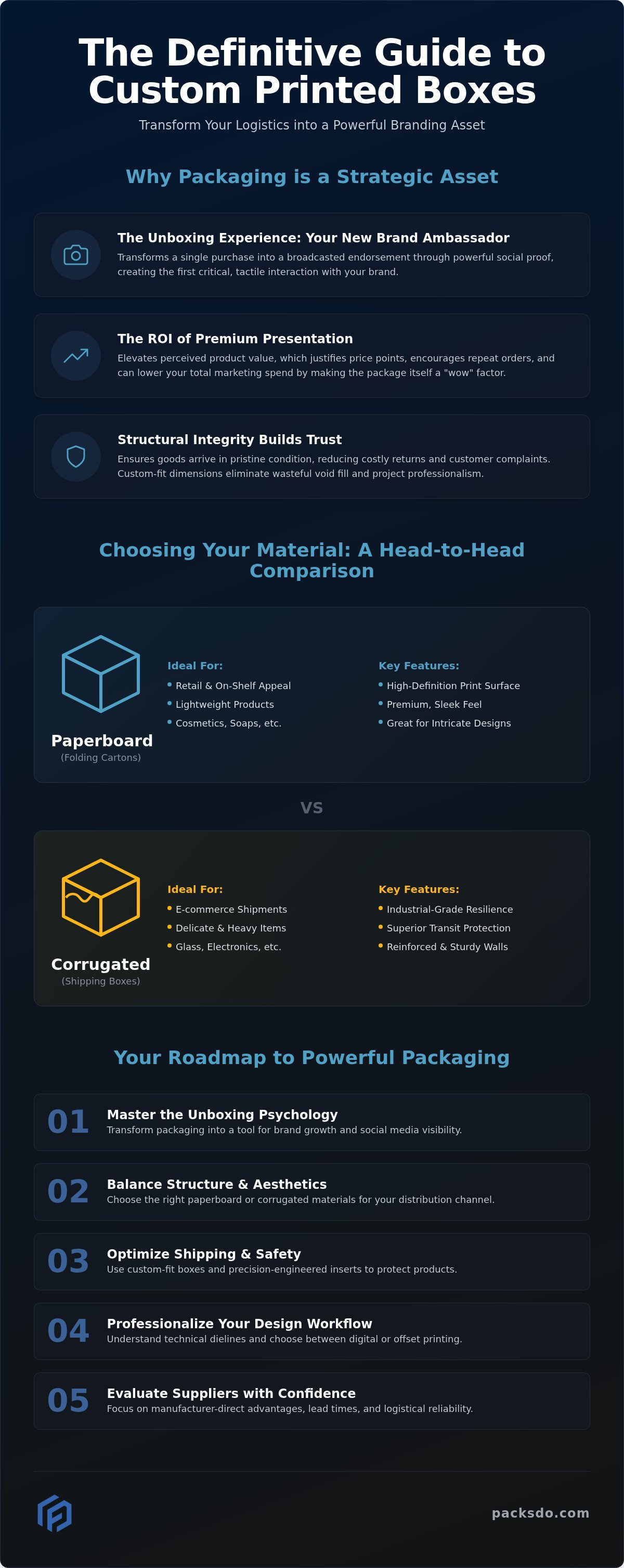
- Master the psychology of the unboxing experience to transform your physical packaging into a powerful tool for brand growth and social media visibility.
- Learn how to balance structural integrity with aesthetic appeal by choosing the right paperboard weights or corrugated materials for your specific distribution channel.
- Discover how to optimize your shipping budget and product safety through the strategic selection of custom printed boxes and precision-engineered inserts.
- Professionalize your design workflow by understanding technical dielines and selecting between digital or offset printing based on your specific order volume.
- Evaluate packaging suppliers with confidence by focusing on manufacturer-direct advantages, lead times, and logistical reliability.
Why Custom Printed Boxes are Essential for Brand Growth in 2026
Your packaging is no longer just a shipping vessel. It’s the physical manifestation of your brand promise. In an era where digital advertisements are increasingly ignored, custom printed boxes provide a tactile touchpoint that demands attention. It’s the first physical interaction a customer has with your business, and it sets the stage for everything that follows. By treating your packaging as a strategic asset, you move beyond simple logistics into the territory of high-impact marketing. You’re not just delivering a product; you’re delivering an experience.
The unboxing experience has evolved into a powerful form of social proof. Social media platforms are saturated with videos of customers opening packages, making the aesthetic of your box a critical component of your viral potential. When your packaging looks premium, customers feel a natural urge to share it with their followers. This transforms a single purchase into a broadcasted endorsement, reaching potential buyers through organic, trusted channels. A well-designed box acts as a silent brand ambassador, communicating your values and attention to detail before the customer even touches the product inside.
The ROI of Branded Packaging
Elevate your customer retention rates by investing in premium presentation. When a customer receives a thoughtfully designed package, they immediately perceive the product as more valuable. This psychological boost justifies your price point and encourages repeat orders. High-quality packaging can also lower your total marketing spend. Because the box itself delivers a significant “wow” factor, you can often reduce the reliance on expensive printed inserts or separate promotional flyers. The packaging performs the heavy lifting for your brand identity, ensuring that your message is seen and felt at the most critical moment of the customer journey.
Beyond the Logo: Structural Integrity
Visuals might catch the eye, but structural integrity builds long-term trust. A crushed corner or a shifting product suggests a lack of care and professionalism. Selecting the right materials, such as high-grade Corrugated fiberboard for e-commerce shipments, ensures your goods arrive in pristine condition. Precision engineering prevents product movement during transit, which directly reduces the rate of costly returns and customer complaints. Consider these structural advantages:
- Custom-fit dimensions eliminate the need for excessive, wasteful void fill.
- Reinforced walls provide essential protection for delicate items like glass or electronics.
- Secure locking mechanisms prevent accidental opening during the rigorous shipping process.
When your box feels sturdy and looks sharp, it reinforces the idea that your brand is reliable and professional. This combination of marketing flair and industrial durability is what separates market leaders from the rest of the pack.
Choosing the Right Materials: Paperboard vs. Corrugated
Selecting the right substrate is the foundational decision of your packaging strategy. It’s a choice between the sleek, high-definition finish of paperboard and the industrial-grade resilience of corrugated fiberboard. For 2026, the market demands more than just a sturdy container; it requires materials that align with brand values and logistical efficiency. Your choice dictates everything from the vibrancy of your colors to the safety of your contents during the final mile of delivery. High-quality custom printed boxes start with a deep understanding of these material properties.
Surface finishes provide the final sensory layer that defines your brand’s personality. A matte lamination offers an understated, sophisticated feel that resists fingerprints, while a high-gloss finish makes colors pop with intense vibrancy. For luxury items, soft-touch lamination creates a velvety, tactile experience that immediately signals premium quality. As sustainability becomes a non-negotiable standard, opting for FSC-certified recycled stocks and soy-based inks ensures your growth doesn’t come at an environmental cost.
Folding Cartons for Retail and Lightweight Products
Retail environments demand precision and visual clarity. Folding cartons are the ideal choice for cosmetics, soaps, and pharmaceuticals because they offer a smooth surface for intricate designs and small text. When designing these, you must account for Fair Packaging and Labeling Act requirements to ensure all mandatory product information is legible and compliant. Utilizing professional folding carton packaging allows you to maximize shelf space while providing a crisp, high-end look that attracts the modern consumer’s eye. These cartons are lightweight, which keeps your storage costs low and your assembly lines moving quickly.
Corrugated Mailers for Secure Shipping
E-commerce success depends on durability. Corrugated mailers use a fluted medium sandwiched between two liners to provide superior cushioning and structural strength. For subscription boxes and direct-to-consumer shipments, E-flute or B-flute corrugated is the gold standard. These materials protect your goods from the rigors of automated sorting facilities and temperature fluctuations. Precision engineering here is vital; a box that is even an inch too large can trigger higher dimensional weight (DIM) fees from carriers. By optimizing the thickness and size of your custom printed boxes, you protect your margins as much as your products. If you’re ready to see how these materials look with your branding, browsing our selection of custom product boxes is an excellent place to start.
The Buying Guide: Selecting Your Box Style and Structure
Structure determines how your brand survives the journey from warehouse to doorstep. While the graphic design grabs the initial attention, the physical form factor of your custom printed boxes dictates the lasting impression. Choosing the wrong style can lead to wasted space, increased shipping fees, or a frustrating unboxing experience that feels cheap. You need to match the box structure to your specific distribution model and product fragility. Style is more than a visual choice; it’s a functional foundation.
Mailer boxes represent the pinnacle of e-commerce versatility. They feature self-locking tabs that eliminate the need for excessive tape, providing a clean and professional look. For smaller, lightweight items intended for retail shelves, product boxes offer a more refined, slender profile. These are perfect for items that don’t need to withstand the rigors of the postal system on their own. By selecting the right shape, you optimize your logistics and enhance the tactile experience for your customer.
Mailers vs. Folding Cartons: Which Do You Need?
The decision rests on your shipping strategy. If your product is going directly into a shipping bag or another box, a lightweight folding carton is your most cost-effective option. However, if your packaging is the primary shipping container, you must choose a mailer box. Mailers provide the structural rigidity needed to protect contents from being crushed. Consider these factors when making your choice:
- Weight: Heavier items require the reinforced walls of a mailer.
- Fragility: Delicate items benefit from the double-walled sides found in most mailer designs.
- Volume: For high-volume retail, folding cartons assemble faster and save significant storage space.
The Role of Custom Inserts and Sleeves
Precision-engineered custom printed boxes often require internal support to truly shine. Even the sturdiest box won’t prevent damage if the product rattles inside. This is where custom product boxes with tailored inserts become essential. Inserts made from cardboard, foam, or molded pulp lock your items in place, creating a curated presentation that feels intentional and high-end. They ensure that multi-part kits remain organized and arrive exactly as you intended.
Packaging sleeves offer a brilliant solution for seasonal branding or limited editions. Instead of ordering entirely new boxes for a holiday promotion, you can slide a custom-branded sleeve over your existing generic or branded packaging. This strategy reduces waste and allows for rapid marketing pivots without the overhead of a full production run. It’s a professional way to maintain brand consistency while staying agile in a competitive market.
Designing Your Boxes for Maximum Impact and Accuracy
Precision is the bridge between a brilliant creative concept and a flawless physical product. While previous sections focused on the “what” and “where,” this phase is about the “how.” Designing custom printed boxes requires a technical mindset to ensure your vision translates perfectly from a computer screen to a tangible folding carton. You aren’t just creating art; you’re building an architectural blueprint for your brand. Every millimeter matters when you’re managing fold lines, glue tabs, and ink coverage.
The process begins with the dieline. This flattened 2D template serves as the foundation for your artwork. You must respect safe zones to prevent critical text or logos from being lost in a fold or sliced by a cutting die. High-resolution output is non-negotiable. Ensure all imagery is at least 300 DPI to avoid the amateur look of pixelated graphics. Finally, always review a 3D proof or a physical prototype. This step allows you to visualize the spatial relationship between your design elements before you commit to a full production run.
Digital vs. Offset Printing
Choosing the right printing technology is a balance of volume and detail. Digital printing has transformed the industry by offering high-quality results without the need for expensive physical plates. It’s the superior choice for short runs, seasonal promotions, or projects requiring variable data. If you’re launching a limited edition serum or a small batch of artisanal soaps, digital printing provides the agility you need.
Offset printing remains the industrial gold standard for high-volume orders. It delivers unmatched color consistency and crispness across thousands of units. While it requires a higher initial setup cost, the price per unit drops significantly as your quantity increases. By 2026, both methods offer incredible vibrancy, but your choice will ultimately depend on your budget and the scale of your distribution.
Common Design Pitfalls to Avoid
Avoid the frustration of production errors by checking your technical settings early. One of the most frequent mistakes is ignoring bleed requirements. You need to extend your background colors at least 0.125 inches beyond the cut line to prevent thin white edges from appearing if the paper shifts slightly during the die-cutting process.
- Color Shifts: Always design in CMYK mode rather than RGB to ensure your printed colors match your expectations.
- Font Legibility: Don’t over-complicate small-format boxes with tiny, intricate fonts that might bleed or become unreadable.
- File Formats: Use vector files for logos and text to maintain sharp edges at any scale.
Color management is equally vital. If your brand relies on a specific signature shade, consider Pantone matching to ensure total consistency across different materials and batches. Ready to see your vision come to life? Start your custom product box project today with our expert manufacturing team.
Partnering with a Specialist Custom Packaging Supplier
Securing the right manufacturing partner is the final, most critical piece of your packaging puzzle. You’ve mastered the materials and refined your design; now you need a specialist who can execute your vision with industrial precision. Working with a direct manufacturer like PacksDo eliminates the middleman, giving you direct access to the craftsmen who actually build your custom printed boxes. This transparency ensures that your technical requirements aren’t lost in translation and that your lead times remain predictable as you scale. A dedicated partner doesn’t just fulfill an order; they act as a technical consultant who protects your brand’s reputation.
Reliability is the currency of the packaging industry. As your order volumes increase from hundreds to thousands, your partner must possess the infrastructure to handle the surge without compromising on print quality or structural integrity. Expert consultation during the prototyping phase can save thousands of dollars by identifying structural weaknesses before they reach the customer. This collaborative approach transforms a simple transaction into a strategic advantage, allowing you to focus on product development while your packaging logistics run on autopilot.
What to Look for in a Packaging Partner
Demand transparency in every interaction. A professional supplier should provide clear insights into material sourcing, pricing tiers, and production timelines. They must also demonstrate the technical capability to handle specialized requests, such as precision-engineered custom candle boxes or custom soap boxes that require specific moisture-resistant coatings. Your partner should feel like an extension of your own team, offering the steady hand needed to navigate complex production runs. Look for a partner who offers:
- Technical Responsiveness: Rapid support for dieline adjustments and print-ready file preparation.
- Material Expertise: Guidance on selecting the right substrate for your specific product weight and distribution model.
- Scalability: The ability to move from short-run digital batches to high-volume offset production seamlessly.
Next Steps: From Quote to Delivery
Transform your concepts into reality by requesting a detailed quote. To get the most accurate pricing for custom printed boxes, provide your exact dimensions, material preferences, and desired finishes upfront. Once the initial quote is approved, the sampling process begins. Don’t skip this step. A physical prototype allows you to test the fit of your product and verify the color accuracy in real-world lighting. It’s your final insurance policy against mass-production errors.
Prepare your warehouse for the arrival of your bulk order. Packaging is often shipped flat to save on shipping costs, meaning you’ll need dedicated space for both storage and the assembly process. By aligning your internal operations with your supplier’s delivery schedule, you ensure a smooth transition from manufacturing to fulfillment. Your journey to a premium unboxing experience starts with a single, well-informed decision. Choose a partner who values your brand’s growth as much as you do.
Elevate Your Brand Strategy for 2026
Your journey toward premium packaging is a strategic investment in your brand’s future. By prioritizing structural integrity and material precision, you transform your logistics from a simple cost center into a powerful marketing engine. Successful brands in 2026 understand that the right custom printed boxes do more than protect a product; they build a lasting emotional connection with customers during that critical unboxing moment. Whether you’re optimizing for retail shelf presence with folding cartons or securing e-commerce shipments with custom inserts, your attention to detail defines your professional reputation.
Don’t leave your brand’s first impression to chance. Partnering with a specialist allows you to leverage direct manufacturer pricing and specialized folding carton expertise to ensure your vision is executed flawlessly. With national US shipping and a focus on industrial reliability, we’re ready to help you scale your business with confidence. Design your custom printed boxes with PacksDo today and take the first step toward a more professional, protected, and profitable brand presence. We’re excited to help you build something extraordinary.
Frequently Asked Questions
What is the minimum order quantity for custom printed boxes?
Minimum order quantities typically depend on the printing technology selected for your project. Digital printing often supports smaller runs for startups or limited seasonal releases, while offset printing provides the best unit value for high-volume orders. We recommend matching your order size to your immediate distribution needs to keep storage costs manageable while benefiting from bulk manufacturing efficiencies.
How do I choose the right box size for my product to save on shipping?
Measure your product’s maximum height, width, and depth, then add a small clearance for easy removal or protective inserts. Even a slight reduction in box dimensions can significantly lower your dimensional weight (DIM) charges. Using precisely sized packaging eliminates the need for excessive void fill and prevents carriers from applying oversized shipping surcharges to your shipments.
What is the difference between a mailer box and a shipping box?
Mailer boxes feature self-locking tabs and double-walled sides, providing a premium, tape-free unboxing experience perfect for direct-to-consumer brands. Shipping boxes, or regular slotted containers, are utility-focused vessels that require tape for closure. While shipping boxes are excellent for bulk wholesale transit, mailers are the gold standard for e-commerce and subscription services where presentation is paramount.
Can I get a sample of my custom box before placing a full order?
Requesting a physical prototype or a digital 3D proof is a vital step in the manufacturing process. This allows you to verify that your custom printed boxes fit your products perfectly and that the color vibrancy aligns with your brand identity. Testing a sample ensures that any technical adjustments to the dieline are made before you commit to mass production.
What file formats are required for custom packaging printing?
Professional results require high-resolution vector files, specifically AI, EPS, or print-ready PDF formats. Ensure all embedded images are at least 300 DPI to prevent pixelation on the final product. It’s also critical to convert your artwork to the CMYK color profile, which ensures the colors you see on your screen translate accurately to the physical ink on the box.
How long does the production and shipping process typically take?
Production timelines generally fluctuate based on the structural complexity of your box and the total quantity ordered. Most projects move from the final proof approval to delivery within a few weeks, though transit times vary by your specific US location. Planning your packaging needs at least a month before a major launch ensures you have ample time for quality checks and assembly.
Are custom printed boxes environmentally friendly?
Sustainable packaging is easily achievable through the use of FSC-certified paperboard and recycled corrugated materials. You can enhance your brand’s eco-friendly profile by selecting soy-based inks and opting for uncoated finishes that are easier to recycle. Many modern businesses prioritize these materials to meet the growing consumer demand for responsible, plastic-free packaging solutions.
Do custom boxes help with retail shelf presence?
Folding cartons are specifically designed to catch the eye in a competitive retail environment. By utilizing specialized finishes like matte lamination or spot UV, you can create a tactile and visual experience that distinguishes your product from generic competitors. High-quality packaging serves as a silent salesperson, communicating premium value and professional authority the moment a customer looks at the shelf.