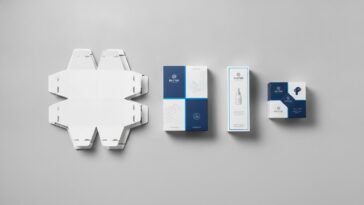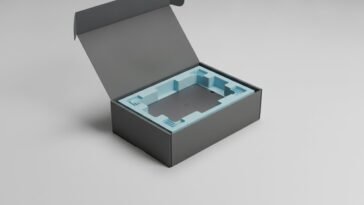
Are you paying more for the air inside your packaging than the product itself? It’s a common trap for growing brands; oversized boxes lead to shifting products, transit damage, and inflated shipping costs that eat your margins. You want your packaging to feel like a tailored suit, not a hand-me-down. Mastering your folding carton sizes is the vital bridge between logistical efficiency and a high-end brand presence that commands attention on the shelf.
We understand that the technical side of manufacturing can feel overwhelming when you’re focused on creative design. This guide will help you master the nuances of carton dimensions to ensure every order fits perfectly and arrives safely. You’ll gain the clarity needed to distinguish between internal and external measurements, account for material thickness, and optimize your packaging for the 2026 retail market. We’ll explore the synergy between outer cartons and custom box inserts, giving you the tools to order bulk packaging with absolute confidence and professional polish.
Key Takeaways
- Master the “Goldilocks” principle to ensure your packaging protects your product while signaling high-end value to your customers.
- Understand the critical distinction between internal and external folding carton sizes to prevent costly ordering errors and account for paperboard caliper.
- Weigh the benefits of rapid-turnaround stock dimensions against the bold brand distinction offered by custom-engineered shapes and sizes.
- Learn industry-specific sizing tactics for delicate items like skincare jars and bath bombs, including how to integrate custom box inserts for maximum security.
Why Accurate Folding Carton Sizes Are the Foundation of Your Brand
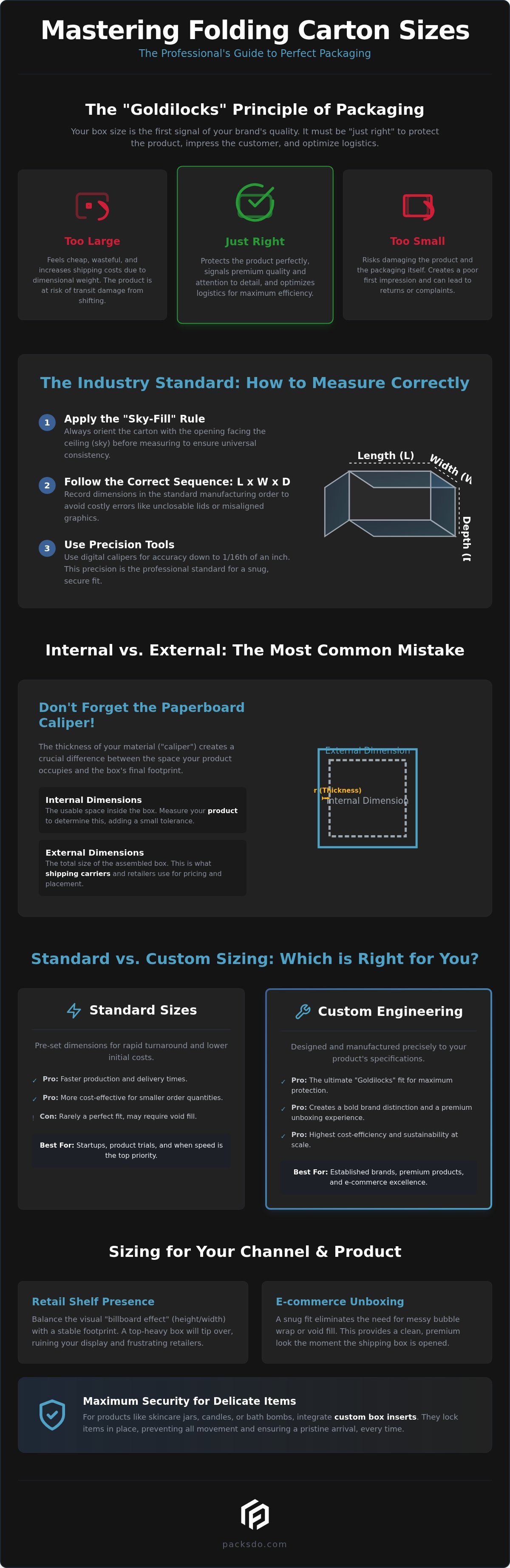
Your packaging is the first physical touchpoint your customer has with your brand. Getting your folding carton sizes right isn’t just a technical requirement; it’s a strategic move that defines your market position. We often refer to this as the “Goldilocks” principle of packaging. A box that’s too large feels cheap and wasteful, while one that’s too small risks product damage. Achieving that “just right” fit ensures your product remains secure, looks professional, and presents an image of high-end precision.
Precision engineering impacts how consumers perceive your product’s value. A folding carton overview reveals how these structures have evolved into sophisticated branding tools. When a box fits a product perfectly, it signals quality and attention to detail. Conversely, “air” in a box suggests a lack of care. Beyond aesthetics, optimized dimensions directly slash your shipping costs. Carriers use dimensional weight (DIM) to calculate fees; if your box is unnecessarily large, you’re paying a premium to ship empty space. By tightening your dimensions, you keep your margins healthy and your logistics efficient.
Aligning with 2026 sustainability standards is no longer optional. Modern consumers view over-packaging as an environmental failure. Reducing your material footprint shows you’re a responsible brand that values efficiency. It’s about doing more with less, ensuring every square inch of paperboard serves a purpose.
The Impact of Size on Retail Shelf Presence
Maximize your “billboard effect” by strategically choosing your height and width. In a retail environment, visual dominance is key to catching a shopper’s eye. However, you must balance this visibility with stability. Folding carton sizes that are too top-heavy will tip over, ruining your display and frustrating retailers. Aim for a footprint that’s efficient enough for wholesale success but large enough to command attention. A stable center of gravity ensures your product stays upright and looks its best during every customer interaction.
Sizing for the Modern E-commerce Unboxing
Create a snug fit to eliminate the need for messy bubble wrap or excessive void fill. A well-sized carton provides a clean, premium look the moment the shipping box is opened. Unboxing psychology serves as the emotional bridge between the initial purchase and the actual product use, turning a simple delivery into a brand experience. Using the first-touch dimensions to build excitement sets the stage for long-term customer loyalty. When the product is nestled perfectly within its carton, the perceived value of the entire purchase increases instantly.
The Industry Standard: How to Measure Folding Carton Dimensions Correctly
Accuracy is the hallmark of professional packaging. Before you record a single number, apply the “sky-fill” rule: orient the carton so the opening faces the ceiling. This perspective ensures you’re following the universal language of manufacturing. Recording folding carton sizes in the wrong order is a frequent mistake that leads to unclosable lids or upside-down graphics. By sticking to the standard Length (L) x Width (W) x Depth (D) sequence, you provide your manufacturer with a clear blueprint for success.
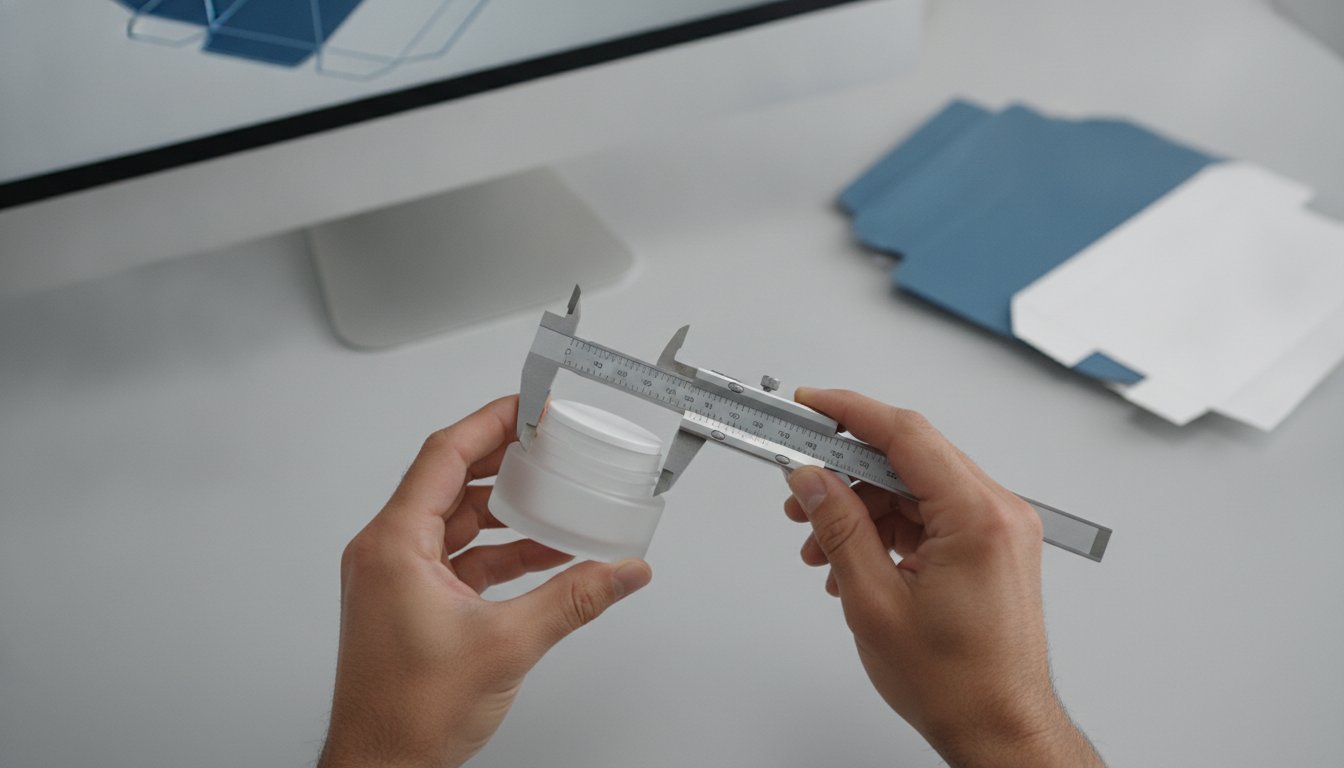
Precision requires the right tools. Skip the wooden ruler and invest in a set of digital calipers. These allow you to measure down to 1/16th of an inch, which is the industry standard for a snug, professional fit. The Paperboard Packaging Council provides extensive resources on these standards, highlighting how even a fraction of an inch can impact structural integrity. When your measurements are this tight, you eliminate the “rattle” that suggests a low-quality product. If you’re looking for a partner to help translate these numbers into reality, our team specializes in custom folding cartons designed for high-impact retail.
Defining Length, Width, and Depth
- Length: This is the longest dimension of the opening. It determines the primary horizontal span of your box.
- Width: This is the shorter dimension of the opening. It dictates the thickness or side profile of the carton.
- Depth: This is the vertical distance from the top opening to the bottom. It represents the total height of the usable space.
Accounting for Paperboard Caliper (Thickness)
One of the most common errors in packaging design is failing to distinguish between internal and external dimensions. Internal dimensions represent the space your product occupies; external dimensions represent the final footprint. This gap is determined by the paperboard caliper, or thickness. For example, a 16pt board is 0.016 inches thick, while a 24pt board is 0.024 inches. While these numbers seem small, they’re doubled when you consider both sides of the box.
Heavier products like glass jars or metal components require thicker, more rigid board to prevent bowing or bursting. When measuring an existing box to replicate its folding carton sizes, always measure from the center of the score lines. Measuring from the very edges of the folds will give you an inflated number that results in a loose, unprofessional fit. Precision at this stage prevents the frustration of receiving a bulk order that doesn’t quite hold your product as intended.
Standard Sizes vs. Custom Sizing: Finding the Perfect Fit
Deciding between off-the-shelf options and bespoke engineering is a defining moment for your product’s lifecycle. Stock boxes offer an immediate solution. They eliminate the need for custom tooling and die-cutting plates, which significantly lowers your initial investment. If you’re testing a new product line or running a small batch, these predetermined folding carton sizes provide a safe, fast entry into the market. However, convenience often comes at a hidden cost that many brands overlook during the early stages of growth.
Custom sizing represents the shift from a “good enough” container to a strategic branding asset. While you’ll encounter upfront costs for custom die-lines, the long-term savings are substantial. A perfectly fitted box reduces your total cost of ownership by slashing shipping rates and minimizing transit damage. Referencing the ECMA Code helps manufacturers standardize these complex custom designs, ensuring that even the most unique shapes remain functional and production-ready. This global standard provides a bridge between your creative vision and industrial reality.
Common Standard Sizes for Retail
Stock dimensions typically follow high-demand industry profiles. Small retail cartons, often measuring 2 x 2 x 4 inches, are the go-to for lip balms or essential oil tinctures. Medium-sized options, such as 4 x 4 x 6 inches, provide a sturdy home for candles or tech accessories. For apparel and light household goods, larger folding cartons offer a versatile canvas. These sizes are reliable, but they rarely provide the snug fit required to eliminate shifting during transit.
The Freedom of Custom Die-Lines
Break away from the traditional rectangle to truly distinguish your brand. Custom die-lines allow you to experiment with hexagonal, triangular, or sleeve-style dimensions that command shelf attention. These bespoke designs can integrate functional elements like hang tags or retail display tabs directly into the structure, creating a seamless presentation that feels intentional rather than assembled.
Efficiency is the core of custom engineering. We focus on the size-to-material ratio to prevent unnecessary waste during the manufacturing process. By optimizing how your folding carton sizes fit onto a single sheet of paperboard, you reduce environmental impact and lower your unit price over time. Custom sizing isn’t just about the box; it’s about maximizing every inch of material to benefit your bottom line and the planet. This level of precision ensures your brand stands out for its quality and its commitment to efficiency.
Determining the Right Size for Specific Industries
Every product category demands a unique approach to structural engineering. While a standard box might work for a basic item, specialized industries require folding carton sizes that account for complex geometries and regulatory needs. For instance, pharmaceutical brands must balance compact footprints with the legal requirement to include multi-page inserts and legible labeling. In the electronics sector, precision is paramount. High-value components need dedicated compartments for cable management to prevent internal scratching and ensure a professional presentation upon opening. If you’re struggling to find the right balance, you can order custom folding cartons tailored to your specific industry requirements.
Cosmetic Packaging Precision
Luxury skincare relies on secondary packaging that perfectly complements the primary container. When calculating your depth, you must account for pump dispensers and oversized luxury caps that often exceed the diameter of the bottle itself. A common mistake is sizing for the glass jar alone, leaving the delicate dropper exposed to pressure. For seasonal promotions, you can utilize custom packaging sleeves to refresh your look without the need to re-engineer your core box dimensions. This flexibility allows you to maintain brand consistency while adapting to market trends with minimal friction.
Bath Bomb and Fragile Retail Sizing
Circular products present a specific challenge: they want to roll. Creating stable folding carton sizes for bath bombs requires specialized “lock-in” dimensions that secure the product at its widest point. We recommend performing a “rattle test” during the prototyping phase. If the product moves when the box is shaken, the width or length needs adjustment to prevent impact damage. It’s also vital to provide extra clearance if you plan on using protective coatings or luxury tissue wrap. This small buffer prevents the friction that leads to surface crumbling, ensuring your product looks pristine on the shelf.
Fragile items often benefit from a hybrid approach. By combining a precisely sized outer carton with custom box inserts, you create a suspension system that absorbs transit shocks. This dual-layer protection is particularly effective for delicate droppers or glass vials. It moves the focus from mere containment to active protection, giving you the confidence to ship high-value retail goods nationwide without the fear of breakage.
Optimizing Your Packaging Strategy with PacksDo Custom Solutions
Partnering with a direct manufacturer gives you a distinct advantage in both precision and speed. Your folding carton sizes are only as effective as the engineering behind them, and we’ve built our reputation on turning complex dimensional challenges into seamless retail successes. We don’t just print boxes; we act as your technical consultants to ensure every millimeter of your packaging serves a purpose. Our vibrant can-do approach means we lean into bespoke sizing challenges that others might avoid, utilizing rapid prototyping to put physical samples in your hands before you commit to a bulk run.
Scaling from a small batch to a national rollout requires a steady hand and a reliable supply chain. By working directly with us, you eliminate the middleman and gain direct access to the craftsmen who understand the nuances of paperboard caliper and structural integrity. We verify every die-line and dimension before the first drop of ink hits the material, ensuring your final product is exactly what you envisioned. This direct supplier model provides the shipping security and professional polish your brand deserves.
The Role of Custom Box Inserts
Most packaging failures start with an outside-in approach. We flip the script by focusing on the interior first. The insert dictates the box size, not the other way around. By starting with the dimensions of your product, we engineer custom box inserts that create a secure cradle, which then determines the final folding carton sizes. This ensures a snug fit that eliminates the need for wasteful void fill and reduces transit damage.
We work with a variety of materials to match your protection needs. You might choose paperboard for a lightweight, eco-friendly feel, or corrugated board for heavier items that require extra rigidity. When designing for multi-product kits, such as a skincare set containing a glass jar and a delicate dropper, we calculate the combined footprint to ensure the outer carton remains compact yet protective. This level of detail transforms a simple box into a sophisticated kit that enhances the customer unboxing experience.
Streamlining Your Production with PacksDo
Sometimes a standard box size is the most economical choice for your current stage of growth. You can still achieve a high-end, custom feel by leveraging our custom labels and hang tags to dress up stock dimensions. These accessories add layers of texture and branding without the need for custom tooling fees. They allow you to maintain a consistent brand identity across different product lines while keeping your manufacturing costs predictable.
Our process is designed for clarity and ease. We provide digital proofs and physical prototypes to confirm that your products fit perfectly and your graphics align with the score lines. This rigorous verification process prevents the frustration of ordering thousands of units that don’t meet your standards. Whether you’re a startup or an established enterprise, we provide scalable solutions that grow with your ambitions. Ready to transform your packaging into a strategic asset?
Elevate your brand with custom folding cartons from PacksDo.
Master Your Brand Presentation with Precision Engineering
Mastering your packaging dimensions transforms a logistical necessity into a powerful branding tool. You now understand how to navigate the technical sequence of Length, Width, and Depth while accounting for the critical thickness of your paperboard. By aligning your folding carton sizes with the “Goldilocks” principle, you protect your margins and your product quality simultaneously. This foundation ensures that every unboxing moment feels intentional and premium.
We specialize in precision custom manufacturing from our Chicago facility, ensuring every die-line meets our rigorous standards for excellence. Our national shipping coverage brings world-class quality directly to your doorstep, regardless of your location. We act as your creative enabler, providing the steady hand and technical expertise needed to solve your most complex sizing challenges with a vibrant, solution-oriented approach. Whether you’re refining a single product or launching an entire collection, we’re here to ensure your vision is realized with industrial reliability.
Start Your Custom Packaging Project with PacksDo.
Your vision deserves packaging that reflects your commitment to excellence and innovation. We’re ready to help you stand out on the shelf and deliver a box that fits your brand perfectly.
Frequently Asked Questions
How do I calculate the volume of a folding carton?
Calculate the volume by multiplying the internal Length by the Width and the Depth. This simple equation gives you the total cubic capacity of the box. Knowing the volume is essential when you’re trying to determine how much void fill you might need or if multiple small items will fit into a single kit. It’s a fundamental step in ensuring your packaging remains efficient and cost-effective.
What is the difference between a folding carton and a corrugated box?
Folding cartons consist of a single layer of heavy paperboard, while corrugated boxes feature a fluted inner layer sandwiched between two flat liners. You’ll typically use folding cartons for primary retail packaging because they offer a superior surface for high-quality printing and intricate finishes. Corrugated boxes are generally reserved for heavier shipping needs where maximum structural stacking strength is the primary requirement during transit.
How much clearance should I leave between my product and the box walls?
Aim for a clearance of 1/16th to 1/8th of an inch for a standard professional fit. This small buffer provides just enough room to slide the product in without forcing it, which prevents the paperboard from bowing or tearing. If you’re using luxury tissue wrap or a protective sleeve, remember to include that extra thickness in your initial measurements to maintain that perfect, snug feel.
Can I get a custom size without paying for a new die-cut tool?
You can often save on upfront costs by utilizing a manufacturer’s existing library of house dies. If your required folding carton sizes align with these pre-existing templates, you’ll avoid the custom tooling fees associated with creating a brand-new die-line. This is an excellent strategy for growing brands that want a professional look while keeping their initial investment manageable and their production timelines fast.
What is ‘caliper’ and how does it affect my box size?
Caliper is the technical term for paperboard thickness, measured in points where one point equals 0.001 inches. Thicker boards have a higher caliper, which provides more rigidity but also takes up more space at the fold lines. If you’re moving from a standard 16pt board to a heavy-duty 24pt board, you must adjust your internal dimensions slightly to ensure your product still fits perfectly inside the finished box.
How do I measure for a reverse tuck end (RTE) box vs. a straight tuck end (STE)?
Measure the Length, Width, and Depth of the main body, as these primary dimensions are identical for both styles. The difference between these two popular options is found only in the orientation of the top and bottom flaps. In an RTE box, the flaps tuck in opposite directions, while in an STE box, they tuck toward the same side. Your choice depends on your aesthetic preference and assembly process.
Do I need to change my box size if I add a custom insert?
Yes, you must increase your folding carton sizes to account for the physical footprint of the insert material itself. Inserts aren’t invisible; they occupy space around your product to provide that essential “lock-in” security. We always recommend engineering the insert first, then building the outer carton around that combined structure. This inside-out approach guarantees that everything fits together seamlessly without any unexpected bulging or tight spots.
What are the most common folding carton sizes for e-commerce shipping?
Standard dimensions like 4 x 4 x 2 inches and 6 x 6 x 3 inches are frequently used for cosmetics, supplements, and small electronics. These sizes are popular because they’re designed to fit perfectly inside standard shipping mailers, which helps you avoid oversized box charges. Choosing these common footprints allows you to maintain a professional retail presence while keeping your postage costs as low as possible for direct-to-consumer deliveries.