Seasonal packaging can make a product feel timely, giftable, and worth sharing. It helps brands tap into holidays, limited-time campaigns, changing moods, and customer expectations throughout the year. The problem is that fully reprinting custom boxes for every season can get expensive fast. It also creates extra inventory pressure, longer lead times, and more room for waste.
That is why many growing brands take a smarter route.
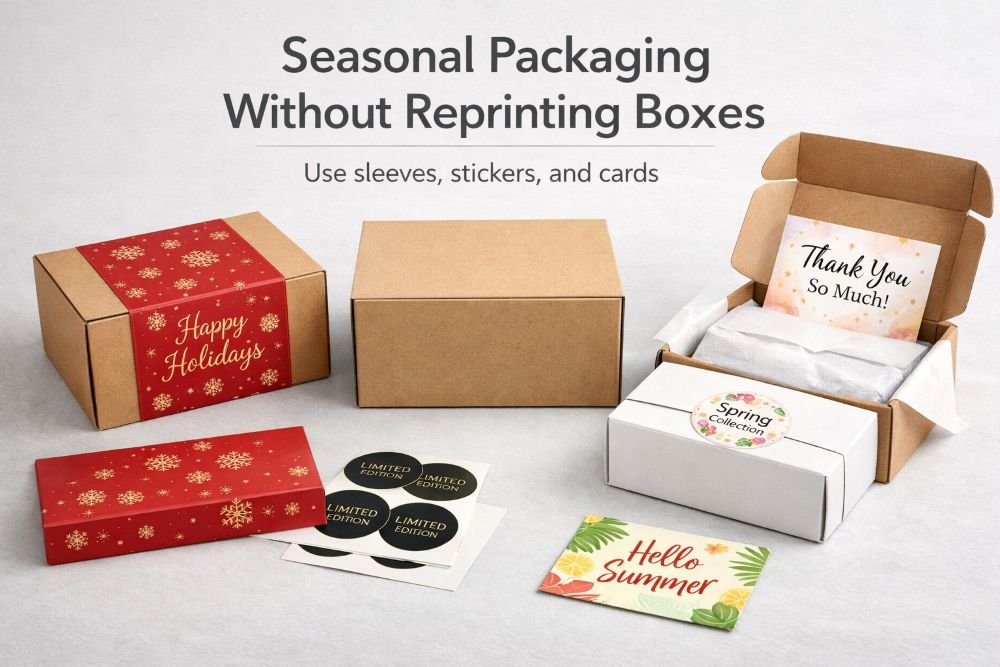
Instead of changing the whole box, they keep the core packaging consistent and update the look with add-ons like packaging sleeves, custom stickers, and printed cards. This approach gives you the flexibility of seasonal packaging without the cost and commitment of reordering new boxes every few months.
If your brand wants to look fresh for Valentine’s Day, Ramadan, Eid, Mother’s Day, summer launches, Black Friday, Christmas, or any limited edition campaign, this method is one of the easiest ways to make it happen.
Why reprinting boxes for every season is not always practical
A full seasonal box redesign sounds exciting until you start thinking about production realities.
You need new artwork.
You may need new proofs.
You may need to meet higher minimums.
You risk holding leftover stock after the season ends.
And if demand changes, you can either run short or over-order.
For many businesses, especially ecommerce brands, boutiques, subscription brands, candle brands, bath and body sellers, cosmetics companies, and gift-focused products, that is a lot of pressure for a temporary design change.
A plain or evergreen box gives you more control. It stays usable all year. Then, when a seasonal promotion comes up, you layer in the campaign visually with sleeves, labels, and inserts. The main packaging stays the same, but the customer experience feels new.
That is the real advantage.
You do not need to rebuild your packaging system every season. You just need a flexible way to dress it differently.
The smart seasonal packaging formula
The easiest formula looks like this:
Keep the box structure evergreen.
Add a seasonal sleeve around it.
Use a sticker to reinforce the campaign.
Include a printed card inside for messaging, offers, or storytelling.
That combination works because each piece plays a different role.
The box remains your stable packaging base.
The sleeve creates the biggest visual shift.
The sticker adds another branded touch and can seal tissue, close boxes, or label editions.
The card adds personality and gives you room for a message without cluttering the box itself.
Together, these small elements can completely change how your packaging feels.
Start with an evergreen box design
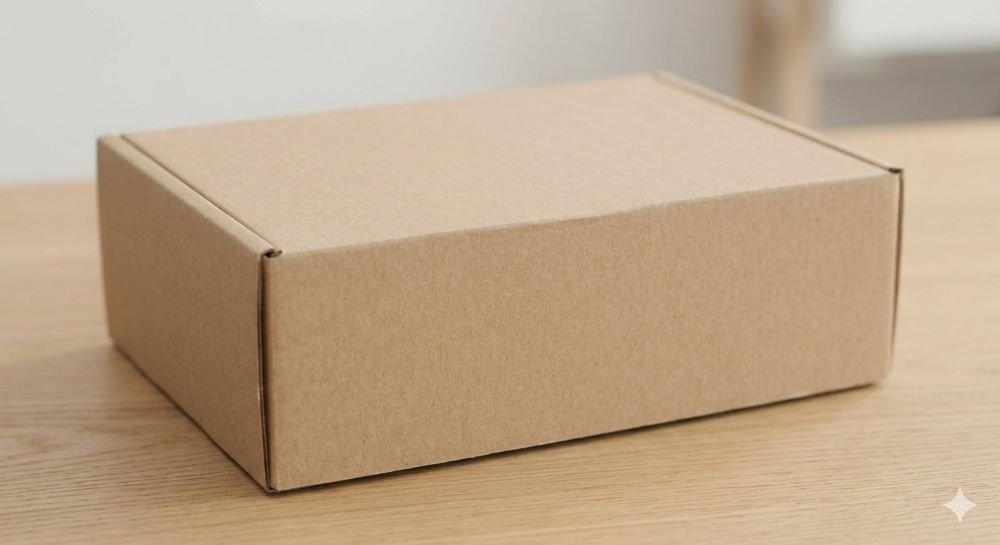
If you want seasonal packaging without reprinting boxes, the first step is to stop treating your main box like a campaign asset.
Your main box should be neutral enough to work year-round. That does not mean boring. It just means versatile.
A good evergreen box usually includes your logo, brand colors, core messaging, and a clean look that can support different seasonal layers. It should feel on-brand in January, June, and December. The less tied it is to one theme, the more usable it becomes.
Think of it as your packaging foundation.
A rigid box, mailer box, folding carton, or product box can all work well in this model, especially when the structure does not need to change. Once you have that base, you can adapt the look externally and internally without touching the full print run.
This approach is especially useful for brands managing multiple SKUs or trying to simplify packaging inventory.
Why sleeves are the easiest seasonal upgrade
Packaging sleeves do a lot of work with very little commitment.
A sleeve wraps around a plain or pre-printed box and instantly changes its appearance. That means you can use the same box underneath while giving the outside a holiday feel, a summer campaign look, a limited-edition style, or a promotional identity.
Sleeves are ideal because they give you strong visual coverage without requiring a whole new box. You can change colors, imagery, seasonal patterns, messaging, and product positioning while leaving the structural packaging untouched.
For example, a clean kraft or white box can become:
A festive holiday gift box with a red-and-gold sleeve
A spring collection package with floral artwork
A Valentine’s edition with soft pink graphics and gift messaging
An Eid launch with elegant seasonal details
A Black Friday or end-of-season promo pack with bold callouts
The transformation is immediate, but the packaging system stays simple behind the scenes.
Sleeves also work well when you want to test a campaign before scaling it. Instead of committing to a full custom box order, you can trial a smaller batch of sleeves and see how customers respond.
How to use stickers for seasonal impact
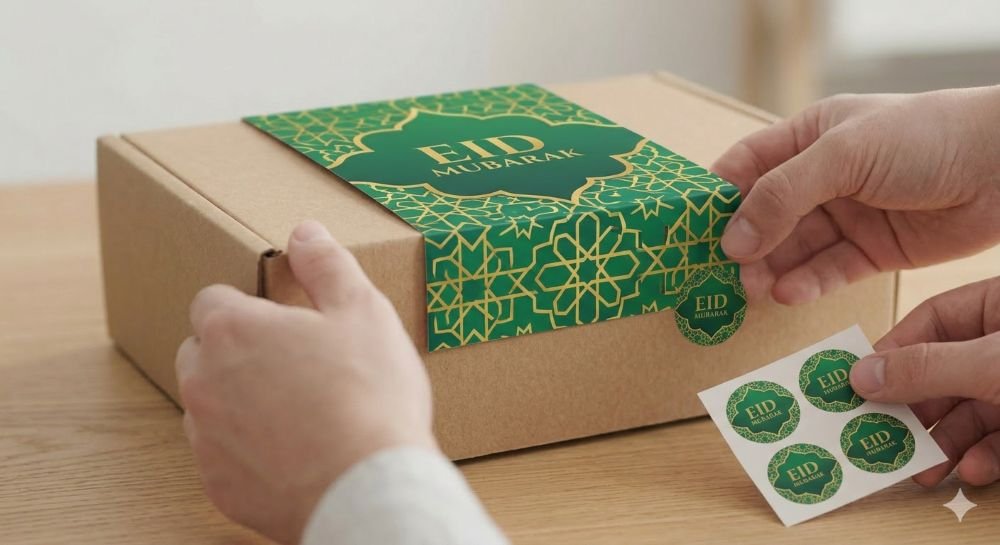
Stickers may be small, but they are one of the most flexible tools in seasonal packaging.
They work because they can be added almost anywhere. On the box lid. On tissue paper. On wrapping. On jars, bags, sleeves, or cards. They are easy to update, easy to apply, and cost-effective for short-run campaigns.
A seasonal sticker can do one of several jobs.
It can add a themed greeting like “Limited Holiday Edition” or “Packed for Eid.”
It can highlight a collection name or gift set.
It can add urgency with phrases like “Summer Drop” or “Special Release.”
It can function as a seal that makes the packaging feel more complete.
Even if your main box and sleeve are minimal, a well-designed sticker can still bring in the seasonal mood.
This is especially helpful for brands that want subtle campaign updates rather than a full visual change. Sometimes a sticker is enough to shift perception and make the packaging feel timely.
It is also a practical option when you need fast turnarounds or want to personalize packaging for smaller events, influencer mailers, or short promotions.
Why printed cards matter more than people think
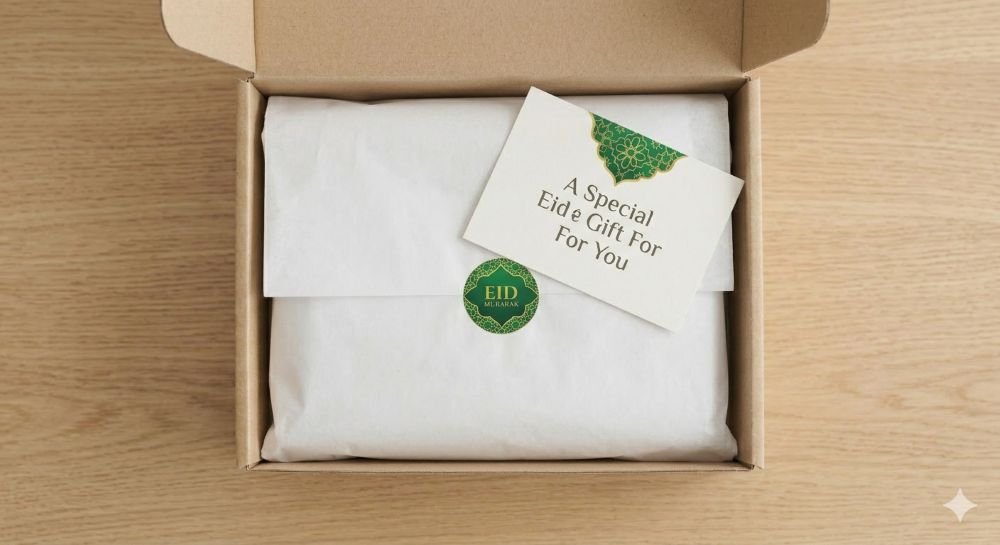
The inside of the package matters just as much as the outside.
A printed card gives you a simple way to add seasonal messaging, brand warmth, or promotional content without redesigning the packaging itself. It is one of the easiest ways to make an order feel intentional.
A seasonal insert card can say thank you, share a holiday greeting, explain the campaign theme, offer a discount on the next purchase, or tell the story behind a limited edition product. It can also encourage repeat purchases, social shares, or unboxing moments.
That makes cards useful both emotionally and commercially.
For gift-driven seasons, a card adds a more personal touch. For promotional seasons, it gives you space for an offer. For premium brands, it adds polish. For ecommerce orders, it can make the unboxing feel more thoughtful.
And because cards are separate from the box, you can update the message as often as needed.
One month you include a Ramadan greeting. The next, a summer campaign card. Later, a festive year-end thank-you. The packaging base remains unchanged, but the message evolves with the season.
The cost-saving advantage of this approach
One of the biggest reasons brands choose sleeves, stickers, and cards is cost control.
Full custom seasonal boxes usually require more planning, more inventory, and more budget. Even when the design looks great, the economics do not always make sense for temporary campaigns.
Using add-ons helps reduce that risk.
You can order your main boxes in larger, more efficient runs. Then you add seasonal components in smaller quantities based on what you actually need. That gives you better flexibility and often better cash flow management too.
It also reduces obsolete stock.
If a campaign ends, you are not stuck with hundreds or thousands of unused holiday boxes. You still have your evergreen boxes ready to use for standard orders. Only the seasonal sleeve, sticker, or card changes.
That kind of flexibility is valuable for brands that plan campaigns often but still need to stay lean.
It also makes inventory easier to manage
Packaging can become messy when every season has its own printed box.
You have different SKUs. Different storage requirements. Different reorder timelines. Different risks of leftovers.
By keeping one standard box and rotating add-ons, your packaging workflow becomes easier to manage. You simplify storage, improve consistency, and reduce the operational stress that comes with short seasonal windows.
This is especially useful for brands with limited warehouse space or fast-changing promotions.
Instead of storing multiple full box designs, you keep your core packaging in place and hold smaller seasonal components that are easier to manage.
That means less clutter and more agility.
Best use cases for sleeves, stickers, and cards
This packaging strategy works especially well for brands that run regular campaigns but do not want to overhaul their packaging each time.
Gift brands benefit because they often need packaging to feel timely and presentable.
Beauty and skincare brands benefit because seasonal aesthetics matter, but product packaging systems also need consistency.
Food, confectionery, candle, bath and body, apparel accessories, and subscription brands benefit for the same reason. They need flexibility, but they also need packaging that remains operationally simple.
It also works well for product launches, influencer kits, festive bundles, retail promotions, and limited-edition collections.
Anywhere you want a packaging refresh without rebuilding the entire box, this approach fits.
How to make seasonal packaging still feel premium
The biggest mistake brands make is treating seasonal packaging like decoration only.
Seasonal does not just mean louder colors or holiday graphics. It should still feel connected to your brand identity. If the sleeve, sticker, and card all look disconnected from the box or from each other, the result can feel random rather than premium.
The better approach is to build a seasonal system.
Use your brand fonts.
Keep your visual language consistent.
Adjust the palette, imagery, and message for the season without losing your identity.
Make sure each element feels like part of the same packaging story.
A luxury brand might use subtle texture, elegant foil details, or muted seasonal color shifts. A playful brand might use brighter graphics and bold campaign language. Both can work, as long as the seasonal layer still feels like the brand.
Quality also matters. A well-printed sleeve on a simple box often looks better than an overworked box design. The same goes for neatly finished cards and thoughtfully placed stickers.
Premium is not only about complexity. It is about cohesion.
A practical example of how this works
Imagine your brand sells a year-round gift box in a clean white mailer with a simple logo.
For regular orders, the box ships as-is with your standard insert.
For Eid, you add a deep green sleeve with elegant festive artwork, a gold-accent sticker sealing tissue inside, and a greeting card with a thank-you message and limited-time offer.
For summer, you keep the same box but swap in a bright seasonal sleeve, a playful sticker, and a campaign card promoting a seasonal collection.
For year-end gifting, the same box gets a rich holiday sleeve, a festive seal label, and a message card designed for gift recipients.
The structure never changes.
The customer experience does.
That is the power of modular packaging.
What to plan before you print
To make this strategy work well, think through the campaign before producing anything.
Start with the goal. Is this packaging for a holiday launch, a gift promotion, a retail shelf refresh, or a limited-edition drop?
Then decide what needs the strongest visual impact. In many cases, the sleeve carries the campaign while the sticker and card support it. In other cases, a simple branded box with a seasonal sticker and message card may be enough.
Also think about quantity and timing. Seasonal packaging only works when it arrives on time. Planning ahead helps you avoid rushed decisions and gives you room to align printing, packing, and campaign launch dates.
Most importantly, keep the system reusable. The more your seasonal assets are built around one evergreen base, the easier it becomes to repeat this process throughout the year.
Final thoughts
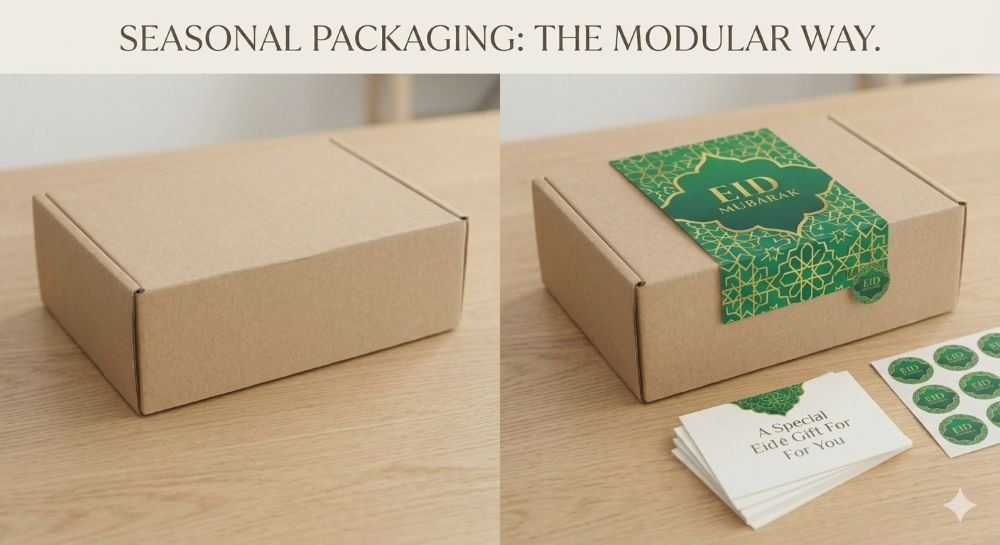
Creating seasonal packaging does not always require a full box redesign.
In fact, for many brands, the smarter move is to keep the box consistent and update the experience with sleeves, stickers, and cards. It is more flexible, more cost-conscious, easier to manage, and often just as effective visually when done well.
You still get the excitement of seasonal packaging.
You still create a timely unboxing experience.
You still make your products feel giftable, fresh, and campaign-ready.
But you do it without the burden of reprinting new boxes every time the calendar changes.
For brands that want packaging to move faster, stay leaner, and still look thoughtful, this is one of the most practical solutions available.