In this article
- 1Rigid Boxes and Folding Cartons at a Glance
- 2What Each Box Is
- 3Look, Feel and Perceived Value
- 4Protection and Durability
- 5Cost and Minimum Orders
- 6Shipping, Storage and Handling
- 7Customization and Finishes
- 8Which One for Which Product
- 9The Middle Ground: Premium Cartons and Mixed Ranges
- 10Sustainability: Keep It Honest
- 11How to Decide: A Short Checklist
- 12Common Mistakes
- 13Feel the Difference Before You Order
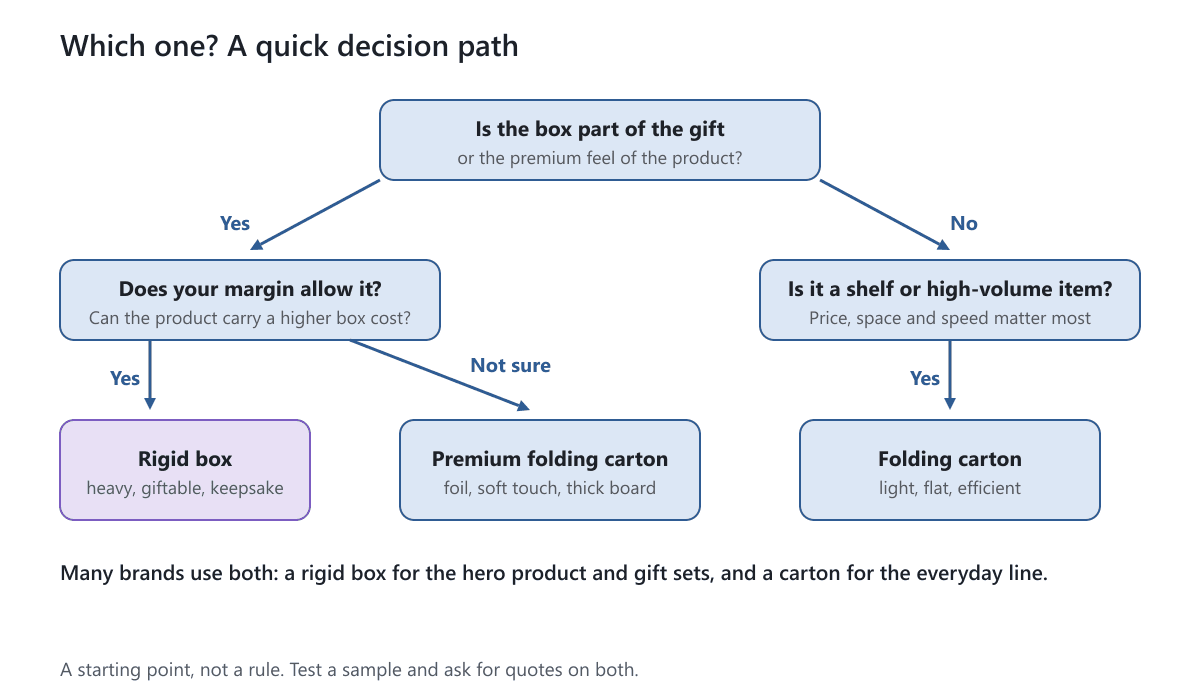
Choose a rigid box when the box is part of the product, for a gift, a premium price or a keepsake. Choose a folding carton when the box has to be efficient, for a retail shelf, a higher volume, a lower cost and a flat-pack shipment. Many brands use both: rigid for the hero product, cartons for the everyday line.
That is the quick answer. This guide compares rigid boxes and folding cartons on look and feel, protection, cost, minimums, shipping, customization and best uses, with a worked example and a decision path. It is written for a brand deciding how much to spend on the box, not for someone choosing between shipping materials. For that, see our guide to rigid versus corrugated boxes.
Key takeaways
- Rigid is about perceived value. Thick, wrapped board makes a product feel premium and giftable.
- Folding cartons are about efficiency. Thin, printed paperboard ships flat, costs less and runs well in volume.
- Cost follows the material. Rigid costs more per box, so the product needs the margin to carry it.
- Both can look premium. A carton with foil, soft touch and a good structure can close the gap.
- Shipping differs. Cartons ship flat. Collapsible rigid boxes do too, but assembled setup boxes take more space and are priced separately.
- You do not have to choose one. Mix them across your range, or use a rigid inner with a carton sleeve.
Rigid Boxes and Folding Cartons at a Glance
| Rigid box | Folding carton | |
|---|---|---|
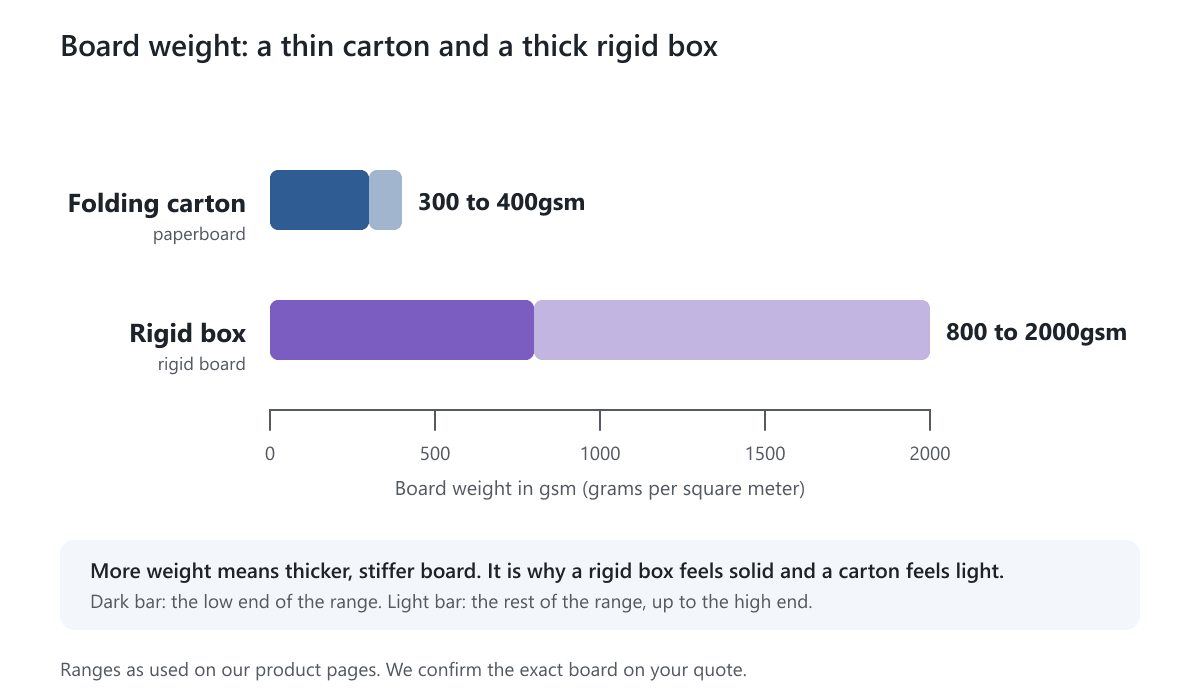
| Material | Rigid board, 800 to 2000gsm, wrapped in printed paper | Paperboard, 300 to 400gsm, printed and die cut |
| Feel | Heavy, firm, premium | Light, flexible, clean |
| Protection | Holds its shape, resists squeezing | Good for light and medium products |
| Cost per box | Higher | Lower |
| Minimum order | From 50 units | From 100 units for tuck-style cartons |
| Arrives | Flat if collapsible, or assembled | Flat, folded when needed |
| Best for | Gifts, luxury, keepsakes | Retail shelves, everyday products, runs of any size |
The minimums above are the starting points on our product pages. Each page states its own, and your quote includes shipping.
What Each Box Is
Rigid Boxes
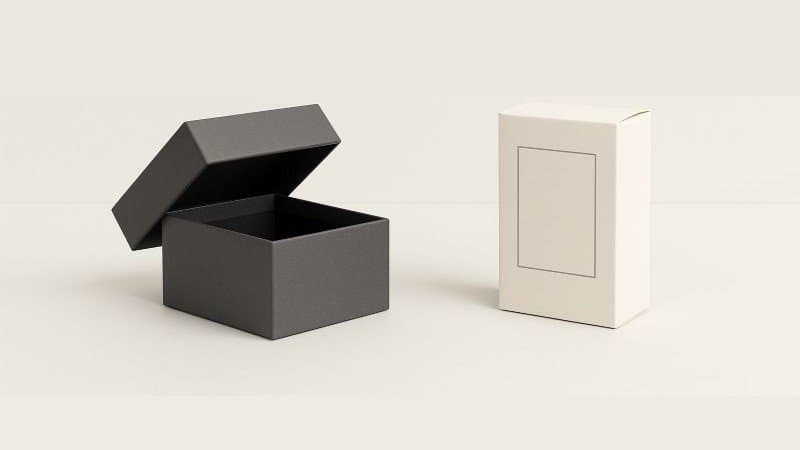
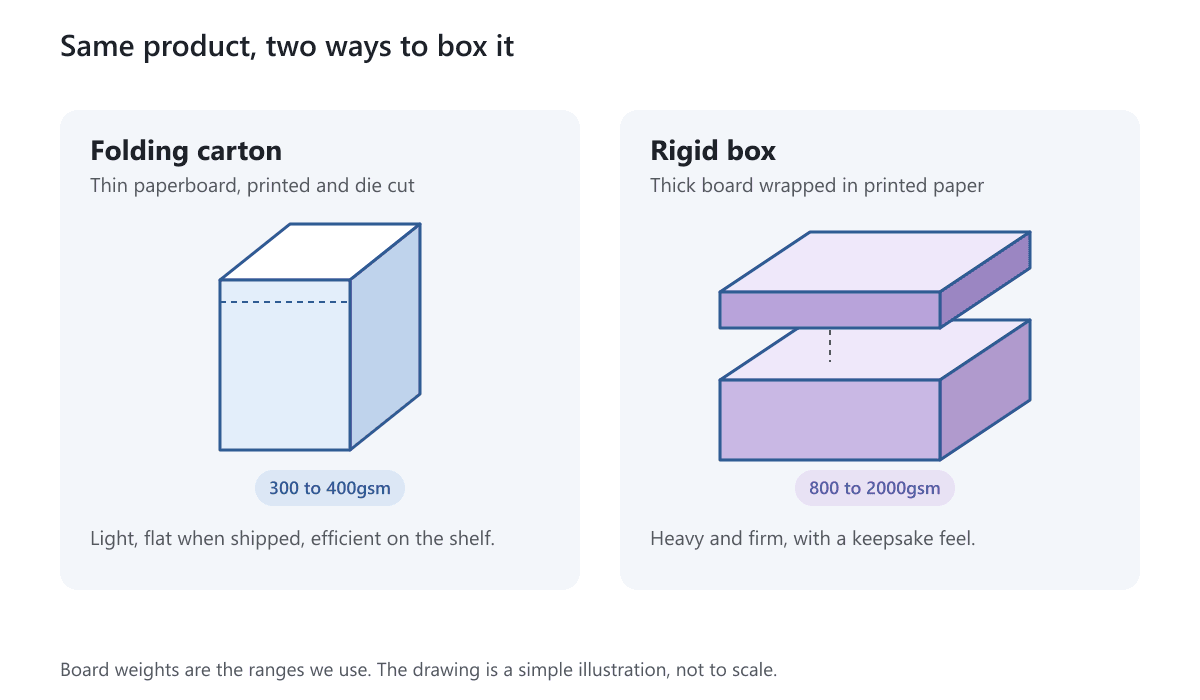
A rigid box, also called a setup or gift box, is made of thick, dense board wrapped in printed paper. It does not fold or bend easily. It comes in lid-and-base, magnetic, hinged and drawer styles. Our rigid boxes page lists the styles, and our lid and base boxes guide compares the two-piece options.
Folding Cartons
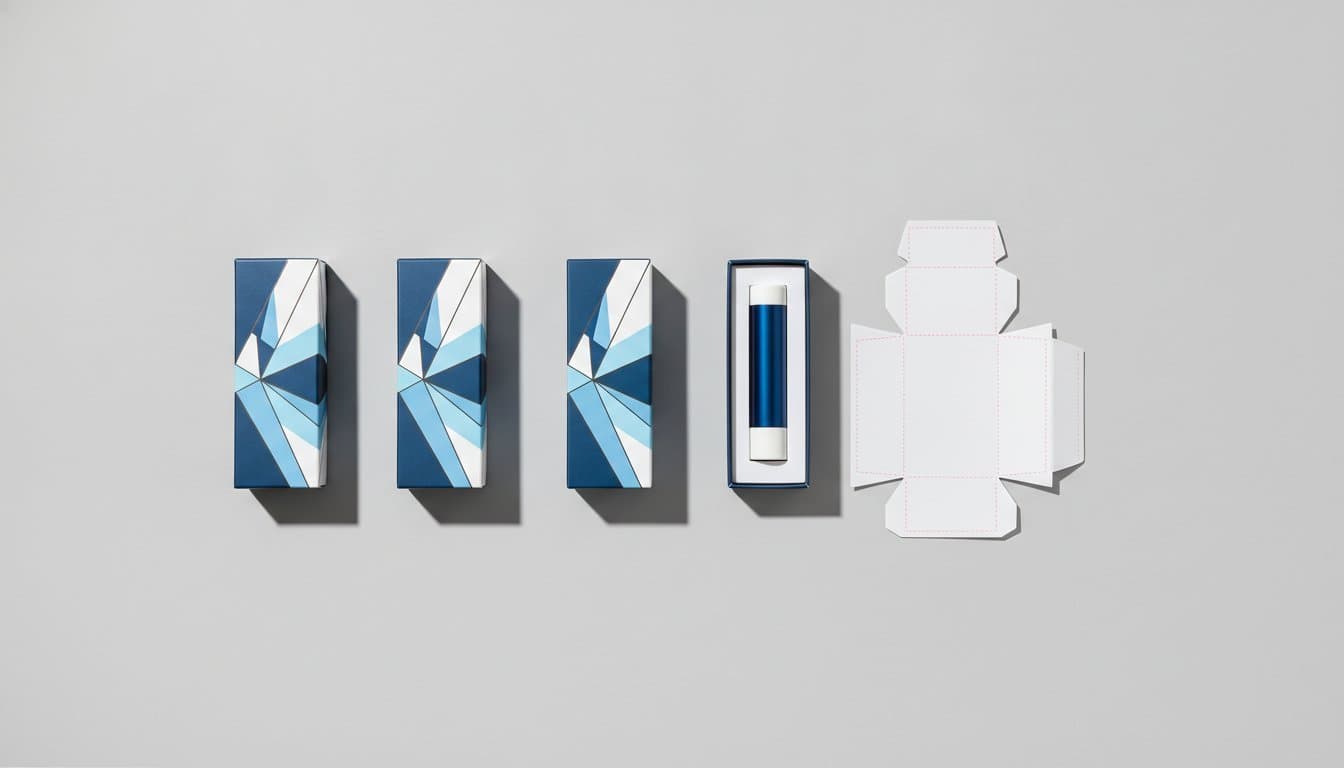
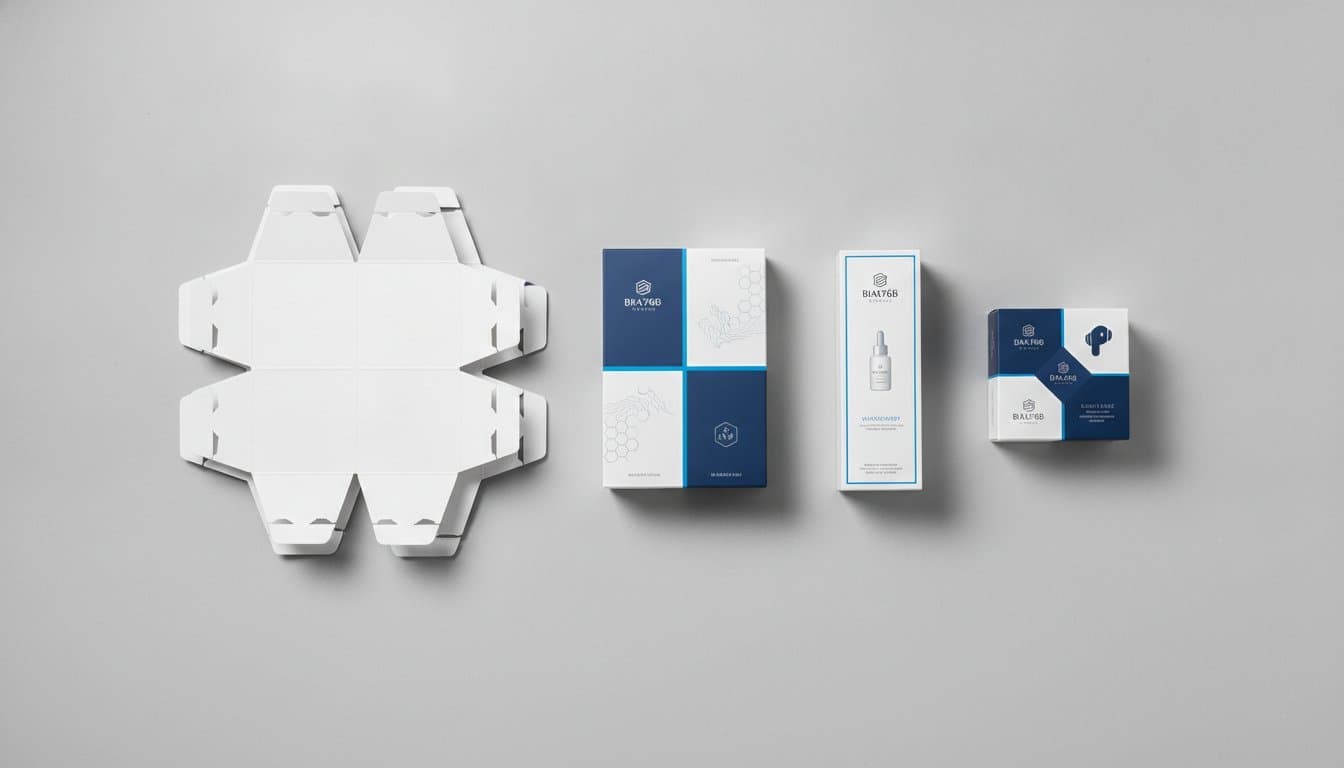
A folding carton is made of thin paperboard that is printed, die cut, and supplied flat. It is folded and glued into shape when it is packed. The family includes tuck boxes, pillow boxes and display boxes. Our folding carton page explains the styles.
Look, Feel and Perceived Value
The weight, the wrap and the way the lid closes all tell a customer something before they see the product. A rigid box signals that the contents are special and worth keeping. A carton signals practical and accessible.
That matters most for products bought as gifts, photographed for social media or displayed in boutiques. A rigid box can help justify a higher price. A carton may be a better fit when the product competes on convenience or price, and when a heavy box would feel out of place.
A carton can still look premium. Thicker board, soft touch coating, foil stamping, embossing and a clean structure make a big difference, and for many brands a premium carton is the right balance. See our guide to luxury packaging for ideas.
Protection and Durability
Rigid board is dense, so a rigid box keeps its shape and resists being squeezed. It handles repeated opening, and it protects delicate products on a shelf or in a drawer. Cartons are lighter. They protect light to medium products well, especially with an insert, but they dent and crush more easily.
Neither is built to take a parcel journey on its own. A rigid box or a carton is normally shipped inside a corrugated outer box. If you sell online, see our guide to which boxes are good for shipping.
Cost and Minimum Orders
Rigid boxes cost more per box. They use denser board, a paper wrap and more handling, and the finishing adds to it. Folding cartons use less material and simpler processes, so they cost less, especially in volume. See the starting price on each product page and ask for a quote on your size.
Minimums are low for both. Rigid boxes have a low minimum and tuck-style cartons at 100 units. Production takes 5 to 7 working days after artwork is approved and payment is received. Larger or more complex orders can take longer, and we confirm the date in your quote. Delivery time is added on top.
A Worked Example
This is an invented example to show how to think about it, not a quote. Say a rigid box costs $1.50 more per unit than a carton for the same product.
| Product (example) | Retail price | Extra cost of rigid | Share of the price |
|---|---|---|---|
| Scented candle | $40 | $1.50 | About 3.8% |
| Lip balm | $12 | $1.50 | About 12.5% |
The same extra cost is small on the candle and large on the lip balm. If the rigid box lets you charge more, sell more gifts or cut returns, it may pay for itself on the candle. On the lip balm it eats into margin. Our guide to packaging costs and product pricing shows how to test this with your own numbers.
Shipping, Storage and Handling
- Cartons ship flat. You can store thousands in a small space and fold them when needed. They suit machine or hand packing lines.
- Collapsible rigid boxes ship flat too. They open into a rigid box when you need them.
- Setup rigid boxes ship assembled. They arrive ready, take more space to store and ship, and are priced separately. The starting price on our rigid page is for collapsible rigid boxes delivered flat.
- Weight. Rigid boxes are heavy. A heavier parcel can cost more to send.
If warehouse space or freight cost is a concern, this one point can decide the choice. Ask us what is possible for your size. Our guide to measuring a box correctly explains how outside size and weight affect shipping.
Customization and Finishes
Both are fully customizable in size, print and finish. Both can be printed in CMYK or Pantone and finished with matte, glossy, satin or soft touch coating. Foil stamping, embossing or debossing and spot UV are available on both, and you can add a window to a carton.
- Rigid boxes can add a magnetic closure, a ribbon, a cut-out and a fitted insert that cradles the product.
- Cartons can add a window, a hanging tab, a tray or a dust flap, and a wide range of structures such as tuck, pillow and display.
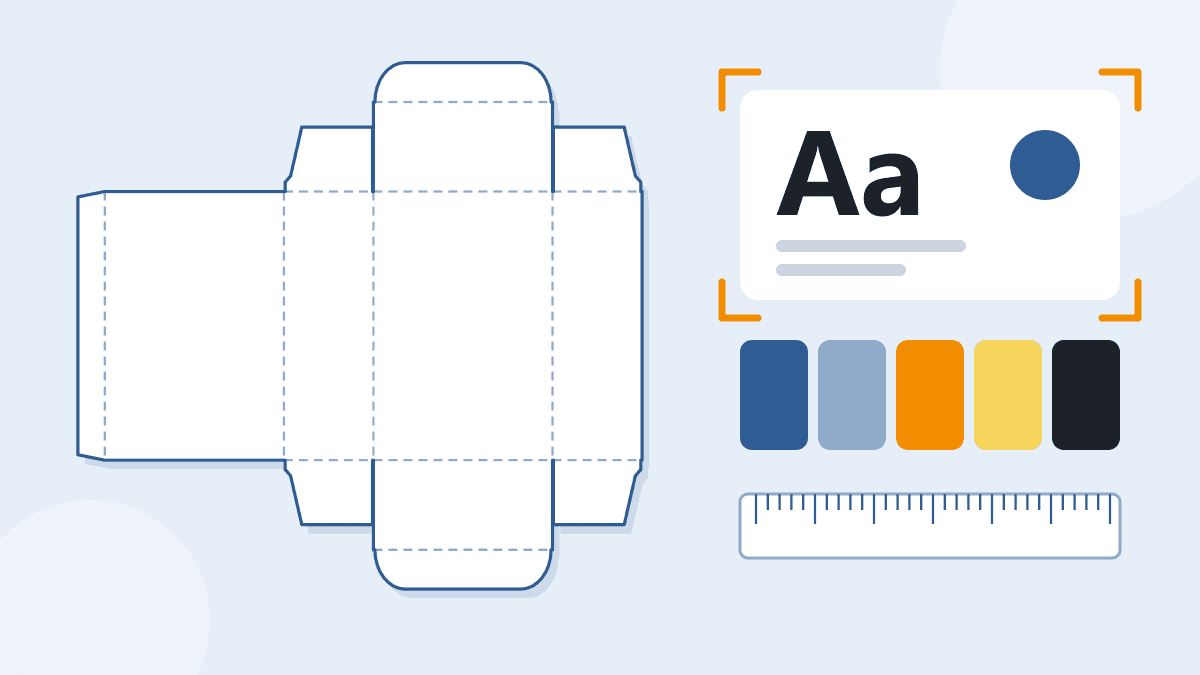
A free dieline template shows how a style lays out flat, and our design support is free.
Which One for Which Product
| Product (examples) | Often a good fit | Why |
|---|---|---|
| Fine jewelry, watches | Rigid | A gift-grade box with a lid or magnet |
| Perfume and premium skincare | Rigid, or a premium carton | Presentation matters, and the carton can look high-end too |
| Candles and soaps | Either | A carton for the shelf, rigid for a gift set |
| Supplements and everyday cosmetics | Folding carton | Volume, price and shelf space |
| Chocolate and gourmet food gifts | Rigid for gifts, carton for the shelf | Tell us if the food touches the box and we confirm suitable options |
| Tech accessories | Carton, or rigid for premium | Depends on price and gift appeal |
The Middle Ground: Premium Cartons and Mixed Ranges
You do not have to pick an extreme. Three common ways to mix:
- A premium carton. Use thicker board, soft touch coating, foil and a clean structure to get close to a luxury look at a lower cost.
- Rigid for hero products. Put your flagship product, gift sets or limited editions in rigid boxes, and use cartons for the core range.
- A paperboard box that opens like a rigid one. Our two piece foldable boxes are paperboard boxes with a lid and base that ship flat.
A rigid inner with a printed carton sleeve is another pairing. The sleeve carries the shelf message, and the rigid box carries the experience.
Sustainability: Keep It Honest
Both are paper-based, and neither is automatically greener. A rigid box uses more board per unit and often includes glue, wrapped paper and sometimes magnets, ribbon or foam, which can make recycling harder. A carton uses less board and, if it has no plastic window or film, is generally easier to recycle where local facilities accept paperboard. On the other side, a rigid box is often kept and reused, which extends its life.
If sustainability matters to your brand, ask about recycled stock, which is available on request, keep finishes simple, and right-size the box. Whether a finished pack is recyclable depends on the board, inks, coatings and adhesives and on local facilities.
How to Decide: A Short Checklist
- What are the retail price and the margin? Can you add the cost of a rigid box?
- Is the product bought as a gift, or does the unboxing drive sales?
- How heavy and fragile is it? Do you have breakage today?
- How do your closest competitors package similar products?
- How much space do you have to store boxes, and how will they ship?
- What do your customers value: a keepsake, or simple and sustainable packaging?
- How many units do you need now, and may the design change soon?
If you answer yes to gifting, margin and unboxing, rigid is likely worth it. If price, volume and shelf efficiency come first, a folding carton is likely the better call.
Common Mistakes
- Choosing rigid for a low-margin product that nobody keeps the box for.
- Choosing a plain carton for a luxury product and undermining the brand.
- Comparing a flat-shipped carton price with an assembled setup box price.
- Forgetting that a rigid box still needs an outer shipping box.
- Skipping a sample, so the feel and fit are a surprise.
- Ignoring storage space for assembled boxes.
Feel the Difference Before You Order
The weight and finish are hard to judge from a picture. A structural sample is an unprinted prototype that shows size and form. The Standard Sample Kit costs $50 with shipping included, though it may not include rigid boxes or boxes that ship assembled, so ask us about rigid samples. The samples page lists every type.
Tell us what you are packing, how it will sell and your quantity, and we recommend a style for each. Get a free quote for both and compare. Design support is free.
Frequently Asked Questions
What is the difference between a rigid box and a folding carton?
A rigid box is made of thick, dense board, 800 to 2000gsm, wrapped in printed paper, and keeps its shape. A folding carton is made of thin printed paperboard, 300 to 400gsm, and ships flat before it is folded.
Are rigid boxes worth the extra cost?
They can be, if the product is giftable, sells at a premium and gets kept or shared. For low-margin or everyday products, a folding carton is often the smarter choice.
Is a rigid box better than a folding carton?
Neither is better in every case. Rigid suits luxury and gifting, and folding cartons suit retail shelves, volume and lower cost.
Can a folding carton look as premium as a rigid box?
It can come close. Thicker board, soft touch, foil, embossing and a clean structure give a premium feel, though a rigid box has a weight and solidity that a carton cannot match.
Do rigid boxes ship flat?
Collapsible rigid boxes ship flat. Setup rigid boxes arrive assembled, which takes more space and is priced separately.
What are the minimum orders for rigid boxes and folding cartons?
Rigid boxes have a low minimum and tuck-style folding cartons at 100 units. Each product page states its own minimum.
Can I use both rigid boxes and folding cartons?
Yes. Many brands use rigid boxes for hero products and gift sets, and folding cartons for the everyday range.
Written by the PacksDo Team
We make custom printed packaging, from boxes and mailers to bags, labels and inserts. Questions about this guide? Ask us.