In this article
- 1What Makes a Box Good for Shipping
- 2Corrugated Board and Why It Works for Shipping
- 3Corrugated, Paperboard and Rigid: Which Can Ship
- 4Mailer Boxes vs Shipping Boxes
- 5Match the Box to Weight and Fragility
- 6Pick a Size That Fits
- 7Filler, Inserts and Dividers
- 8Examples by Product
- 9What a Shipping Box Costs
- 10Test Before You Order a Full Run
- 11Common Mistakes When Choosing a Shipping Box
- 12Choose Your Box and Take the Next Step
The best boxes for shipping are corrugated boxes that fit the product snugly, are strong enough for its weight, and close securely. For most online orders that means a corrugated mailer box for light and medium items, or a corrugated shipping box for heavier, more fragile or oddly shaped ones.
This guide explains what makes a box good for shipping, how corrugated board works, how mailer boxes and regular shipping boxes differ, and how to match a box to your product's weight and fragility. It also covers sizing, filler, cost and testing, with examples for books, apparel, glass, electronics, food and candles.
If you are deciding between all types of packaging, including retail cartons and gift boxes, start with our guide to choosing the right box for your product. This article is about boxes that have to survive a trip.
Key takeaways
- Corrugated is the standard for shipping. Its fluted layer cushions shocks and resists crushing.
- Mailer box or shipping box. A mailer is a one-piece box with a lid, good for light items and a neat unboxing. A regular shipping box is taped shut and suits heavier or varied loads.
- Match the board to the load. Heavier and more fragile products need thicker board or a stronger wall.
- Right-size the box. A snug fit means less filler, less movement and a smaller package to ship.
- Hold the product still. Inserts, dividers and paper stop it moving, which is where most damage starts.
- Test before you commit. Ship a sample to yourself and see how it arrives.
What Makes a Box Good for Shipping
A box for the shelf only has to look good. A box for shipping has to survive being stacked, dropped, squeezed and slid along belts. Six things decide whether it can.
- Board strength. How well the walls resist crushing and bending, set by the type of board and its thickness.
- Fit. How closely the box matches the product, so it cannot rattle or be crushed from the side.
- Closure. Whether the lid stays shut in transit, by tape, a tuck or a lock.
- Protection inside. What stops the product moving, such as an insert, a divider or paper.
- Shipping cost. A box that is bigger or heavier than it needs to be can cost more to send.
- Brand experience. What the customer sees and feels when they open it.
The rest of this guide goes through each one. The first, board strength, depends on one material: corrugated board.
Corrugated Board and Why It Works for Shipping
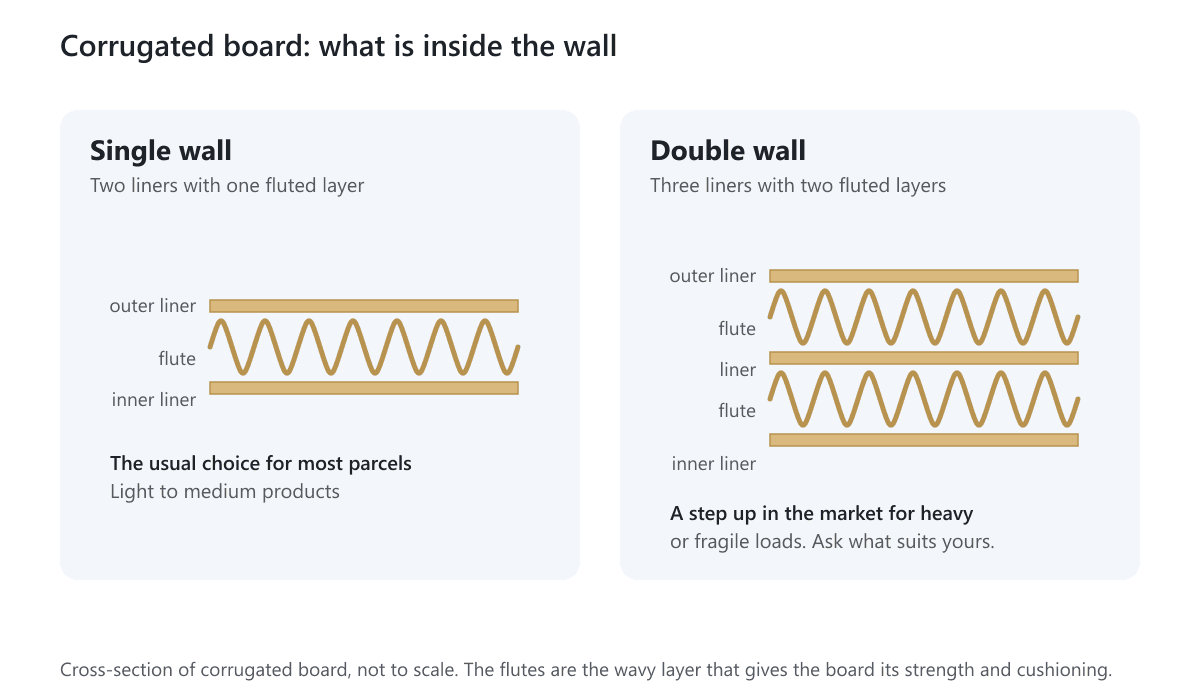
Corrugated board is made of a wavy paper layer, called the flute, glued between flat sheets of paper called liners. The waves act like tiny arches. They hold the board stiff under pressure and cushion a knock, while the board stays light.
Flute Sizes
The size of the flute changes how thick and strong the board is. Two common ones are:
- E-flute: about 1.2 to 2 mm thick, a frequent choice for mailer boxes and lighter shipping boxes. It prints well and keeps the box slim.
- B-flute: about 2.5 to 3 mm thick, a better fit for bulky boxes and heavier items.
Single Wall and Double Wall
Single-wall board has two liners with one fluted layer between them. Double-wall board has three liners and two fluted layers, which is thicker and stiffer. Single wall is the usual choice for most parcels. Double wall is a step up in the market for heavy or fragile loads, and the right choice depends on the box size, the weight and the way it is stacked. Tell us what you are shipping and we recommend a board, then test it with a sample.
Recycling note: plain corrugated board without plastic film is widely collected for recycling where local facilities accept it. Coatings, plastic tapes and mixed materials can make recycling harder, and rules differ by town. Recycled stock options are available on request.
Corrugated, Paperboard and Rigid: Which Can Ship
People often ask whether any box can be a shipping box. Not quite. The three main families do different jobs.
| Box family | Board | Shipping use |
|---|---|---|
| Corrugated (mailer and shipping boxes) | Fluted board between liners | Built to ship. Use it as the outer box. |
| Paperboard (folding carton) | Thin, flat paperboard, 300 to 400gsm | Made for retail. Ship it inside a corrugated outer box. |
| Rigid (gift and setup box) | Thick rigid board, 800 to 2000gsm, wrapped in paper | Premium presentation. Usually ships inside an outer carton. |
A folding carton is light and prints beautifully, but it is not made to take a drop on its own. For the full comparison of rigid and corrugated, see our guide to rigid versus corrugated boxes. Our corrugated boxes page lists the corrugated styles we make.
Mailer Boxes vs Shipping Boxes
Both are corrugated, so both can ship. They differ in how they close and what they suit.
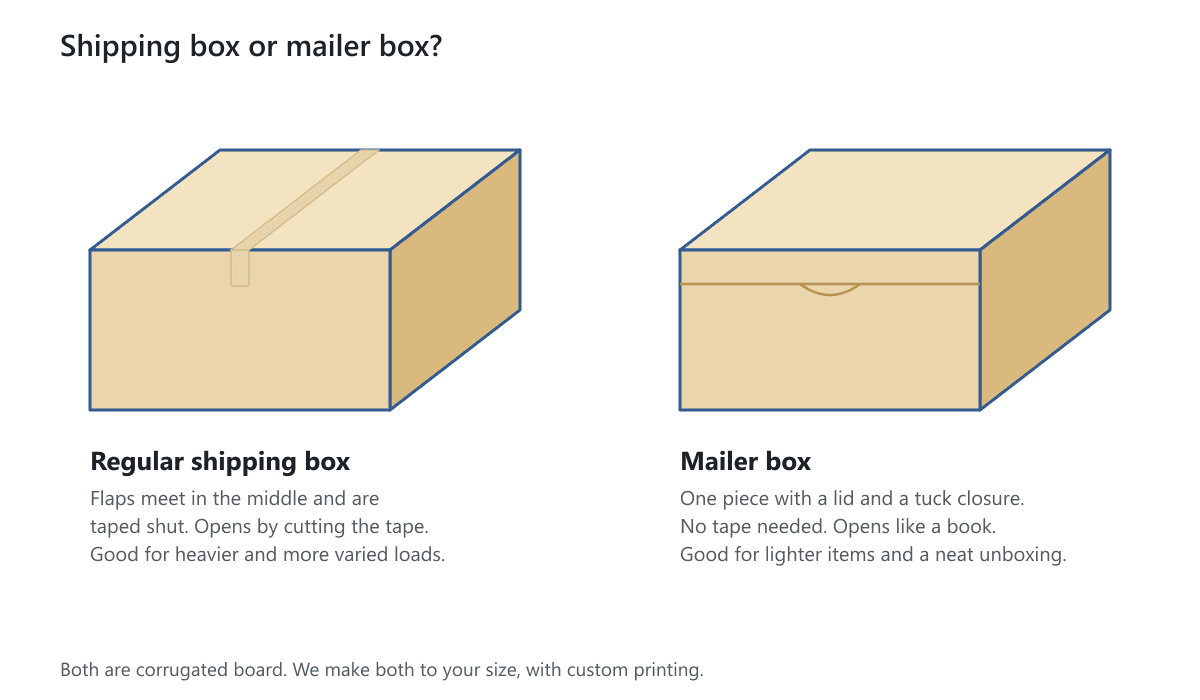
| Mailer box | Regular shipping box | |
|---|---|---|
| Construction | One piece with an attached lid | Four flaps on top and bottom |
| Closure | Tuck or lock, often no tape | Taped shut |
| Typical strength | Light to medium loads | Medium to heavy loads, thicker board possible |
| Look | Printed inside and out for a neat unboxing | Plain or printed, practical |
| Best for | Subscription boxes, apparel, gifts, cosmetics | Books, bottles, small appliances, mixed orders |
| Minimum order | From 100 units | From 50 units |
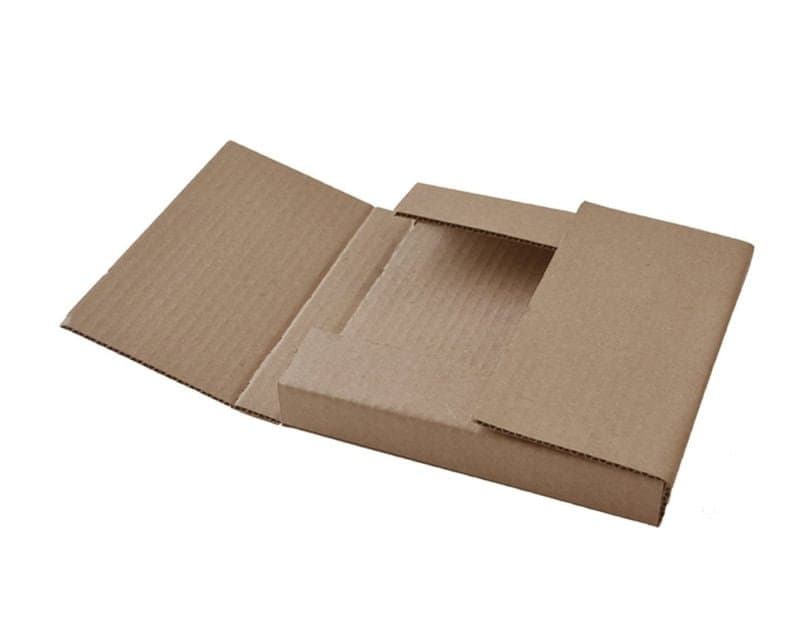
A mailer box opens like a book and looks good on camera, so it suits products where the first look matters. A shipping box is the workhorse: it is built to carry heavier items and take rough handling. Minimums depend on the style, and each product page states its own.
If your product is light and soft, such as clothing, a poly mailer is a lighter bag option. It does not protect against crushing, so it suits items that cannot be crushed.
Match the Box to Weight and Fragility
Weight and fragility are the two questions that decide the board. The table is a general starting point. Your product, the size of the box and the way it is packed all change the answer, so test a sample.
| Your product | What it needs | A good starting point |
|---|---|---|
| Light and sturdy (clothing, soft goods) | A tidy closure and a clean look | Mailer box with an E-flute, or a poly mailer |
| Medium weight (cosmetics, candles, gadgets) | A snug fit and an insert | Mailer box with an insert, or a small shipping box |
| Heavy (books, bottles, tools) | Strong walls and a taped seam | Shipping box, thicker flute, ask about stronger wall options |
| Fragile (glass, ceramics, electronics) | Walls that cushion and an insert or dividers that hold each item still | Shipping box with inserts or dividers, and a drop test |
| Mixed orders of several items | Room for different shapes | Shipping box sized to your usual order, with paper fill |
Pick a Size That Fits
Size is where many shippers lose money and where damage starts. A box that is too big lets the product slide and needs a lot of filler. A box that is too small can be crushed in the middle. Carriers also bill by size as well as weight, so an oversize box can raise the shipping cost.
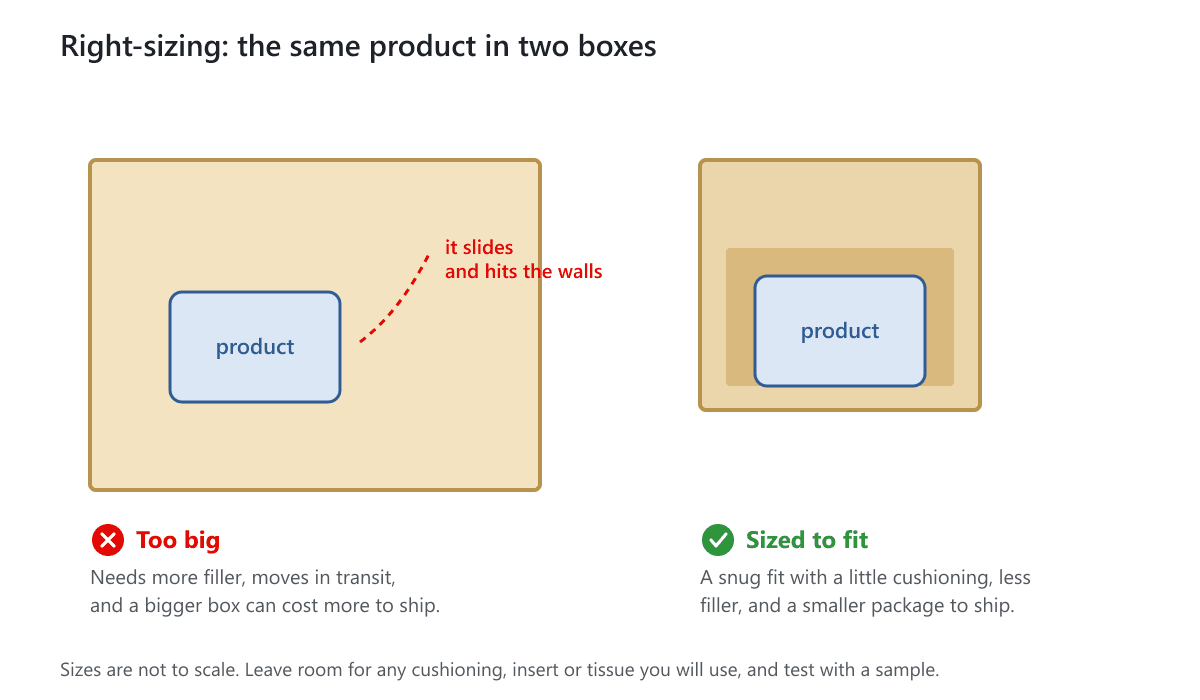
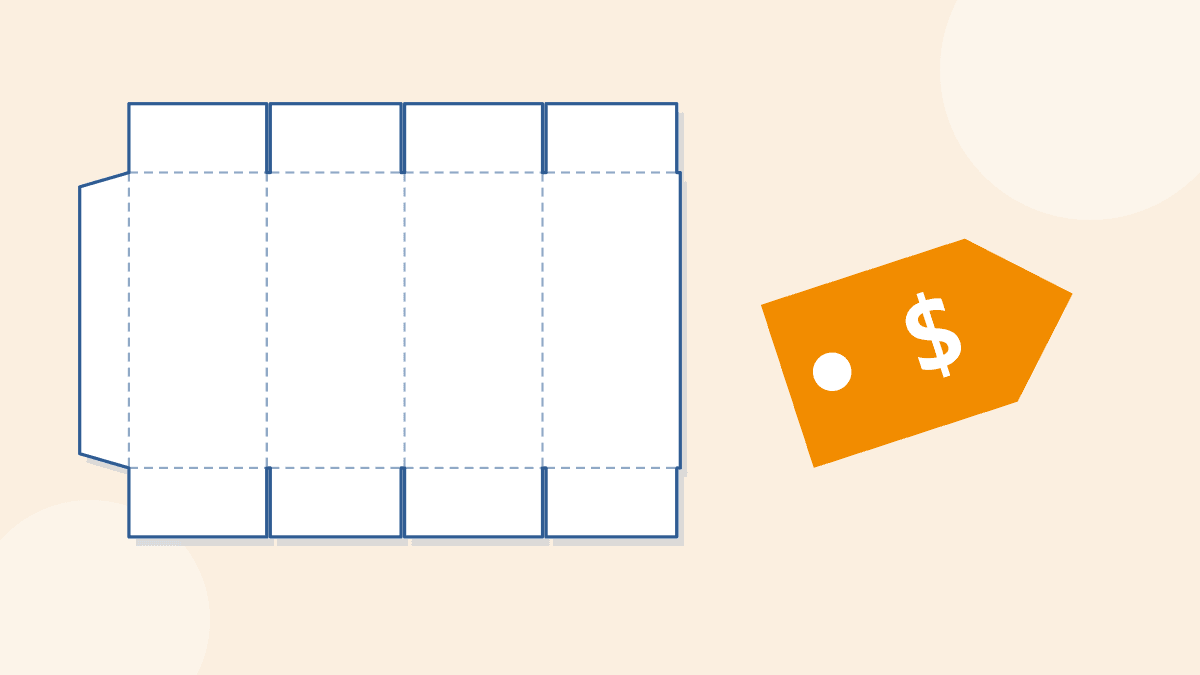
To size a box, measure the product as it will be packed, with its wrap, then add room for any insert or paper. Give us the inside size. Our guide to measuring a box correctly covers inside and outside sizes, board thickness and dimensional weight. You can preview the flat pattern on our free dieline templates.
Filler, Inserts and Dividers
A strong box cannot protect a product that is free to move. The inside matters as much as the walls.
- Inserts hold one product in a shaped cradle. See our box inserts for cardboard and other types.
- Dividers keep items apart, which is useful for bottles, jars and sets.
- Paper and void fill take up the space around the product. We also make packing paper and void fill.
- A simple shake test tells you a lot. Close the packed box and shake it. If you hear or feel the product move, add or change the fill.
Examples by Product
These are general examples to show the thinking. They are not guarantees, and the right box depends on your actual product.
| Product | Likely box | What to watch |
|---|---|---|
| Books | Shipping box, sized to the stack | Corners get hit. Fit snugly so the stack cannot slide. |
| Apparel | Mailer box or poly mailer | Light, so choose by look and size. Fold flat to cut the package size. |
| Glass jars and bottles | Shipping box with dividers or inserts | Each item should be held apart and unable to knock the next. |
| Electronics | Mailer or shipping box with an insert | A tight cradle that stops movement in every direction. |
| Food and drink | Shipping or mailer box | Tell us if the product touches the box, and we confirm suitable options. |
| Candles | Mailer box with an insert or dividers | Jars can chip. Avoid long hot spells in transit if the wax can soften. |
What a Shipping Box Costs
Several things move the price of a custom shipping box, and our guide to packaging costs and product pricing goes through them. The main ones:
- Size. A bigger flat pattern needs more board.
- Quantity. Larger runs cost less per box.
- Board. Thicker or stronger board costs more.
- Printing. One-color print costs less than full coverage inside and out.
- Inserts and extras. Each adds to the cost per order.
- Shipping weight. A lighter, smaller box can lower postage.
Minimum orders are modest: shipping boxes start at 50 units and most other boxes at 100. See the starting price on each product page, and get a free quote for your size. Quotes include shipping. If you are unsure whether custom boxes pay off for you, read are custom shipping boxes worth it.
Test Before You Order a Full Run
The only way to know a box works for your product is to try it. A good test does not take long.
- Pack a real product the way you will pack an order, with the insert and fill.
- Do the shake test and press the sides to feel how firm the box is.
- Ship it to yourself or a friend through your normal carrier, and open it.
- Check the result. Look for damage, movement, a crushed corner or a lid that popped open, and adjust.
A structural sample is an unprinted prototype that shows the size and form of your box. The Standard Sample Kit lets you hold different box types, and the samples page lists every sample we offer.
Common Mistakes When Choosing a Shipping Box
- Choosing a box for looks and ignoring weight and fragility.
- Using a retail paperboard carton as the only outer box.
- Buying one size for every product, so most orders ship half empty.
- Skipping inserts for fragile items.
- Ordering a full run before testing a sample.
- Forgetting that a thick wall or an insert changes the inside size.
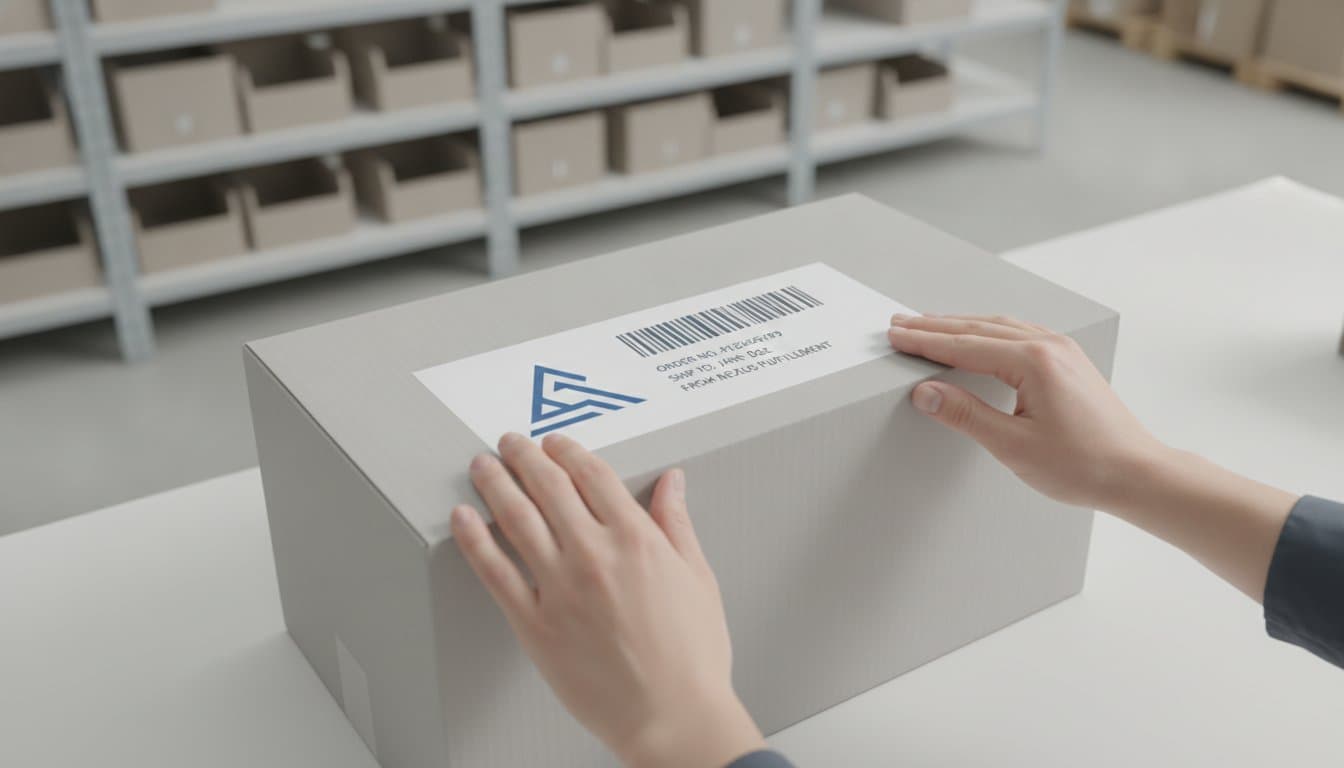
- Leaving no plain area for the shipping label. Our guide on where to place a shipping label shows how.
Choose Your Box and Take the Next Step
Write down your product's size and weight, how fragile it is, how many you ship each month and how you want it to look when it is opened. With that you can pick between a mailer box and a shipping box, and ask for the board that fits. If you want a second opinion, tell us what you are shipping and we recommend a style: get a free quote. Design support is free.
Frequently Asked Questions
What is the best box for shipping?
A corrugated box that fits the product snugly and is strong enough for its weight. A corrugated mailer box suits light and medium items, and a corrugated shipping box suits heavier or more fragile ones.
Is a mailer box strong enough for shipping?
Yes, for the right products. Mailer boxes are made of corrugated board and are built for light to medium items. For heavy or very fragile products, a shipping box with thicker board and an insert is a safer choice.
Can I ship in a paperboard folding carton?
Not on its own. Paperboard cartons are made for retail shelves and are not designed to take a drop. Put them inside a corrugated outer box for shipping.
What is the difference between E-flute and B-flute?
They are two sizes of the wavy layer inside corrugated board. E-flute is thinner, about 1.2 to 2 mm, and B-flute is thicker, about 2.5 to 3 mm, so it suits bulkier or heavier items.
How do I know what size shipping box to buy?
Measure the product as it will be packed, add room for any insert or paper, and give the inside size. See our guide to measuring a box, and test a sample before a full run.
Do I need inserts or filler in a shipping box?
For anything fragile or loose, yes. A strong box cannot protect a product that can move. Inserts, dividers or paper keep it still. Do a shake test to check.
What is the minimum order for custom shipping boxes?
Custom shipping boxes start at 50 units, and mailer boxes at 100 units. Each product page states its own minimum, and your quote includes shipping.
Written by the PacksDo Team
We make custom printed packaging, from boxes and mailers to bags, labels and inserts. Questions about this guide? Ask us.