In this article
The best box for your product is the one that fits how the box will be used. A box that looks great on a shelf can fail in the mail, and a strong shipping box can look plain in a store. This guide walks through the choices in the order we suggest making them.
It is for brands that are new to custom packaging, or that are changing boxes and want a clear way to compare options. Each section links to the box type it mentions, so you can read the details.
Key takeaways
- Start with the use: shelf, shipping, gift or counter display decides the box type.
- Measure the product first, then choose the box.
- Match weight and fragility to the board: paperboard for light retail, corrugated for shipping, rigid for premium.
- Count shipping and storage, because a box that ships flat costs less to move.
- Test with a sample before a full order.
Start with how the box will be used
Before you look at box styles, answer one question: where will this box spend its life? Most products fall into one of these cases.
- Sold on a shelf or in a store. The box needs to look good from the front and hold the product until it is bought.
- Shipped to a customer. The box needs strength for the trip, because it is handled, stacked and dropped.
- Given as a gift. The opening matters as much as the box, so the feel and the unboxing count.
- Shown at a counter. The box needs a large opening so the product is easy to see and reach.
- Carried home. A handle or a shape that is easy to hold matters.
Some products need two of these. A candle that is sold in a store and also shipped online is a good example. In that case, pick the use that is harder to meet first.
Measure your product first
Every box starts with the size of the product. Measure it at its longest, widest and tallest points, in that order: length, width, height. Always give the sizes in the same order, so there is no doubt which side is which.
Allow a little room if the product has to slide in and out of the box. When you send us sizes, tell us whether they are for the product or for the finished box.
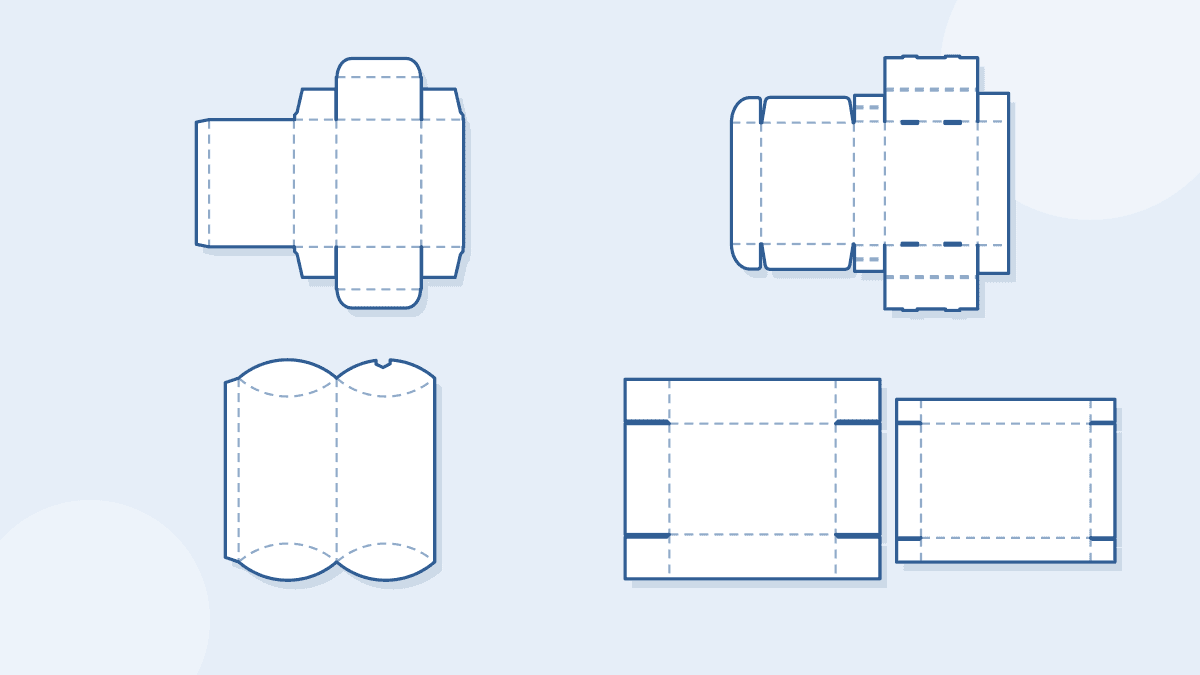
Our measuring guide explains each term. If you want to see the flat pattern for a box, our free dieline templates let you type your measurements and download the pattern as a PDF, SVG or DXF file. Treat these as a layout guide: we confirm the final dieline with you before production.
Match your product to a box type
This table matches common needs to the box types we make. Each name links to the page for that box type, with its sizes, materials, printing and finishes.
| What you need | Box type | Why it fits |
|---|---|---|
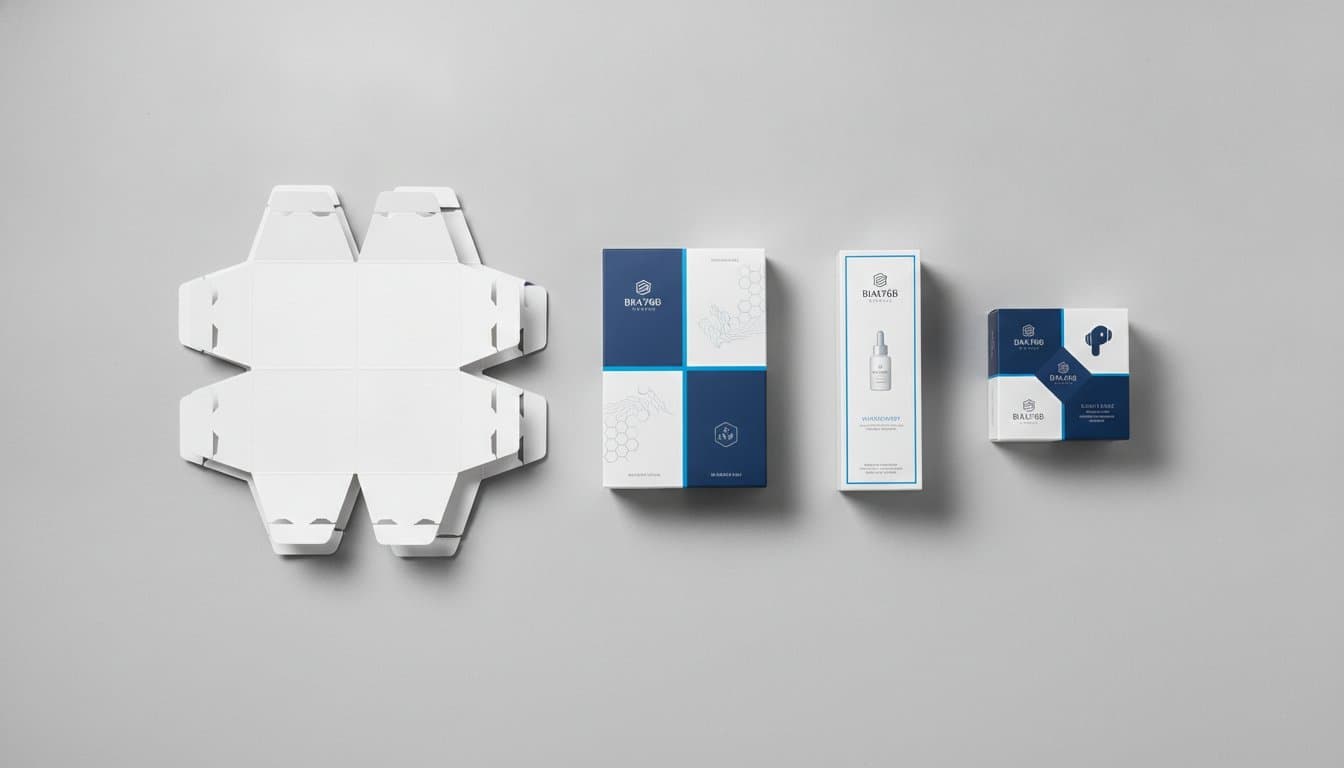
| A light retail product on a shelf, such as cosmetics or electronics | Tuck Boxes | Lightweight paperboard with tuck-in flaps for a secure closure. They ship flat and assemble quickly. |
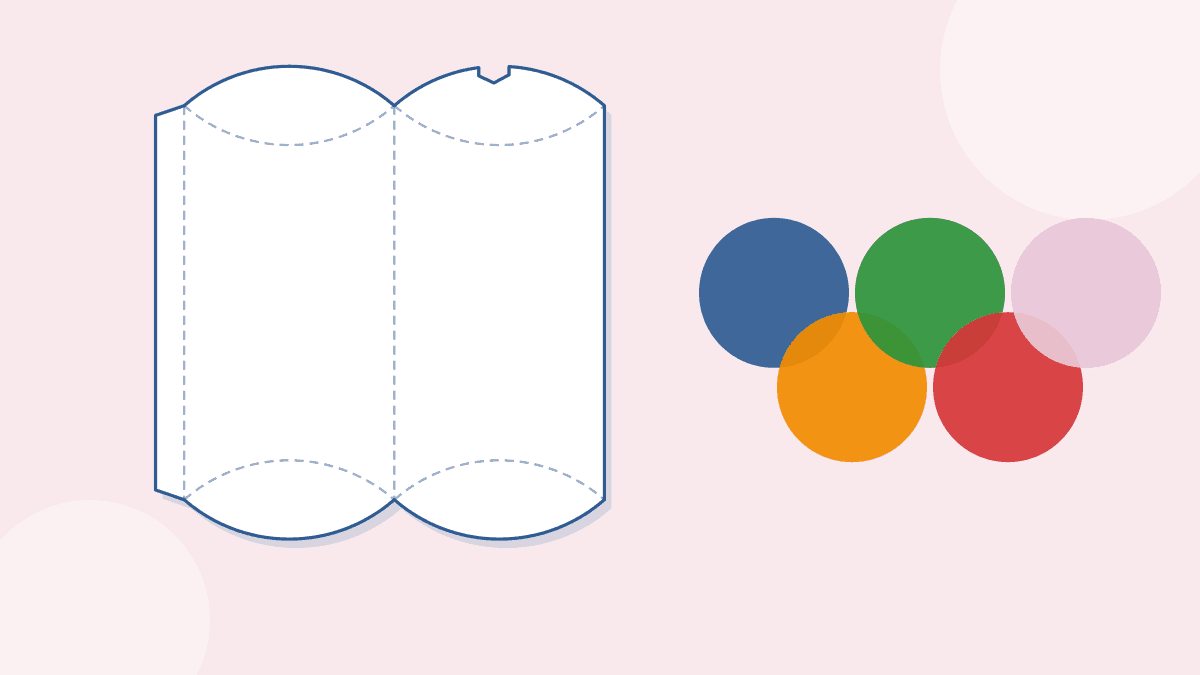
| A light item you want to wrap like a gift | Pillow Boxes | A one-piece paperboard carton whose curved end panels interlock to close it, in many cases without tape or adhesive. |
| A product shown on a shelf, counter or trade show stand | Display Boxes | Made to put the product front and center. A good fit for lightweight items such as spices, sauces or beauty products. |
| Shipping to customers or subscription boxes | Mailer Boxes | One-piece corrugated boxes with an attached lid and tuck closure. They can be printed inside, outside or both. |
| Heavier or bulkier items going by parcel | Shipping Boxes | Made from corrugated cardboard. Corrugated strength ships heftier items and keeps delicate ones safe from bumps. |
| A premium gift box | Rigid Boxes | Rigid board wrapped in printed paper, made for high-end products. Choose two-piece lids or one-piece magnetic closures. |
| A slide-open unboxing | Tray & Sleeve Boxes | Also known as drawer packaging. A tray slides out of a sleeve to show the product. |
| A lid and base box that costs less to ship | Two Piece Boxes (Foldable) | A tray and a lid with a double-wall structure. Thinner than rigid boxes, and they ship flat. |
| A box your customer can carry | Gable Boxes | A peaked roof and a carry handle, which combines the benefits of a box and a bag. |
| An unusual shape | Custom Shaped Boxes | Hexagonal, triangular, round, heart-shaped and other shapes. Tell us the size and quantity and we confirm what is possible. |
If you prefer to choose by material, see our folding cartons for lightweight paperboard packaging and our corrugated boxes for packaging that needs more strength.
Think about weight and fragility
Weight decides the material. Most of our retail boxes, such as tuck, pillow, display and tray and sleeve boxes, are made from paperboard of about 300-400gsm. That suits lightweight products. Rigid boxes use a much thicker board, from 800 to 2000gsm, depending on size.
For a product that will be shipped, corrugated board is the usual choice. The wavy layer inside the board, called the flute, gives the box its strength. E-flute is the one most often chosen. B-flute is thicker and suits bulky boxes and weighty objects. Tuck boxes can also be made from corrugated material when you need extra strength.
Some paperboard styles also help with weight. A snap lock bottom is suited to heavier items, and the thick-walled tray and sleeve version suits heavier items than the thin-walled one. That tray and sleeve version still goes inside a shipping carton for transit.
When an insert helps
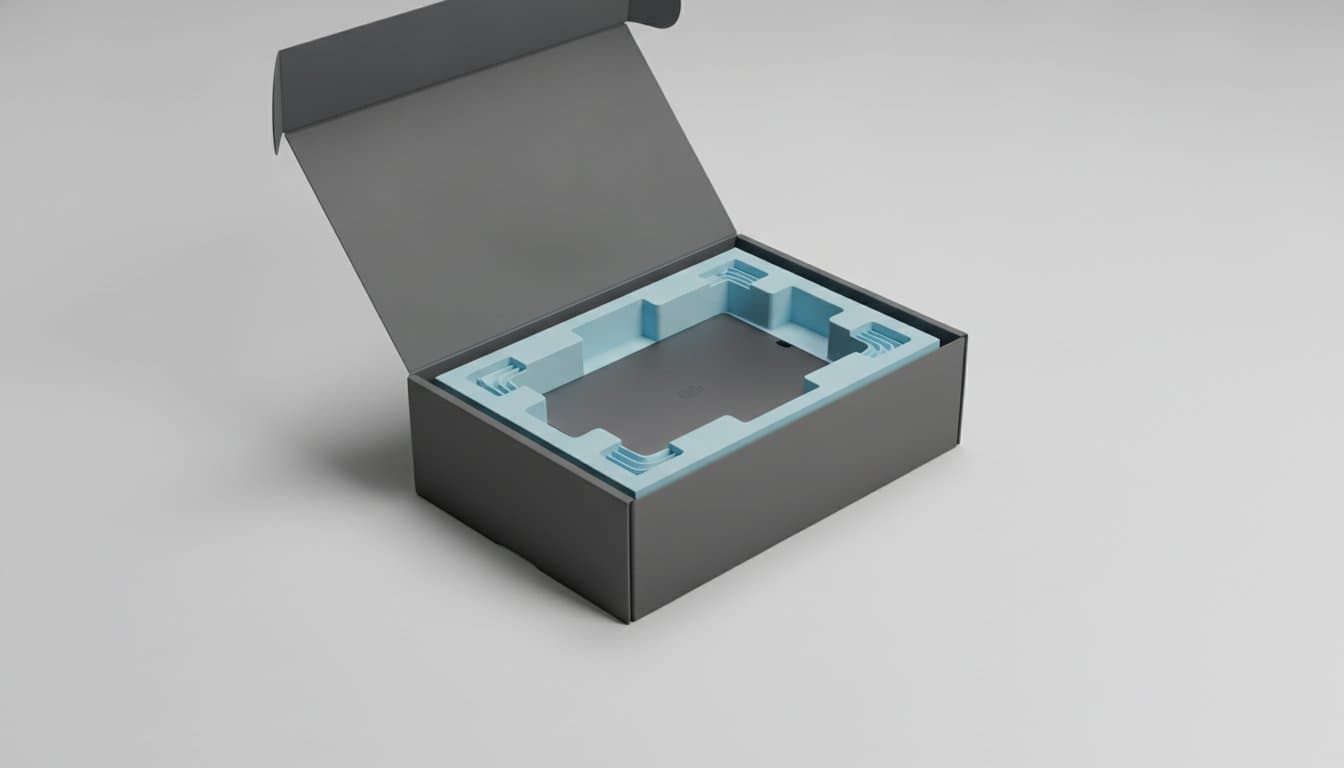
If the product moves inside the box, or you pack several items together, add an insert. Box inserts come in paper and cardboard, foam, plastic tray and molded pulp. Paper and cardboard inserts are lightweight and cost-effective. Foam is made for high-impact absorption and suits delicate or fragile items.
Count the shipping and storage cost
A box has two costs: what you pay for it, and what it costs to move and store it. Boxes that ship flat save on both.
- Tuck boxes ship flat and assemble quickly when you need them.
- Folding cartons are typically supplied flat, which can reduce storage compared with rigid setup boxes.
- Two Piece Boxes (Foldable) ship flat, which cuts shipping costs. The collapsible magnetic style of our rigid boxes also folds flat.
This matters most at higher quantities, when the space the empty boxes take up becomes a real cost. If you ship from a small space, ask us about flat-packed options when you request a quote.
Plan your budget and quantity
Five things move the price of a box: its size, the quantity, the material, the printing and the finishes. In general, the price per unit falls as the quantity grows.
Each box type has a minimum order and a starting price per unit. The starting price depends on quantity, size, material and finishes, so use it to compare box types, not as a final price. Your quote gives the final price, and it includes shipping.
| Box type | Minimum order | Starting price |
|---|---|---|
| Tuck Boxes | 100 units | from $0.40 / unit |
| Mailer Boxes | 100 units | from $0.62 / unit |
| Pillow Boxes | 100 units | from $0.40 / unit |
| Tray & Sleeve Boxes | 100 units | from $0.65 / unit |
| Two Piece Boxes (Foldable) | 100 units | from $0.85 / unit |
| Gable Boxes | 100 units | from $0.90 / unit |
| Display Boxes | 100 units | from $1.00 / unit |
| Shipping Boxes | 50 units | from $0.75 / unit |
| Rigid Boxes | 50 units | from $2.50 / unit |
| Custom Shaped Boxes | Confirmed with your quote | from $0.50 / unit |
Your choices can lower the cost too. CMYK is the most common and budget-friendly color scheme, while Pantone gives accurate brand colors and is more luxury. White paper (SBS) gives high-quality printing results. Brown kraft is unbleached and suits black or white printing only.
Production usually takes 5–7 working days. It starts once your artwork is approved and payment is received. Larger or more complex orders can take longer, and we confirm the date in your quote. Delivery usually takes another 4–5 working days, depending on the carrier and your location, so a typical order arrives in about 2 weeks and larger orders take longer. See our turnaround guide for details.
Choose finishes that match the job
Finishes change how the box looks and feels, and a few also protect it. Start with the coating. Varnish is a water-based coating that is environmentally friendly, though not as protective as lamination. Lamination is a plastic coated layer that protects against cracks and tears, but it is not an eco-friendly option.
For the surface, you can choose matte, glossy, satin or soft touch.
- Matte has a smooth, non-reflective surface and a softer look.
- Glossy is reflective and tends to show fingerprints more.
- Satin is semi-glossy, between matte and glossy.
- Soft touch looks like matte but has a velvet-like feel.
On our paperboard boxes, mailers, sleeves, cards, hang tags and paper bags we can also add foil stamping, embossing or debossing and spot UV. We confirm what suits your box type when we quote.
Test before you order
A screen shows you color and shape, but not weight, feel or fit. A sample is a low-cost way to find a problem before a full order.
The Standard Sample Kit costs $50, with shipping included. It holds different packaging samples, mostly chosen to match your niche or the type of packaging you want. It is usually dispatched within a few business days, and you can expect delivery within 7-10 working days.
If you want to test your own design and size, our samples page lists the options:
- Digital print proof, $29: a flat printout of your artwork in CMYK.
- Structural sample, $49: an unprinted prototype that shows size and form.
- Simplified sample, $89: a basic prototype printed without special finishes.
- Press proof, $149: a printout in CMYK or Pantone made with the production printing method, for color checks.
- Pre-production sample, $249: made and printed in our production facilities, so you see how colors and finishes will look.
The samples page also shows which samples are credited toward a later order.
A short checklist
- Decide how the box will be used: shelf, shipping, gift, counter or carrying.
- Measure the product in length, width, height order.
- Pick a box type from the table above.
- Match the material to the weight, and add an insert if the product can move.
- Check the minimum order and the starting price against your budget.
- Choose coating, surface and any extra finish.
- Order a sample kit or a sample of your own design before the full run.
Next step
If you want to compare the box types we make side by side, see our custom product boxes page. When you are ready, tell us what you sell, its size and how many you need, and we will recommend a box type. Get a free quote and we reply within 1 business day.
Frequently Asked Questions
How do I choose the right box for my product?
Start with how the box will be used: sold on a shelf, shipped to a customer, given as a gift or shown at a counter. Then measure the product, match it to a box type, and check weight, quantity and budget. The table above pairs common needs with the box type that suits them, and our custom product boxes page compares the box types we make.
What is the best box for shipping a product?
A corrugated box is the usual choice for shipping, because its fluted layer gives the strength needed for the trip. Mailer boxes suit shipping and subscription boxes, and shipping boxes suit heavier or bulkier items.
How do I measure my product for a box?
Measure the product at its longest, widest and tallest points, in that order: length, width, height. Allow a little room if it has to slide in and out, and tell us whether your sizes are for the product or the finished box. See the measuring guide.
Do I need an insert in my box?
You need one if the product can move inside the box, or if you pack several items together. Paper and cardboard inserts are lightweight and cost-effective, and foam inserts suit delicate or fragile items. See box inserts.
Can I test a box before ordering in bulk?
Yes. The Standard Sample Kit costs $50, with shipping included, and the samples page lists samples of your own design and size, from $29 for a digital print proof.
Written by the PacksDo Team
We make custom printed packaging, from boxes and mailers to bags, labels and inserts. Questions about this guide? Ask us.