In this article
- 1What a Folding Carton Is, and What It Is Not
- 2How a Flat Sheet Becomes a Carton
- 3Folding Carton Styles and How Each One Closes
- 4Materials, Printing and Finishing in Brief
- 5How to Choose a Style
- 6Shipping and Storing Flat
- 7An Ordering Walk-Through
- 8Special Cases
- 9Common Mistakes
- 10Start With a Style and a Size
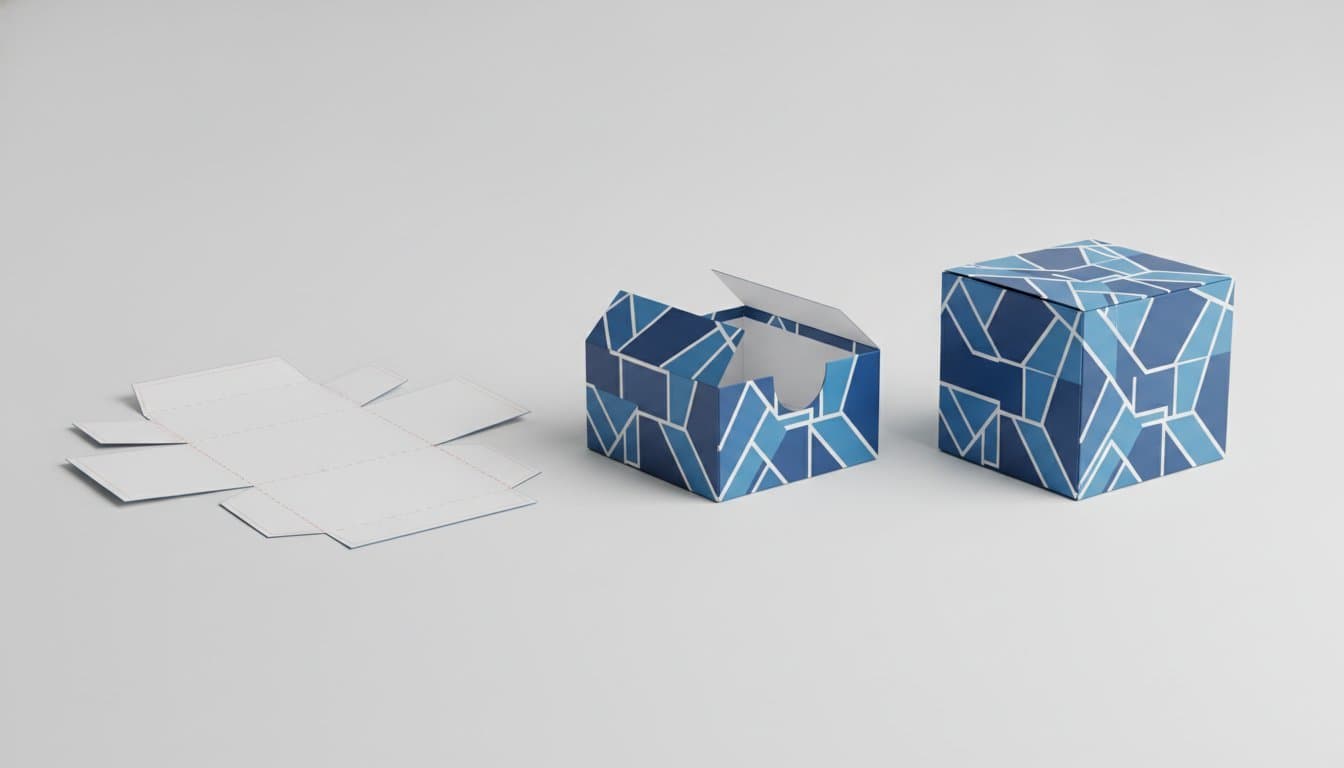
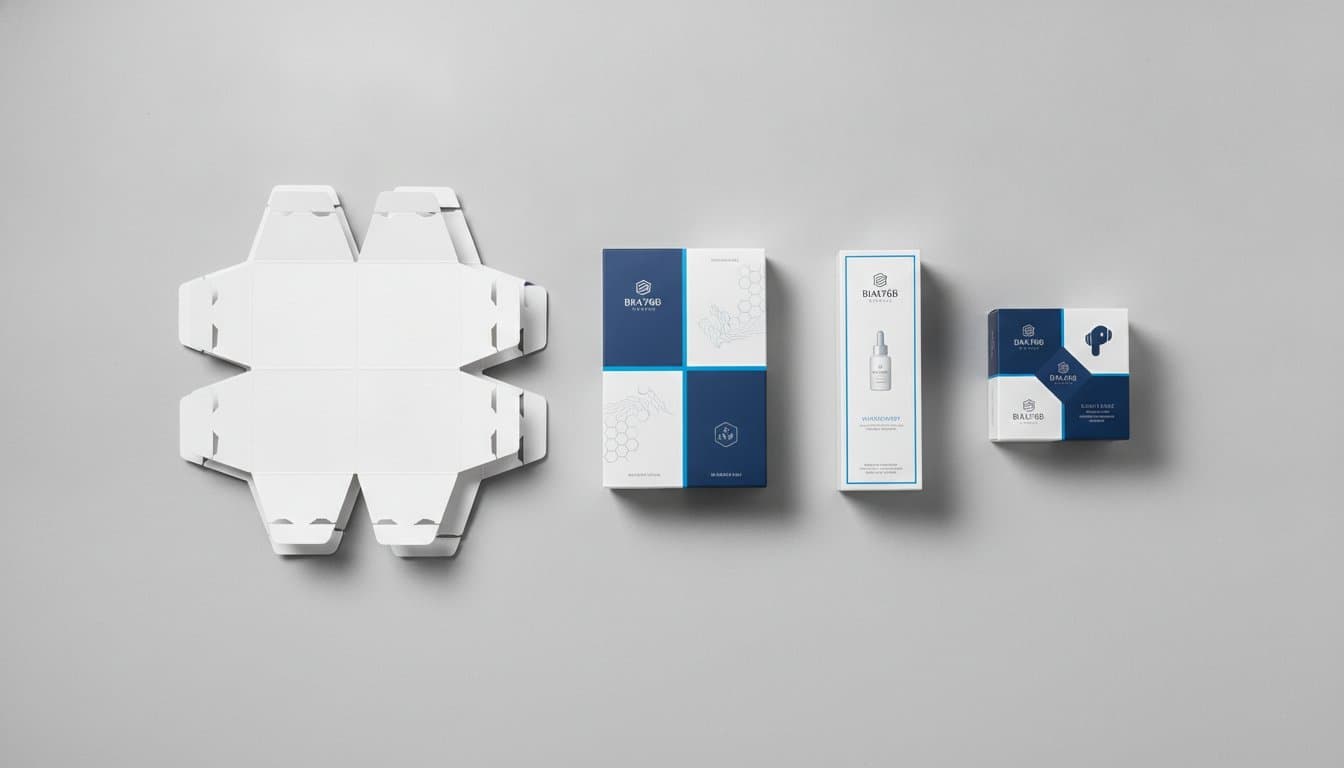
A folding carton is a box made from a single sheet of printed paperboard that is cut and creased flat, then folded into shape. It ships and stores flat, which keeps storage and freight costs down, and it gives you a large printed surface for your brand.
This guide explains how folding cartons work. You will see how a flat sheet becomes a carton, the common styles and how each one closes, how to choose between them, what shipping and storing flat really saves, and how an order runs from first quote to delivery. For sizing, read our folding carton size guide. For board, coatings and finishes in depth, read the paperboard guide.
We make folding cartons in several styles, and the folding carton page shows each one. This article gives you the background to pick the right one.
Key takeaways
- One sheet, cut and creased. A folding carton is paperboard (we offer 300 to 400gsm) that is printed, die cut and creased, then folded and glued.
- It ships flat. That saves storage and freight, but you or your packer fold and fill it, so factor in assembly time.
- The style decides how it closes. Tuck flaps, a locking bottom, glued ends, curved pinch ends and a sliding tray all feel different and carry different weights.
- It is retail packaging, not a shipping box. For parcels, put cartons inside a corrugated shipper or choose a mailer.
- Most cartons start at 100 units. Each product page states its own minimum, and production takes 5 to 7 working days after approval and payment.
What a Folding Carton Is, and What It Is Not
Three families of boxes cover most packaging jobs. A folding carton is a single layer of paperboard. A corrugated box has a fluted layer between two flat liners, which makes it stronger for shipping. A rigid box is a thick board wrapped in printed paper, which makes it a premium, fixed shape. The drawing below shows the three side by side.
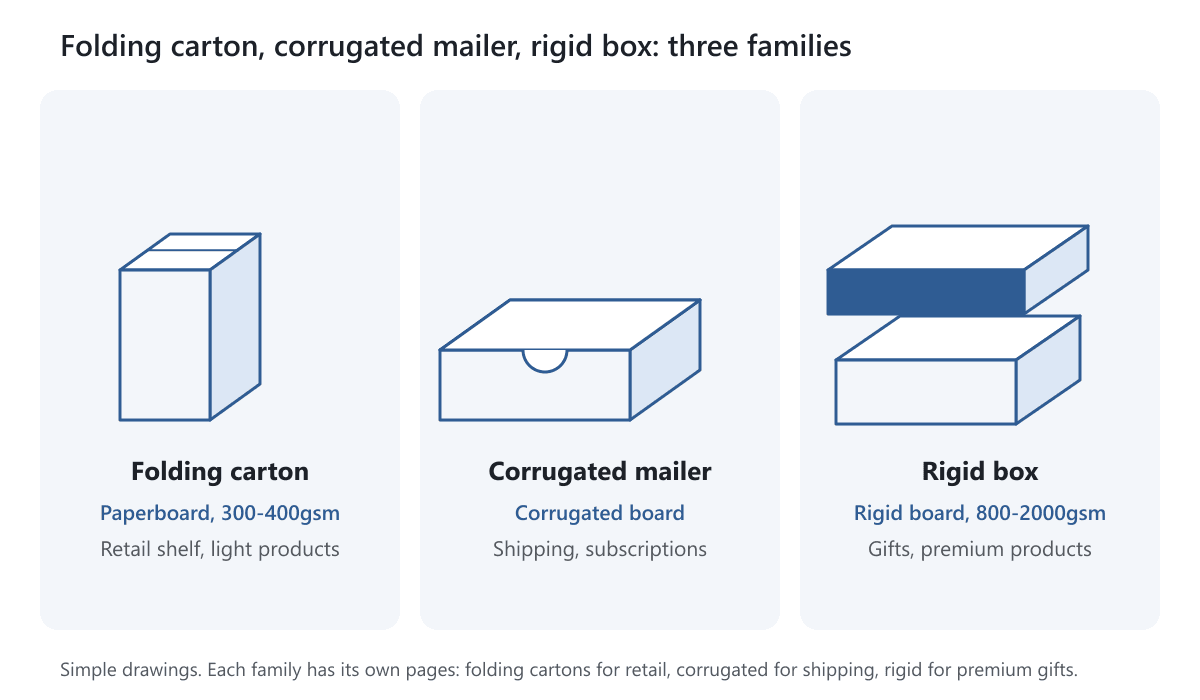
| Compare | Folding carton | Corrugated box | Rigid box |
|---|---|---|---|
| Material | Paperboard, 300-400gsm | Fluted board between two liners | Rigid board, 800-2000gsm, wrapped in printed paper |
| Strength | Holds its shape on a shelf | Built for shipping loads | Stiff and solid |
| Print surface | Smooth, good for detail | Printed on the liner | Printed paper wrap |
| Best for | Retail packs and light products | Shipping and subscriptions | Gifts and premium products |
| Our pages | Folding cartons | Corrugated | Rigid boxes |
People also say "paperboard box", "retail carton" or "tuck box" for the same family. A tuck box is one kind of folding carton, the kind that closes with tuck flaps. Our guide to rigid boxes and folding cartons compares the two in more detail.
Terms You Will See
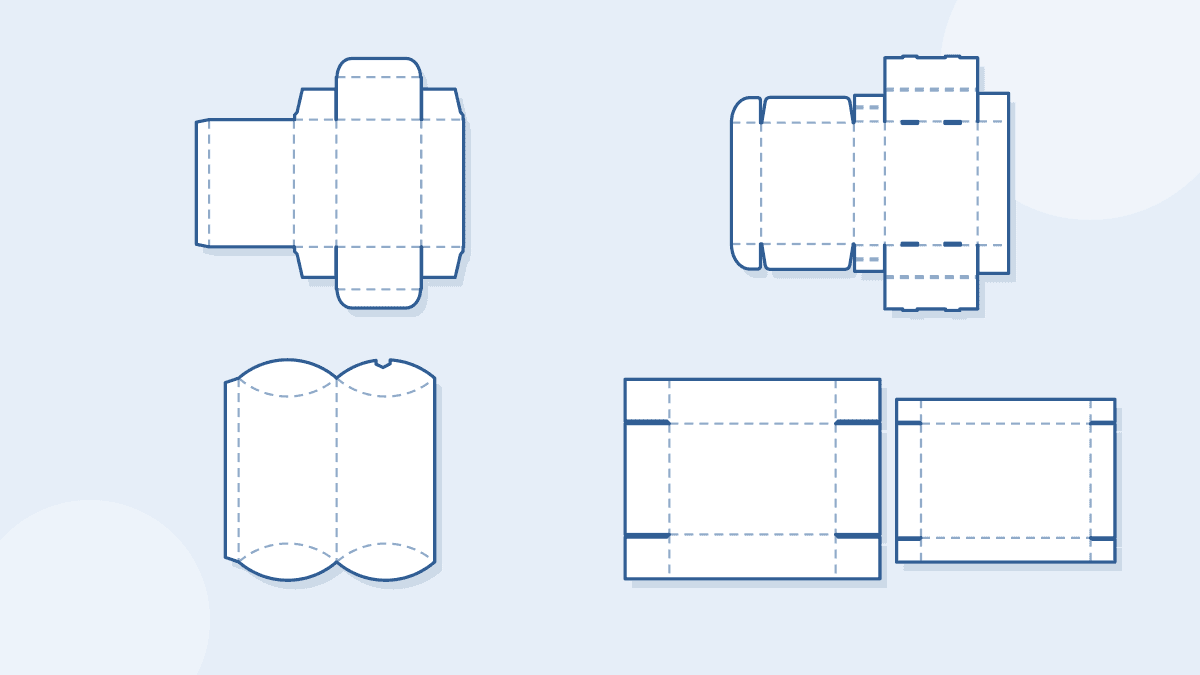
- Dieline. The flat outline of a carton, showing cut lines and fold lines. Our dieline help article explains it.
- Crease or score. A pressed line that lets the board fold cleanly.
- Die cut. Cutting the outline with a shaped steel blade.
- Tuck flap. The flap that folds into the carton to close an end.
- Dust flap. A small flap that closes the gap beside the tuck.
- Glue flap. The strip that is glued to join the side seam.
How a Flat Sheet Becomes a Carton
The steps below are a general picture of how folding cartons are made. The order and the glue step vary by style, and the details come from the printer.
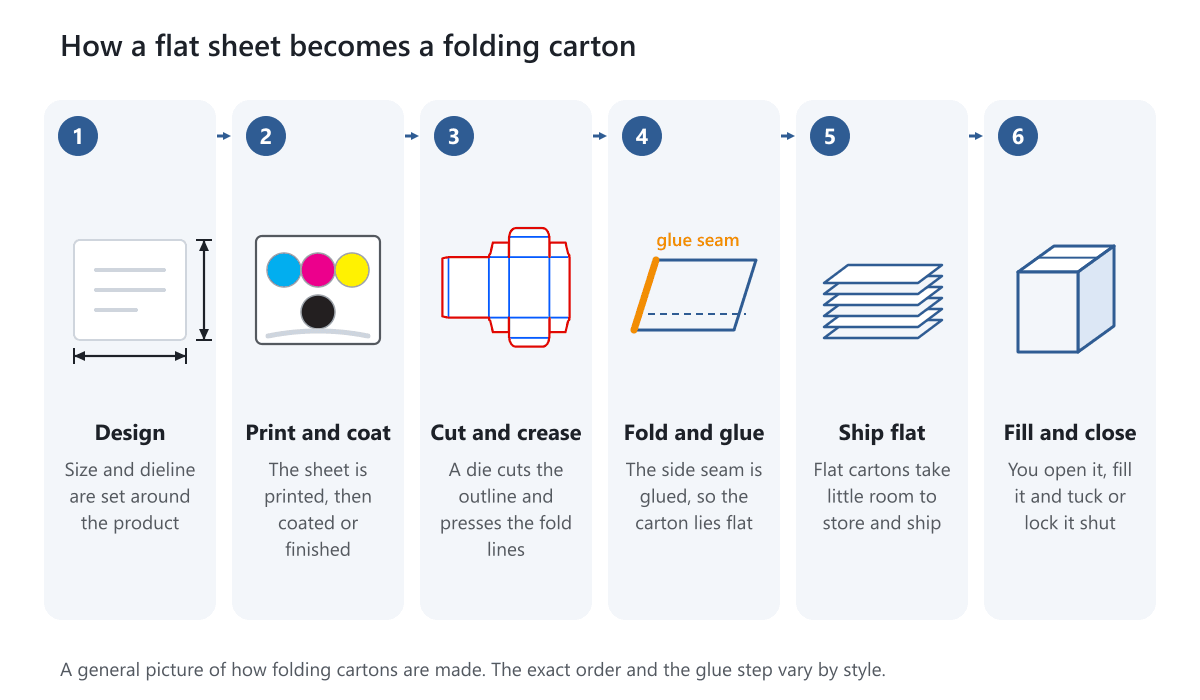
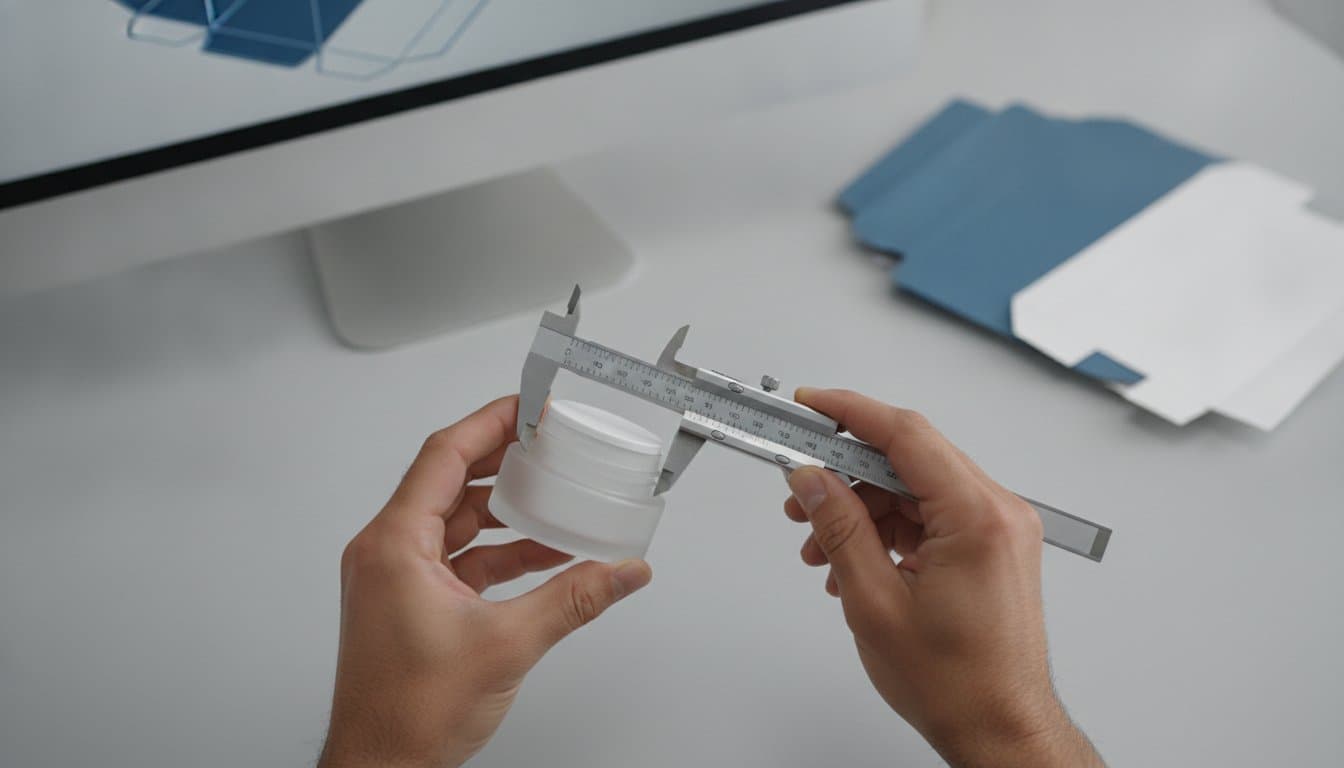
- Design. The size comes from your product, and the dieline is built around it. Our free dieline templates let you check a pattern first.
- Print and coat. The artwork is printed on the sheet, then coated or finished. Coating protects the print, and finishes change how the carton looks and feels.
- Cut and crease. A die cuts the outline and presses the fold lines, so the board bends where it should and not elsewhere.
- Fold and glue. For many styles, the glue flap is bonded to the opposite panel to make a flat tube. Other styles lock without glue.
- Ship flat. The folded tubes or flat sheets are packed in stacks, which is why cartons take little space to store and ship.
- Fill and close. You open the carton, fill it and close it with a tuck, a lock or glue.
Which of these steps you do yourself depends on the style. Some cartons need a little assembly, and others pop open and are ready to fill. Ask what applies to the style you choose.
Folding Carton Styles and How Each One Closes
The style is the structure of the carton. It sets how the carton opens, how much weight it carries and how it looks on a shelf. These six cover most retail jobs.
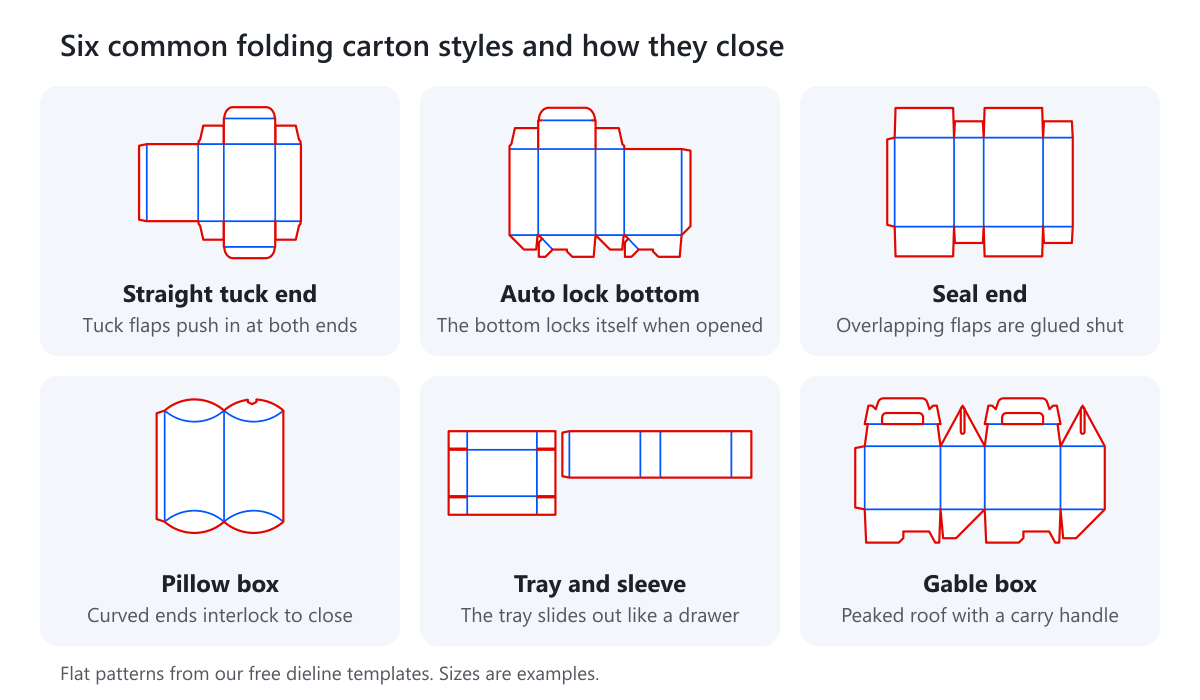
| Style | How it closes | Good for |
|---|---|---|
| Straight tuck end | Top and bottom flaps tuck in on the same side | Cosmetics, supplements, small retail goods |
| Reverse tuck end | Top and bottom flaps tuck in on opposite sides | The same products, often a lower material use on the sheet |
| Auto lock bottom | A pre-glued bottom pops up and locks, also called a crash lock | Heavier items and faster packing |
| Snap lock | The bottom tabs interlock without glue or tape | Weighty items stored flat |
| Seal end | Overlapping flaps with dust flaps, sealed at the ends | Products that need protection from dust |
| Pillow box | Curved ends interlock in one piece | Light gifts and small items |
| Display box | Opens to show the product on a counter or shelf | Spices, sauces, beauty products at the register |
| Tray and sleeve | A tray slides out of a sleeve like a drawer | Gifts and unboxing |
| Gable box | A peaked roof with a carry handle | Gifts, treats, event packs |
| Two piece foldable | A lid and a base that fold flat | Apparel and food, with a sturdier feel than a single carton |
Each style has its own page with sizes, options and a free dieline template. For the tuck family, which is the most common, our tuck box guide goes through every closure and feature.
Materials, Printing and Finishing in Brief
Folding cartons are made of white (SBS) or brown kraft paperboard, 300 to 400gsm. White board gives the brightest color. Kraft gives a natural look and suits simple one or two color designs, because the brown base shows through. We print in CMYK or Pantone. Pantone matches a specific brand color, and CMYK builds colors from four inks and is the usual choice for photos and many colors.
A coating protects the print from scuffs. Varnish is a thin coating, and lamination is a thin film that protects more. Finishes change the look: matte, glossy, satin or soft touch. Foil stamping, embossing or debossing, spot UV and window patching are available on top. Our paperboard guide explains each choice and its trade-offs, and the varnish and lamination article compares the two coatings.
For artwork, you need a dieline, a bleed (the extra color past the cut line) and a safe area. Our guide to what bleed is shows how, and we offer free design support if you want help.
How to Choose a Style
There is no best style, only the one that fits your product and how it is sold. Work through these questions in order.
- How heavy is the product? Light items suit tuck ends. Heavier ones, such as a glass jar, suit a lock bottom.
- How will the customer open it? A tuck flap is quick. A sliding tray feels like a gift. A lid and base feels sturdy.
- Will it hang or stand? A hang tab or hanger lets a carton hang on a peg. A display box stands on a counter.
- Does it need to be seen? A window cutout shows the product. Our tuck box page lists window, hang tab and other features.
- How fast will it be packed? Auto lock bottoms save time on a packing line, because the bottom is already formed.
- Does it ship on its own? A folding carton is not a shipping box. If it goes to the customer in the mail, plan an outer carton or choose a mailer.
- What is the budget? Simpler structures and fewer finishes cost less. Our cost guide shows what moves the price.
If two styles tie, order a sample of each. Holding the real thing settles the question faster than any list.
Shipping and Storing Flat
The biggest practical advantage of a folding carton is that it travels and sits flat. Here is a rough example. A carton of 100 x 50 x 150 mm has a volume of 750 cubic centimeters, so 1,000 assembled cartons take up about 0.75 cubic meters. Folded flat, the same carton is about 150 x 150 mm and a few millimeters thick, so 1,000 take roughly 0.05 to 0.07 cubic meters. That is about a tenth of the space or less. These figures are an example, and the exact numbers depend on the style and the board.
Flat cartons cost less to store and to move. They also mean you are doing the last bit of work. Someone has to open each carton, and for some styles close the bottom. Plan for that time on your packing line, and keep the cartons dry and flat until you use them.
One more point. Cartons ship flat, but the filled product does not. Pack filled cartons in a corrugated shipper, a mailer or a poly bag so the corners are protected in the mail. Our guide to choosing the right box for your product covers shipping choices.
An Ordering Walk-Through
Here is how an order usually runs with us, from first idea to delivery.
- Step 1: Choose a style and a rough size. Use the free dieline template to see the pattern, or just tell us what you sell.
- Step 2: Ask for a quote. Send the size, the quantity, the board and the finishes you want. We reply within 1 business day, and quotes include shipping to the US and Canada. Taxes and duties are not included.
- Step 3: Check a sample if you can. A structural sample is an unprinted prototype that shows size and form. The Samples page lists every type, and the Standard Sample Kit costs $50, shipping included.
- Step 4: Send artwork. We offer free design support, and we confirm the final dieline with you before printing.
- Step 5: Approve and pay. Production starts when artwork is approved and payment is received. It takes 5 to 7 working days. Larger or more complex orders can take longer, and we confirm the date in your quote. Delivery time is added on top.
- Step 6: Receive, store and fill. The cartons arrive flat. Store them dry, assemble a few and check the fit before you start a big batch.
Minimums depend on the product. Most folding cartons start at 100 units, and the product page states each one. If you are unsure, get a free quote and we will say what applies.
Special Cases
Fragile Products
Paperboard holds the shape of a carton but does not cushion a shock. Add an insert to hold a bottle or a jar in place, and ship the carton in a corrugated shipper. Our box inserts page has the options.
Food and Anything That Touches the Product
If the carton touches food, a cream or another product directly, the board, coating and inks must suit that use. We cannot state that for you in general. Tell us what the product is and which rules apply, and we confirm the options that fit. Many brands put the product in a primary pack, such as a bag or a jar, and use the carton as the outer pack.
Child-Resistant Packs
Child-resistant closure options are possible on some projects. Share the product and the regulations you need to meet, and we review what is available. Do not assume a standard carton meets any requirement.
Recycling and Sustainability
Paper-based cartons can be recyclable where local facilities accept them. Plain paperboard without plastic film is generally the easiest to recycle. Laminations, foils, windows and some glues can make recycling harder, and rules differ by town. Recycled stock options are available on request. Our guide to eco-friendly packaging materials goes through the choices.
Common Mistakes
- Choosing a style by looks alone, then finding it does not hold the weight.
- Treating a carton as a shipping box.
- Skipping a sample and finding the fit is wrong after thousands are printed.
- Designing artwork without a bleed, which leaves thin white edges.
- Ordering more finishes than the budget needs. A simple coating often does the job.
- Forgetting that cartons need space and time to assemble.
- Not telling the supplier how the carton will be packed or shipped.
Start With a Style and a Size
If you know the product, you can pick a style from the table above, check the size with our free dielines and ask for a quote. If you are not sure which style fits, tell us what you are packing, how it will be sold and the quantity, and we will recommend one. Free design support is included, and so is a reply within 1 business day. Get a free quote to begin.
Frequently Asked Questions
What is a folding carton?
A folding carton is a box made from one sheet of printed paperboard that is cut, creased and folded into shape. It ships and stores flat. It is a common choice for retail products such as cosmetics, supplements, candles and soap.
What is the difference between a folding carton and a corrugated box?
A folding carton is a single layer of paperboard, made for the retail shelf and for print quality. A corrugated box has a fluted layer between two liners and is made to take shipping loads. See our corrugated packaging page for the shipping side.
Can I ship products in a folding carton on its own?
Usually not. A folding carton protects and presents the product, but it is not built for a parcel network. Pack filled cartons in a corrugated shipper, a mailer or a poly bag.
What board thickness do folding cartons use?
Our folding carton board is typically 300 to 400gsm, depending on the size of the carton. Heavier products and bigger cartons usually need more. Read the paperboard guide for how to choose.
What is the minimum order for folding cartons?
Most folding cartons, including tuck boxes, start at 100 units. Each product page states its own minimum, rigid boxes have a low minimum and shipping boxes start at 50 units. Ask for a quote and we confirm yours.
How do folding cartons arrive?
Folding cartons are shipped flat, so they take little space to store. Depending on the style they arrive glued at the side seam or as flat pieces. Some assembly is usually required.
How long does it take to get custom folding cartons?
Production takes 5 to 7 working days after artwork is approved and payment is received. Larger or more complex orders can take longer, and we confirm the date in your quote. Delivery time is added on top. See our turn around time article.
Written by the PacksDo Team
We make custom printed packaging, from boxes and mailers to bags, labels and inserts. Questions about this guide? Ask us.