In this article
- 1Packaging Cost as a Share of Your Price
- 2What Makes Up the Cost of a Box
- 3Open Box Size: Why the Flat Size Drives Cost
- 4Material Selection
- 5Printing, Finishes and Design Complexity
- 6Order Volumes and Economies of Scale
- 7Shipping and Logistics
- 8Product Fragility
- 9Marketing and Brand Value
- 10A Simple Way to Set Your Packaging Budget
- 11Ways to Lower Packaging Cost Without Hurting Your Brand
- 12Putting It Together
Packaging is part of what each unit costs you, just like materials and labor. The box, its print and finish, the shipping and the storage all go into your price, so it pays to work out the cost per unit early and check it against your selling price. This guide shows what drives that cost, including the size of the box laid out flat, which many buyers overlook, and how to keep it in line with your packaging design.
Key takeaways
- Packaging is a unit cost. Add up the box, print, finishes, insert and shipping per unit, and divide by your selling price to see the share.
- Open size drives price. A bigger flat pattern uses more board, prints more area and may fit fewer boxes on a sheet.
- Material, print, finishes, structure and quantity each move the price, so each is also a place to save.
- Shipping flat costs less to ship and store than shipping boxes assembled.
- Test before you commit. A sample shows the fit, the print and the feel before a full order.
Packaging Cost as a Share of Your Price
There is no single right percentage. A low-priced item usually needs simple, inexpensive packaging, while a premium product can carry a box that costs a larger share of the price because the box is part of what the customer is buying. What matters is that you know your own number. Divide the packaging cost per unit by your selling price:
| Selling price | Packaging cost per unit | Packaging as a share of price |
|---|---|---|
| $20 | $0.80 | 4% |
| $50 | $3.50 | 7% |
| $120 | $12.00 | 10% |
These figures are examples to show the math, not typical costs or a quote. For real numbers, see the starting price and the minimum order on each product page, for example tuck boxes or mailer boxes. Include shipping and storage in your cost per unit, because a cheap box that costs a lot to ship is not cheap.
What Makes Up the Cost of a Box
Most of the price of a custom box comes from a handful of choices. Each one is also a place where you can save money:
| Cost factor | What it means | How it moves the price |
|---|---|---|
| Open size | The size of the box laid out flat | A larger flat pattern uses more board and prints more area |
| Material | Paperboard, corrugated or rigid board, and its thickness | Thicker and more specialized board costs more |
| Printing | CMYK or Pantone colors, one side or both | More colors and more printed area add cost |
| Finishes | Matte, glossy, satin or soft touch coating, foil, embossing, spot UV | Each finish adds a production step |
| Structure | A standard style or a custom shape | Custom shapes add tooling and design time |
| Quantity | How many units you order | Setup is spread over more units, so the price per unit falls |
| Shipping | Weight and size, and whether the box ships flat or assembled | Flat shipping takes less room and costs less to ship |
Open Box Size: Why the Flat Size Drives Cost
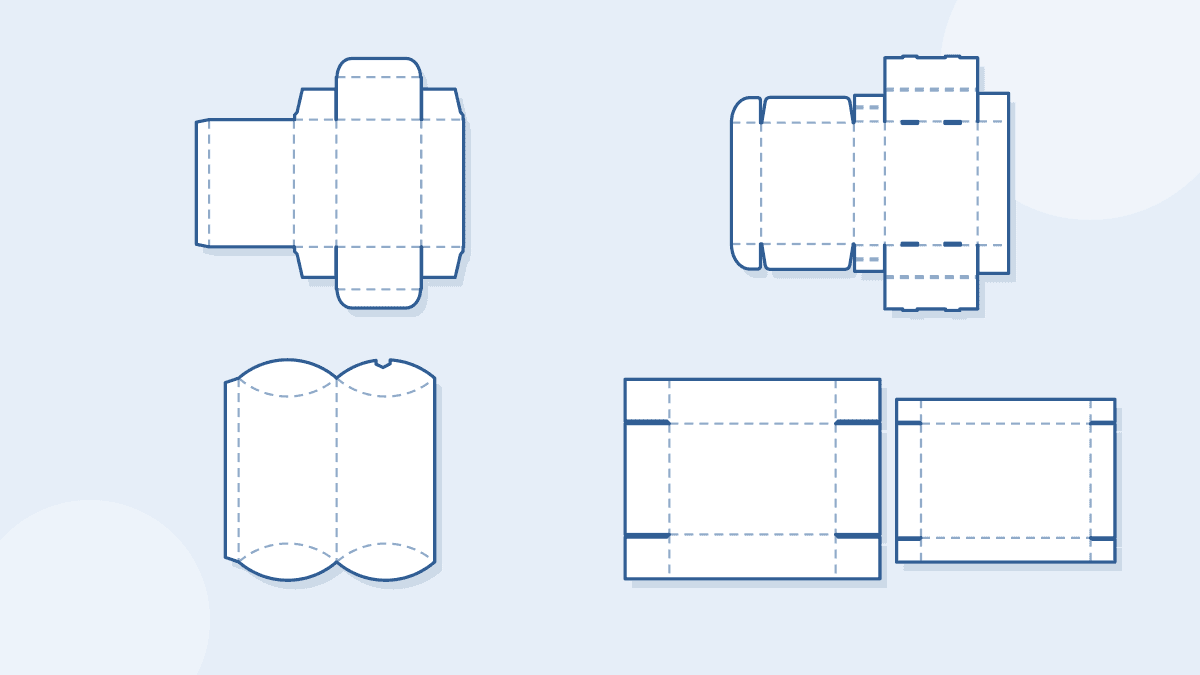
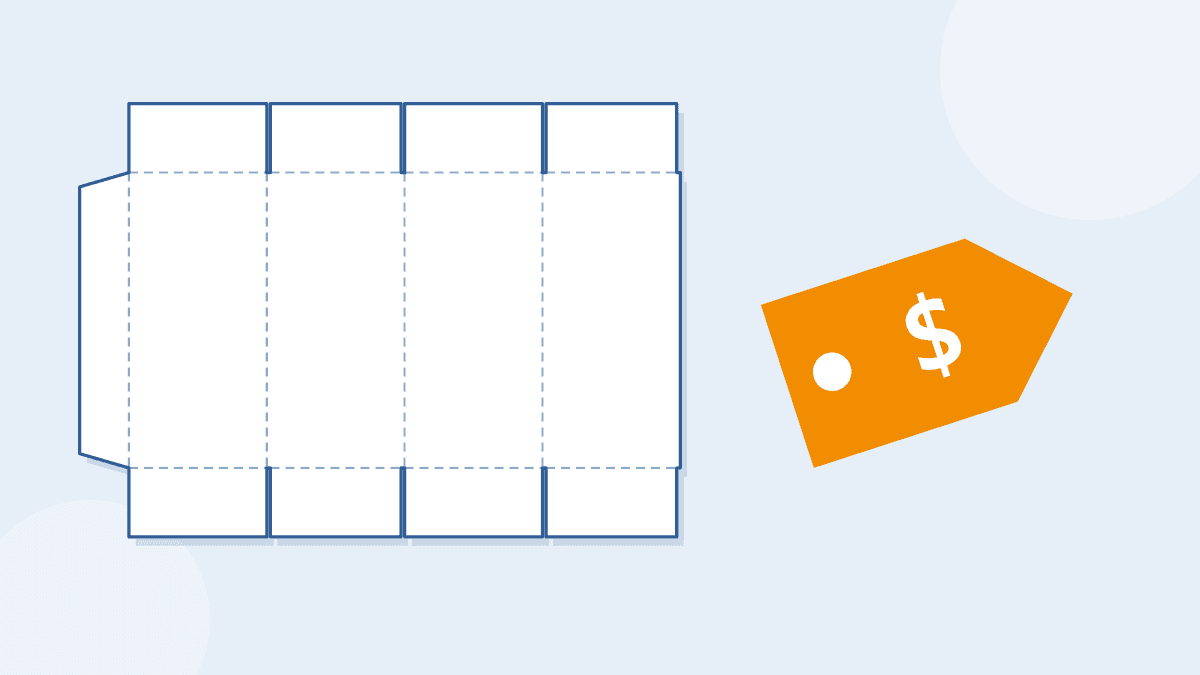
Every box has two sizes. The closed size is the finished box you hold, written as length, width and height. The open size (also called the flat size) is the box unfolded into a single flat pattern, with every panel, flap and tab laid out. Your artwork, your board and your cutting die are all based on the open size, so it is the size that really drives the price.
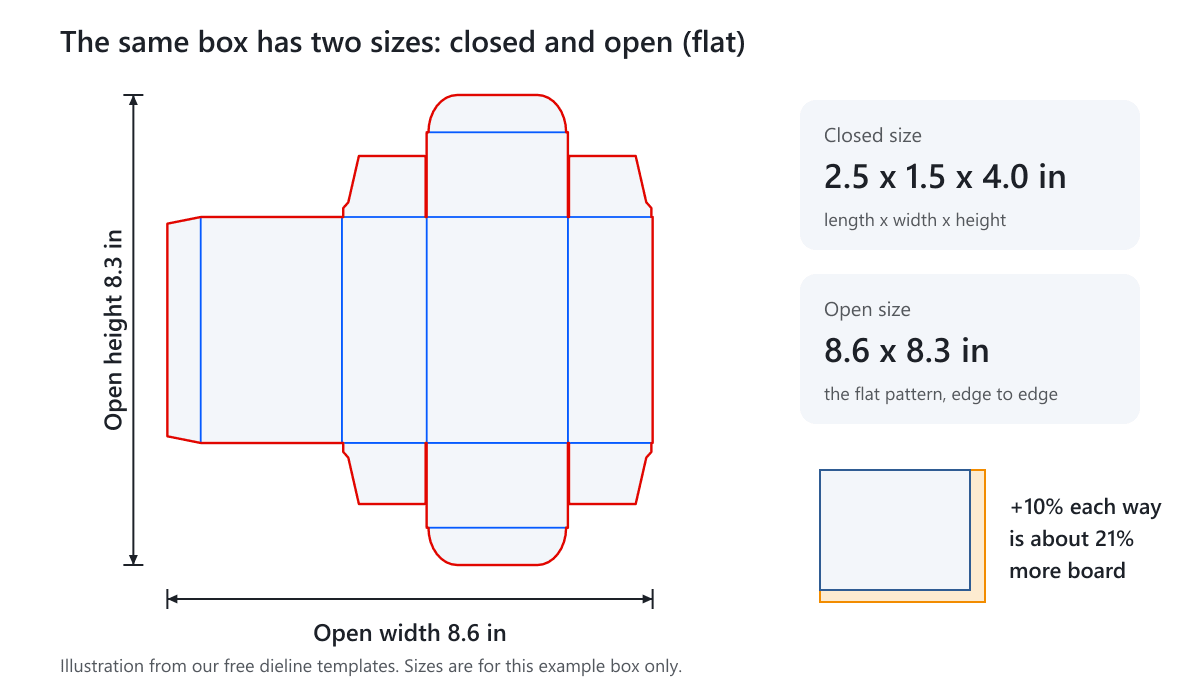
Board is bought and printed in large sheets, and the boxes are cut out of them. That has three effects on your cost:
- Board area. The bigger the flat pattern, the more board each box uses. A pattern that is 10% larger in both directions uses about 21% more board, not 10%.
- Boxes per sheet. Printers fit as many flat patterns as they can on each sheet. A small change in one dimension can mean one fewer box per sheet, and the leftover board around the patterns is paid for as well.
- Print and finish area. Ink, coating and finishes cover the whole open surface, including the inside of flaps if you print there, so a larger open size means more to print and finish.
Two boxes with the same closed size can have very different open sizes. A tuck end box is a simple fold with a few flaps. A mailer with dust flaps or a lid has more panels and uses more board for the same inside volume. Extra tabs, locks and double walls all add flat area.
How to work with open size:
- Size the box to the product. Extra space inside makes every panel larger. Follow our guide to measuring box dimensions and leave only the room the product and any insert really need.
- Compare styles by flat size, not by looks. When two styles can hold your product, ask for the open size of each. A simpler structure often has a smaller open size.
- Look at the pattern. Open our free dieline templates, choose a style and type your closed size. The red cut line is the outline of the open size. Try a few styles and see how the pattern changes. You can tick "Add size labels to the file" to mark the sizes on the download.
- Allow for bleed. Artwork has to run a few millimeters beyond the cut line, so the print area is a little larger than the open size. Our guide to bleed in packaging explains how much.
- Ask us. When you request a quote, tell us the closed size and style. We confirm the final dieline with you before printing, and you can ask for the open size at that point. Our packaging dieline guide explains the file.
Material Selection
The board you choose has a direct effect on cost. Thin paperboard is the lightest and least expensive choice for folding cartons. Corrugated board adds strength for shipping and costs more. Rigid boxes use heavy board, 800 to 2000gsm, wrapped in printed paper, which gives a premium feel and a higher price. Recycled stock options are available on request. Pick the lightest board that still protects the product, because every step up in thickness or strength adds to the price.
Printing, Finishes and Design Complexity
Custom packaging costs more when it has more to produce. Printing in CMYK colors suits full-color artwork, while Pantone spot colors are chosen to match a brand color exactly. Finishes such as matte, glossy, satin or soft touch coating, foil stamping, embossing and spot UV make a box look premium, and each one is an extra production step. A custom shape such as those on our custom shaped boxes page needs its own tooling, so it costs more than a standard style.
You do not have to choose between a good-looking box and a sensible budget. Put the finish where the customer will see it, such as the logo on the lid, and keep the rest simple. A sample lets you check the structure and the print before you commit to a full order.
Order Volumes and Economies of Scale
Quantity changes the price per unit. Setup, plates and dies cost the same whether you order a small run or a large one, so a bigger order spreads that cost over more boxes. Smaller runs have a higher price per unit, which affects your pricing and your margin. Minimum orders depend on the product and range from 50 to 1,000 units, so check the product page. The "from" price on each page is a starting price per unit that falls as the quantity grows, and the final price comes with your quote.
Ordering more only makes sense if you will use the boxes. A larger order ties up cash and storage space, and a design change can leave you with boxes you cannot use.
Shipping and Logistics
Packaging decisions affect shipping through the size, the weight and whether the box travels flat. A box that ships flat, such as our two piece foldable boxes or a collapsible rigid box, takes far less space in a carton than one delivered assembled, which lowers freight and storage costs. Lighter board costs less to ship than heavy board, and a box that fits the product closely avoids paying for air. Our quotes include shipping, so you see the delivered price.
Product Fragility
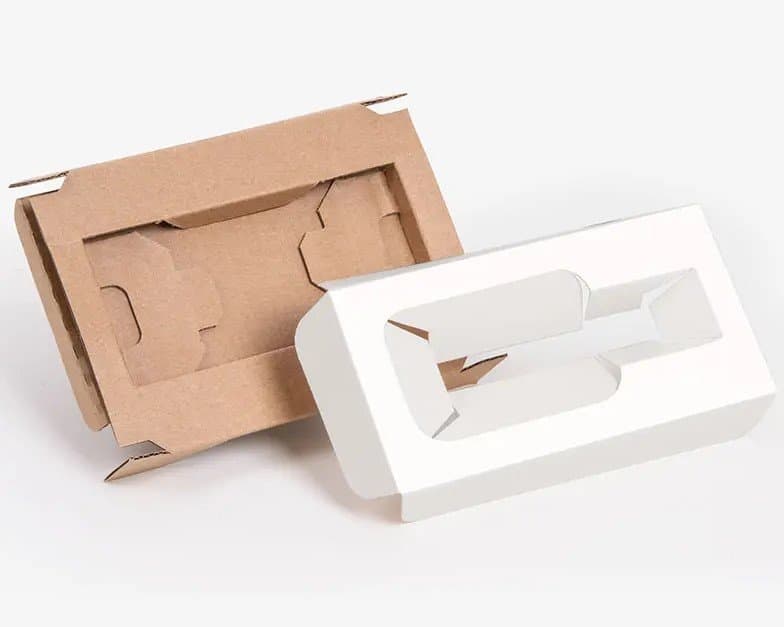
Fragile products need more protection, and protection costs money. Glass, ceramics and electronics may need a stronger board, an insert or dividers to keep items from touching. Box inserts and box dividers add a little to the box cost, but a damaged product costs far more in refunds and replacements.
Marketing and Brand Value
Packaging is also marketing. Premium packaging can justify a higher price for a luxury item, and the unboxing experience affects reviews and repeat orders. A lower-priced product usually needs simpler packaging to stay competitive. Decide how much of the box budget should go to protection and how much to presentation, and reflect your brand in both.
A Simple Way to Set Your Packaging Budget
- Add up the cost per unit. Include the box, print and finishes, any insert, shipping and storage.
- Compare it with your selling price and margin. Decide the share of the price you are willing to spend on packaging.
- Check the open size. Ask for it, or measure the flat pattern from a free dieline, and see if a smaller size or a simpler style does the job.
- Test before you commit. Order a Standard Sample Kit (it costs $50, shipping included) or a sample of your design, and check the fit, the print and the feel.
- Get a quote at two quantities. Seeing the price at two quantities shows how much the unit price drops as you order more.
Ways to Lower Packaging Cost Without Hurting Your Brand
- Right-size the box so no board is wasted.
- Choose a simpler structure with fewer flaps and locks.
- Use fewer colors or limit the finish to one area.
- Pick the lightest board that protects the product.
- Choose a box that ships flat when you can.
- Plan your quantity so you order enough to lower the unit price but not more than you will use.
Putting It Together
Packaging cost is the sum of many small decisions: the open size, the board, the print, the finish, the quantity and the shipping. When you understand each one, you can set a price that protects your margin and still gives your customer a good first impression. If you are comparing options, see our guide to choosing the right box for your product, browse all custom packaging, or get a free quote and tell us what you are making. We reply within 1 business day.
Frequently Asked Questions
What percentage of a product's price should packaging be?
There is no fixed rule. Divide your packaging cost per unit, including shipping and storage, by your selling price, and decide what share fits your margin. Low-priced items usually need simple packaging, while premium products can spend more because the box is part of the product.
What is the open size of a box?
The open size, also called the flat size, is the box unfolded into one flat pattern with all its panels, flaps and tabs. It differs from the closed size, which is the length, width and height of the finished box. Board, printing and the cutting die are all based on the open size.
Does open size affect the price of a box?
Yes. A larger flat pattern uses more board, prints more area and may fit fewer boxes on each sheet. For example, a pattern that is 10% larger in both directions uses about 21% more board. Two styles with the same closed size can have different open sizes, so compare them.
How can I find the open size of my box?
Open one of our free dieline templates, choose your style and type your closed size. The red cut line is the outline of the flat pattern. You can also ask us for the open size when you request a quote, and we confirm the final dieline with you before printing.
How can I lower my packaging cost?
Right-size the box, choose a simpler structure, limit colors and finishes, use the lightest board that protects the product, pick a box that ships flat, and order a quantity that lowers the unit price without leaving you with stock you will not use.
Does shipping a box flat save money?
Usually it does. A box that ships flat, such as a two piece foldable box or a collapsible rigid box, takes less room in a carton than an assembled box, which lowers freight and storage costs. Our quotes include shipping, so you see the delivered price.
Written by the PacksDo Team
We make custom printed packaging, from boxes and mailers to bags, labels and inserts. Questions about this guide? Ask us.