In this article
A product insert is anything placed inside a package alongside the product. The term has two meanings: a marketing insert, such as a thank-you card, coupon or care guide, and a protective insert, a shaped piece of cardboard, foam, molded pulp or plastic that holds the product in place inside the box.
People search for the phrase meaning one or the other, so this guide explains both: what each is for, the materials and sizes, how to choose and the mistakes to avoid. If you want the deeper guide to protective inserts, read our packaging inserts guide. For printed cards and flyers, see our custom printed cards, and for protective inserts see our box inserts.
Key takeaways
- Marketing inserts sell and inform. Cards, coupons, guides and samples that build loyalty and repeat orders.
- Protective inserts hold and protect. Cardboard, foam, molded pulp or plastic trays shaped around the product.
- Most brands use both. A tray holds the product, and a card on top says thank you.
- Fit decides success. A protective insert needs a cavity slightly bigger than the product, and a marketing card needs to be slightly smaller than the box.
- Material changes cost, strength and recycling. Cardboard and molded pulp are paper-based; foam and plastic are harder to recycle.
- Our box inserts start from 100 units, and printed cards from 500 units.
The Two Meanings of Product Insert
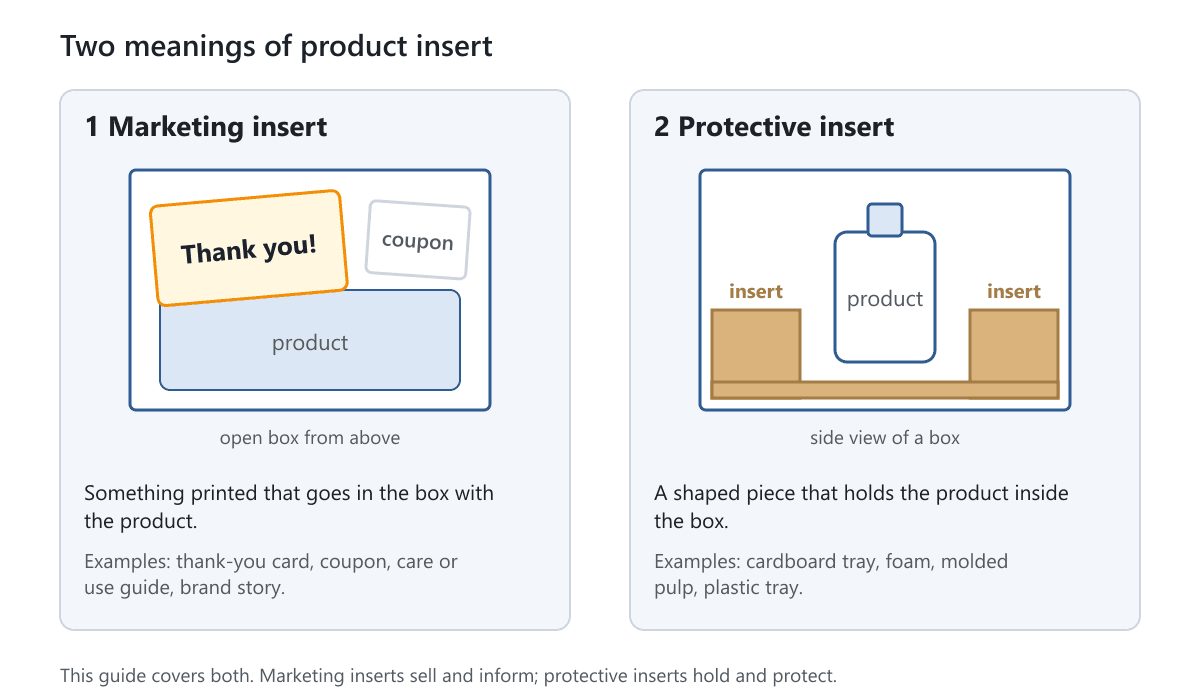
The words are the same but the jobs differ, so it helps to be clear which one you need.
| Marketing insert | Protective insert | |
|---|---|---|
| What it is | A printed card, flyer, guide or sample | A shaped piece that holds the product |
| Main job | Thank, inform, bring the customer back | Keep the product still and safe |
| Typical materials | Paper or card stock | Cardboard, foam, molded pulp, plastic |
| Who sees it | The customer, on opening | The customer sees it, but it is mostly structural |
| Our product page | Cards and flyers | Box inserts and box dividers |
Marketing Inserts
A marketing insert is a printed piece that goes in the box with the product. It is cheap, light and often the most personal part of the unboxing. A hang tag is a related item that hangs from the product instead of sitting in the box: see what a product hang tag is.
Common Types
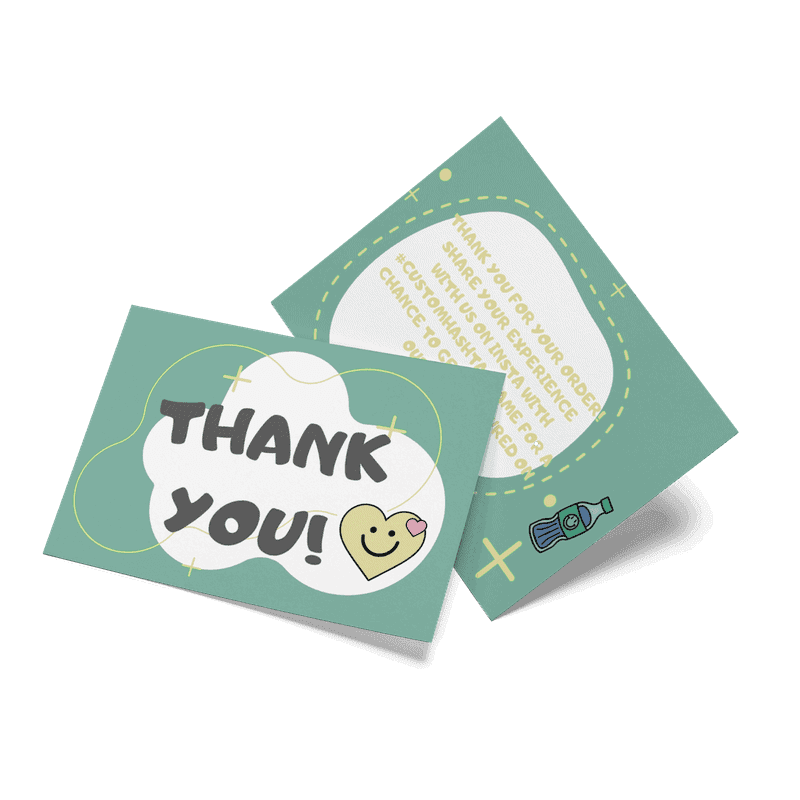
- Thank-you cards. A short note that shows gratitude and builds trust. A card with a hand-written feel is remembered.
- Coupons and discount codes. An offer for the next order, which encourages repeat purchases.
- Product guides. Short steps for using or caring for the product, so customers feel confident.
- Care and warranty cards. Instructions and the details a customer needs to keep.
- Brand story cards. A few lines about who makes the product and why.
- Samples and freebies. A small item that introduces another product.
- QR cards. A code that links to a video, a review page or a social account.
Our printed cards come as standard flat cards, header cards (made to hang on a bag, with hang holes) and flyers. They are printed in CMYK or Pantone on white or kraft paperboard, and standard card thickness runs from 200 to 500 gsm. Flyers use thinner paper. Cards start from 500 units.
What Makes a Marketing Insert Work
- Relevant. A care guide for a product that needs care, a coupon for a product people reorder.
- Short. A line or two and one action. Customers read inserts quickly.
- One call to action. Use a code, scan a QR, follow a page, not all three.
- On top. Put it where it is seen when the box opens.
- Branded to match. The same colors, type and finish as the box and the product.
- Sized to the box. A card should be a little smaller than the inside of the box, so it sits flat. About 1/8 inch smaller in each direction is a safe start.
Legal and platform rules matter if your insert makes an offer or a claim. For example, terms for a discount should be clear, and some online marketplaces limit what you can put in a package. Check the rules of the places you sell.
Protective Inserts
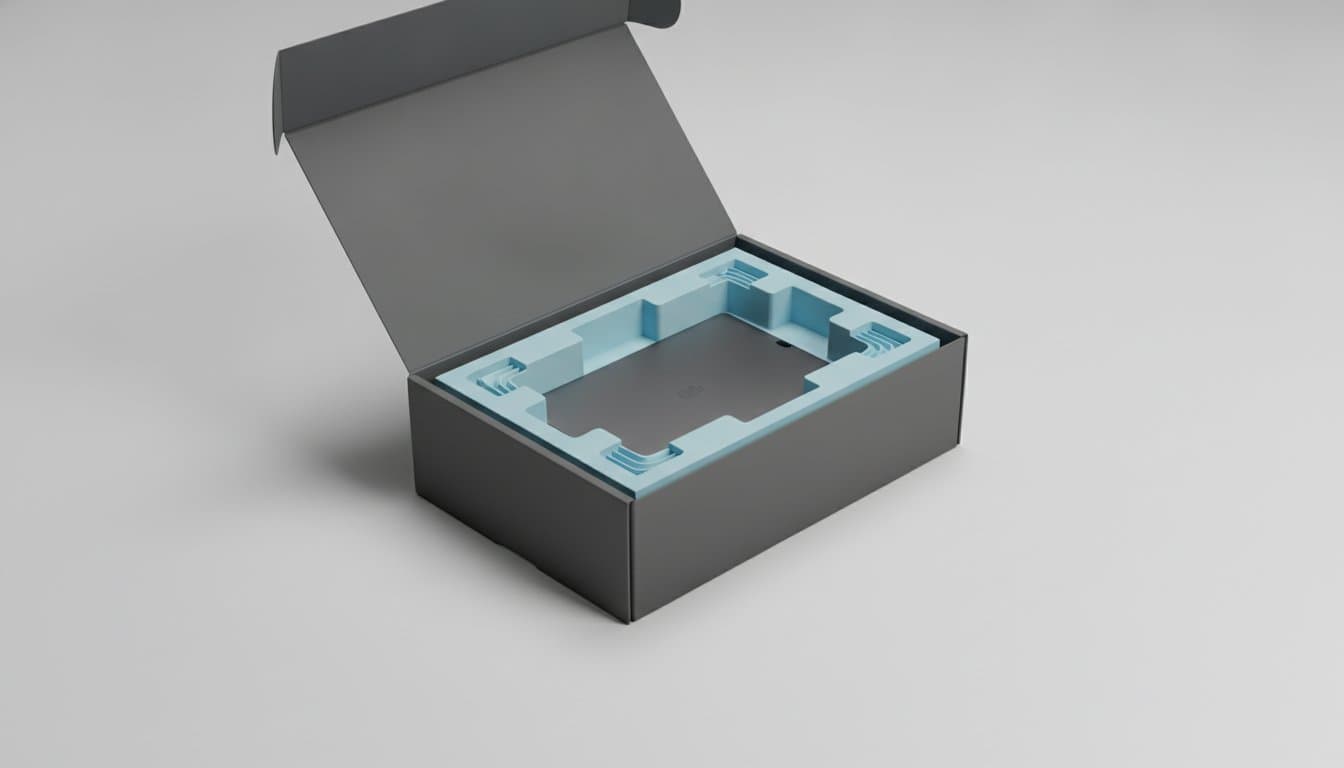
A protective insert is a shaped piece that sits inside a box and holds the product in a fixed position. It stops the product sliding, knocking against the box or other items, and it can also present the product neatly.
What a Protective Insert Does
- Holds the product still, so it does not move in transit.
- Separates items, so glass, jars or parts do not touch.
- Cushions, to absorb a knock.
- Presents the product in a tidy, staged layout for gifts and sets.
- Fills empty space, so a box does not rattle.
Materials
| Material | What it is | Good for | Keep in mind |
|---|---|---|---|
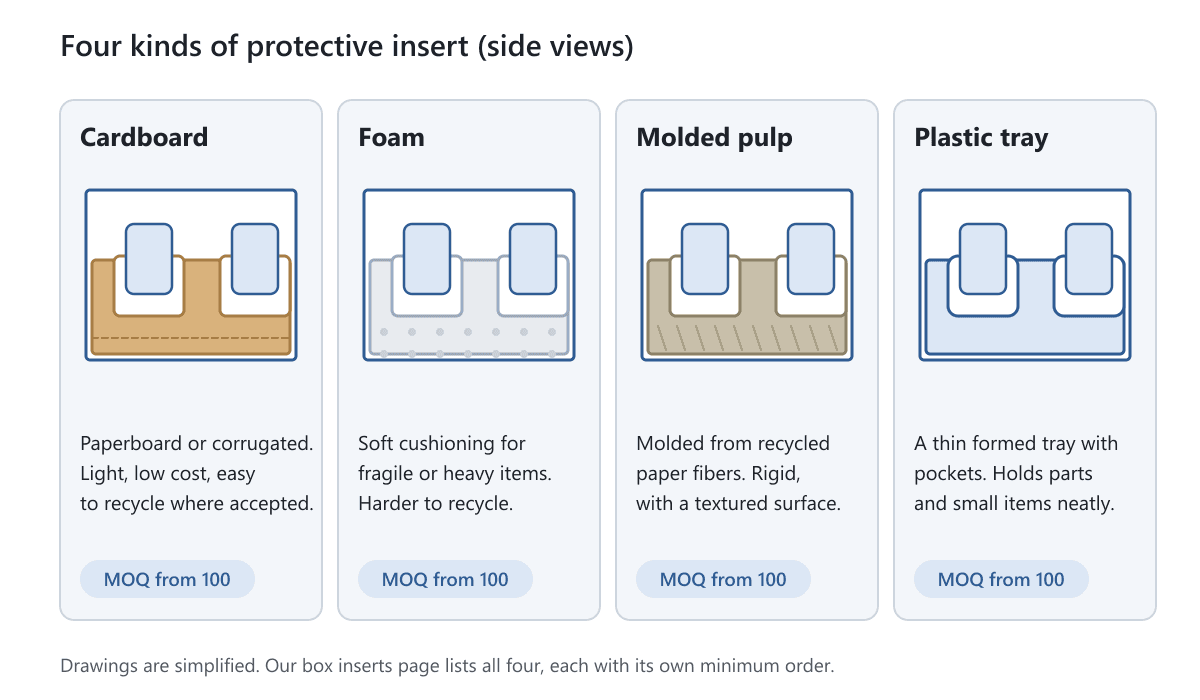
| Paperboard | Paper-based, 300 to 400 gsm, not corrugated | Light, not delicate items | Lower strength |
| Corrugated cardboard | Wavy-layered board; E-flute is about 1.2 to 2 mm, B-flute about 2.5 to 3 mm | Weighty, delicate or shipped items | Thicker walls take space |
| Foam | Soft cushioning foam | Fragile items, high-impact protection | Harder to recycle |
| Molded pulp | Molded from recycled paper fibers | Bottles, jars, electronics | Textured look; set tooling |
| Plastic tray | A formed plastic tray with pockets | Small parts, cosmetics, kits | Plastic is harder to recycle |
All four are listed on our box inserts page, each with its own minimum order, starting from 100 units. Paper-based inserts are generally the easiest to recycle where facilities accept paper, while foam and plastic are harder to recycle. Our guide to eco-friendly packaging materials compares them, and recycled stock options are available on request for paper-based inserts.
Common Insert Structures
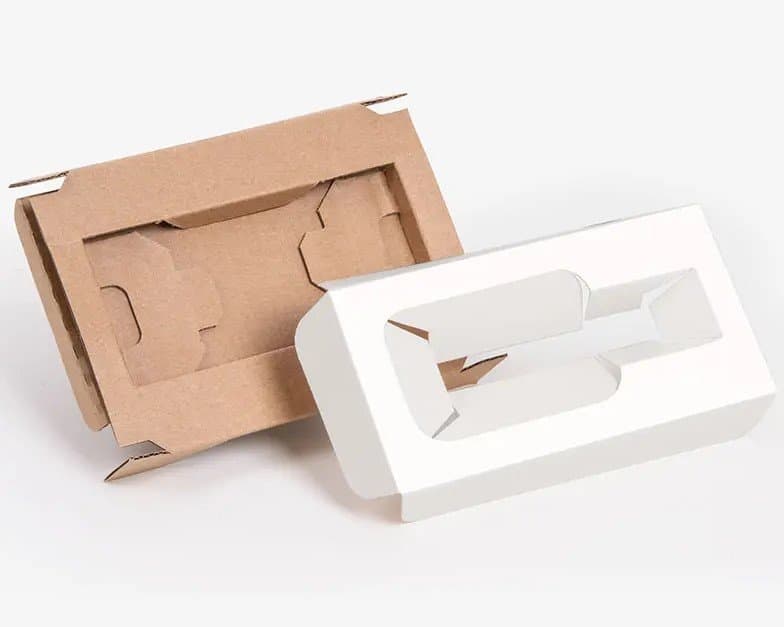
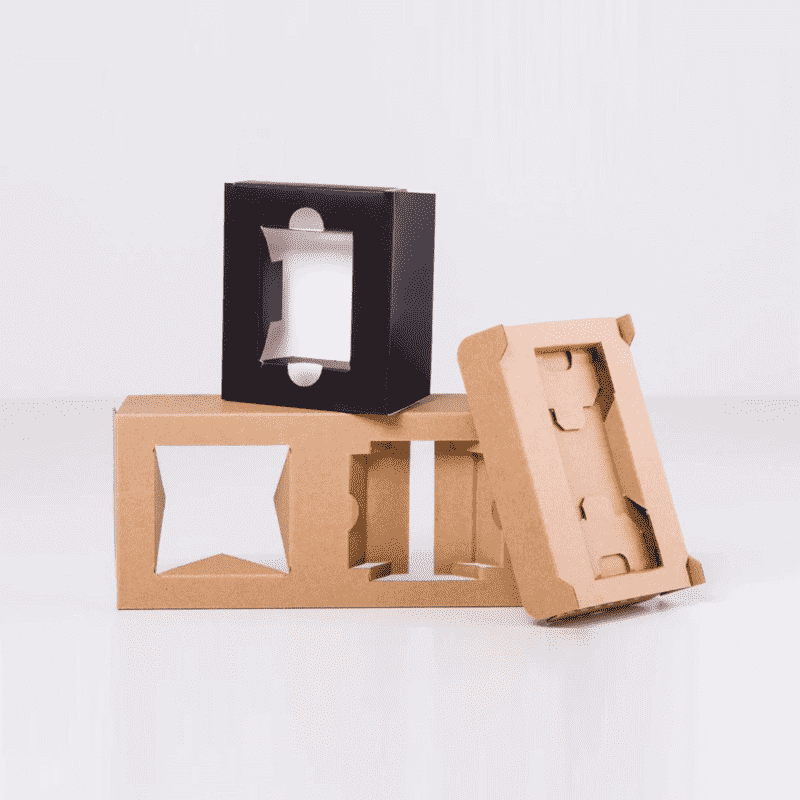
Our paper and cardboard inserts come in two common structures. A box insert without backing sits at the bottom of the box and suits products of similar size. A box insert with backing gives items extra lift and support. For several items in one box, box dividers create compartments, either from one folded piece or from multiple pieces, which suits equal-sized compartments across several rows.
How to Size a Protective Insert
The insert has two sizes to get right: the outside, which fits the box, and the cavity, which fits the product. Both start from measurements. Our guide to measuring the dimensions of a box shows how, and note that the box's inside size is the one the insert must fit.
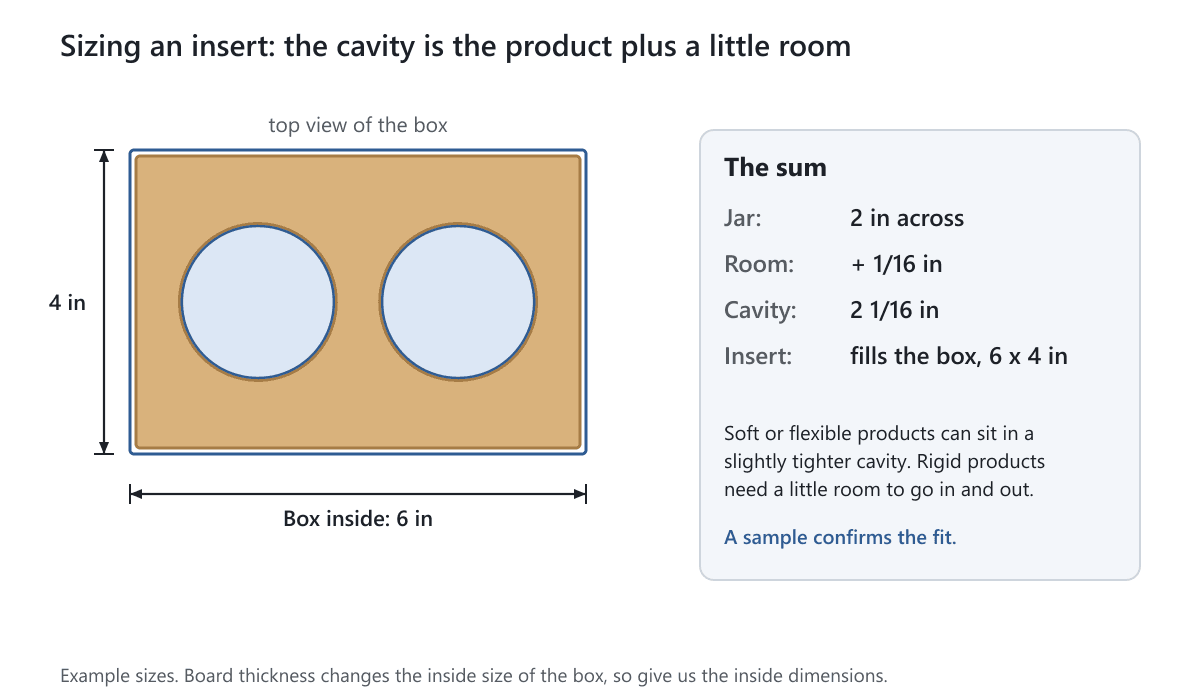
- Outside: the insert fills the inside of the box, usually with a tiny allowance so it drops in easily.
- Cavity: the product size plus a little room. For a rigid jar of 2 inches, a cavity of about 2 1/16 inches is a common starting point.
- Depth: how far the product sits in the cavity decides how well it is held. Deeper holds more but needs a taller box.
- Soft or flexible products can sit in a slightly tighter cavity. Rigid products need a little room to go in and out.
These numbers are starting points, not rules. The way to confirm the fit is a structural sample, an unprinted prototype that shows the size and form. See our samples page for what is available.
How to Choose the Right Insert
Start with what the insert has to do, then work through the questions below.
- What is it for? Marketing, protection or both.
- How fragile and heavy is the product? Glass and heavy items need stronger inserts than a light box of tea.
- Will it ship or sit on a shelf? Shipped products need more holding power and a stronger outer box.
- How many items per box? Several items call for dividers or a multi-cavity insert.
- What look do you want inside? A tray with a printed or white finish looks more finished than bare board.
- What does recycling mean to you? Paper-based inserts suit brands that want a paper-only pack.
- How many will you order? Our inserts start from 100 units, and cards from 500.
| Product | Protective insert to consider | Marketing insert to pair |
|---|---|---|
| Candle jar | Cardboard tray with a round cavity | Burn and care card |
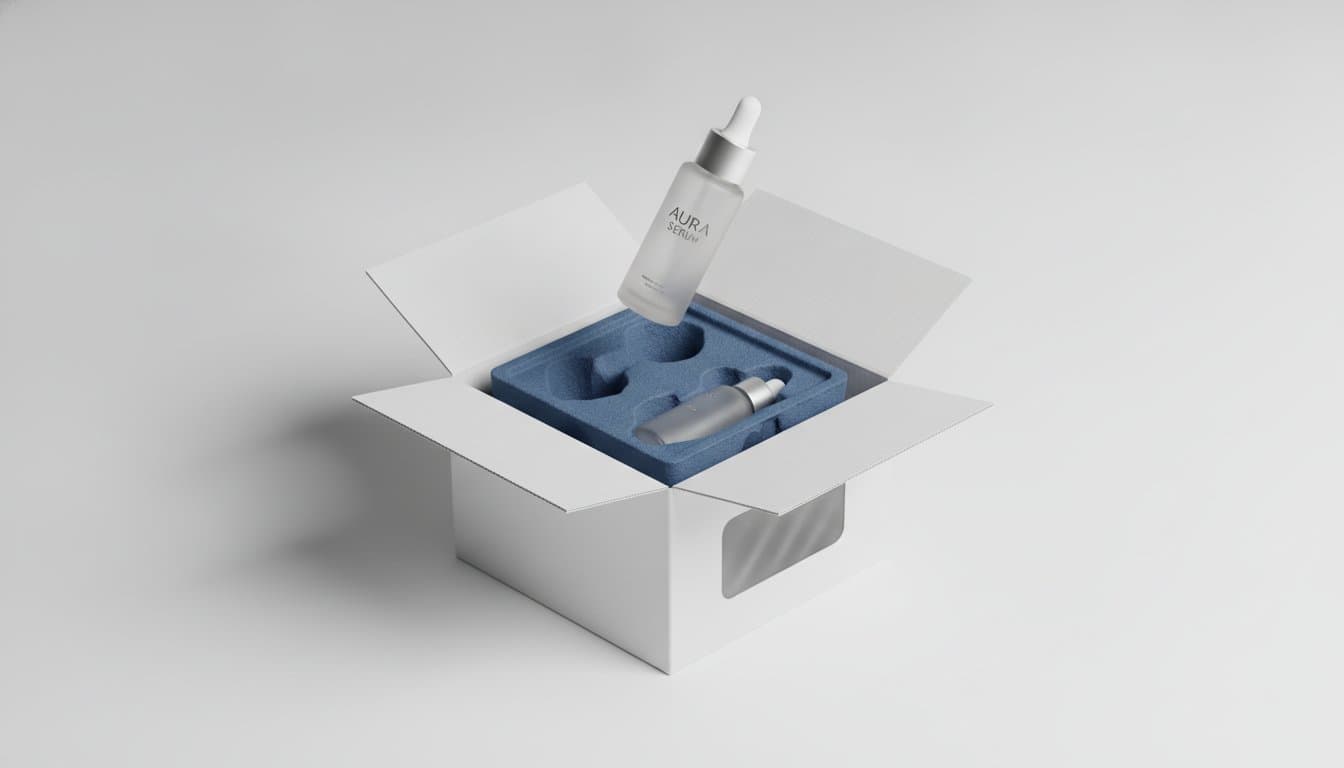
| Bottle or serum | Molded pulp or cardboard insert | How-to-use card |
| Gift set | Insert with backing and compartments | Thank-you card |
| Small electronics | Foam or molded pulp | Warranty and setup card |
| Subscription box | Dividers for several items | Coupon and QR card |
Examples of Inserts in Use
These are invented examples to show the thinking, not customer stories.
- A candle brand ships jars in mailer boxes. A cardboard insert with two round cavities holds each jar still, and a care card says how to trim the wick.
- A skincare brand uses a molded pulp insert for glass bottles and a short card with a QR link to a how-to video.
- A gift shop uses an insert with backing that lifts a set of three items, with a thank-you note on top.
- A subscription brand uses box dividers to keep four small items apart and a coupon card for the next box.
Common Insert Mistakes
- Sizing from the outside of the box and not the inside, so the insert does not fit.
- Making the cavity the exact size of the product, so it will not go in.
- Making the cavity too big, so the product still moves.
- Using a light insert for a heavy product that crushes it.
- Ignoring board thickness, so the insert stack is taller than the box.
- Adding several loose cards that fall out or crowd the product.
- Printing a marketing insert that is bigger than the box, so it folds or bends.
- Forgetting that every insert adds cost and a little weight.
Costs and Minimums
Cost depends on material, size, number of cavities, board thickness, printing and quantity. Cardboard inserts are usually the lowest cost, and foam, molded pulp and plastic trays need tooling or a mold, which makes small runs less efficient. Our guide on the impact of packaging costs on product pricing shows how to compare options per unit. See the product page for the current starting price and minimum, and your quote includes shipping.
Next Steps
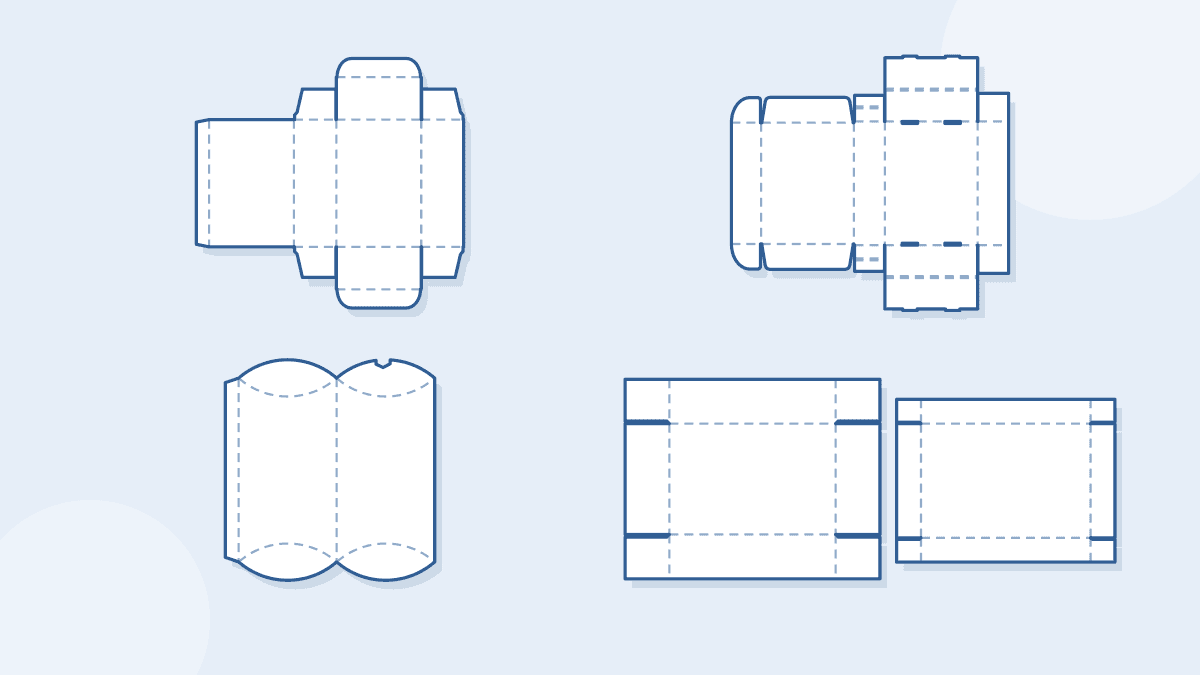
Decide whether you need to protect, to inform or both. Measure the product and the inside of the box, write the sizes down, and choose a material from the table. For a printed card, check the size against the box. For the layout of a protective insert, our free dieline templates show flat patterns at real size, and we confirm the final dieline before printing.
To hold something real before you order, the Standard Sample Kit costs $50 with shipping included. When you are ready, get a free quote and tell us what you are packing and how many boxes you ship. We offer free design support and reply within 1 business day.
Frequently Asked Questions
What are product inserts?
Product inserts are items placed inside a package alongside the product. They are either marketing inserts, such as thank-you cards, coupons and guides, or protective inserts, shaped pieces of cardboard, foam, molded pulp or plastic that hold the product in place.
What is the difference between a marketing insert and a packaging insert?
A marketing insert is printed material that informs or sells, such as a card or flyer. A packaging, or protective, insert is a shaped piece that holds the product inside the box. Many brands use both.
What are the most common types of marketing inserts?
Thank-you cards, discount coupons, product guides, care and warranty cards, brand story cards, samples and QR cards. Pick one with a clear action, and keep the message short.
What materials are protective inserts made from?
Cardboard (paperboard or corrugated), foam, molded pulp and plastic trays. Cardboard and molded pulp are paper-based, while foam and plastic are harder to recycle. We list all four on our box inserts page.
How do I size a protective insert?
Make the outside fit the inside of the box, and make each cavity the product size plus a little room, about 1/16 inch as a starting point for a rigid item. Confirm with a structural sample, because materials vary.
What is the minimum order for product inserts?
Our box inserts start from 100 units, and printed cards and flyers from 500 units. Each product page states its own minimum and starting price.
Are product inserts recyclable?
Paper-based inserts such as paperboard, corrugated and molded pulp can be recycled where local facilities accept paper and cardboard. Foam and plastic are harder to recycle. Rules differ by town, so check yours. Recycled stock options are available on request.
Written by the PacksDo Team
We make custom printed packaging, from boxes and mailers to bags, labels and inserts. Questions about this guide? Ask us.