In this article
- 1What a Packaging Insert Does
- 2Types of Packaging Inserts
- 3How to Choose an Insert by Weight and Fragility
- 4Sizing the Insert and Fitting It to the Box
- 5Materials, Colors and Printing
- 6Assembly Time and Packing Speed
- 7What Drives the Cost
- 8Examples by Product
- 9Common Mistakes With Inserts
- 10Order Your Inserts: Next Steps
A packaging insert is a fitted piece inside a box that holds your product in place, keeps it from moving or scratching, and often shows it off. For most products, a paperboard or corrugated cardboard insert is the right starting point. Lighter and sturdier items can use paperboard, heavy or fragile ones need corrugated board, and very delicate products sometimes need molded pulp or foam.
This guide explains what inserts do, the main types, how to choose one by weight and fragility, how to size it to the box, and what drives the cost. It is the full explanation. If you already know what you need and want a list to work through before ordering, use our custom packaging inserts checklist. If you mean thank-you cards and flyers that go into the parcel, that is a different thing, covered in what product inserts are.
Key takeaways
- An insert has one main job: to stop the product moving. Everything else, such as organizing several items or showing the product, comes second.
- Match the material to weight and fragility. Paperboard suits light, sturdy goods. Corrugated suits heavy, delicate or shipped goods. Molded pulp and foam suit awkward shapes and fragile items.
- Size from the inside of the box. The insert has to fit the inside dimensions of the box and hold the product with only a small amount of play.
- Test with a sample before a full run. A fit that looks right on paper can fail when you pack by hand or shake the box.
- Assembly time is a real cost. An insert that takes 20 seconds to fold costs money every time you pack a box.
What a Packaging Insert Does
An insert is the layer between your product and the walls of the box. Without one, a product slides, tips and knocks against the box and against other items. With one, it sits in a fixed position, and the box can carry it safely.
Inserts do four jobs, and most do more than one.
- Hold the product still. A cut-out or cavity shaped to the product stops movement in every direction.
- Protect it. The insert takes the knocks, keeps parts from touching each other and keeps edges away from the box wall.
- Organize several items. A gift set, a kit or a subscription box needs each item in its own place, so it arrives looking planned.
- Present the product. A well-made insert lifts the product, frames it and makes the opening of the box feel designed instead of improvised.
An insert is not the same as a divider. A divider is a flat partition that splits the inside of a box into compartments, and it does not grip the product. Our box dividers work well for bottles, jars and tubes of similar size. An insert is shaped around the product itself. Many boxes use both.
Types of Packaging Inserts
Inserts differ in material and in structure. The material decides how much protection you get, and the structure decides how the product sits. Here are the types you will meet when ordering.
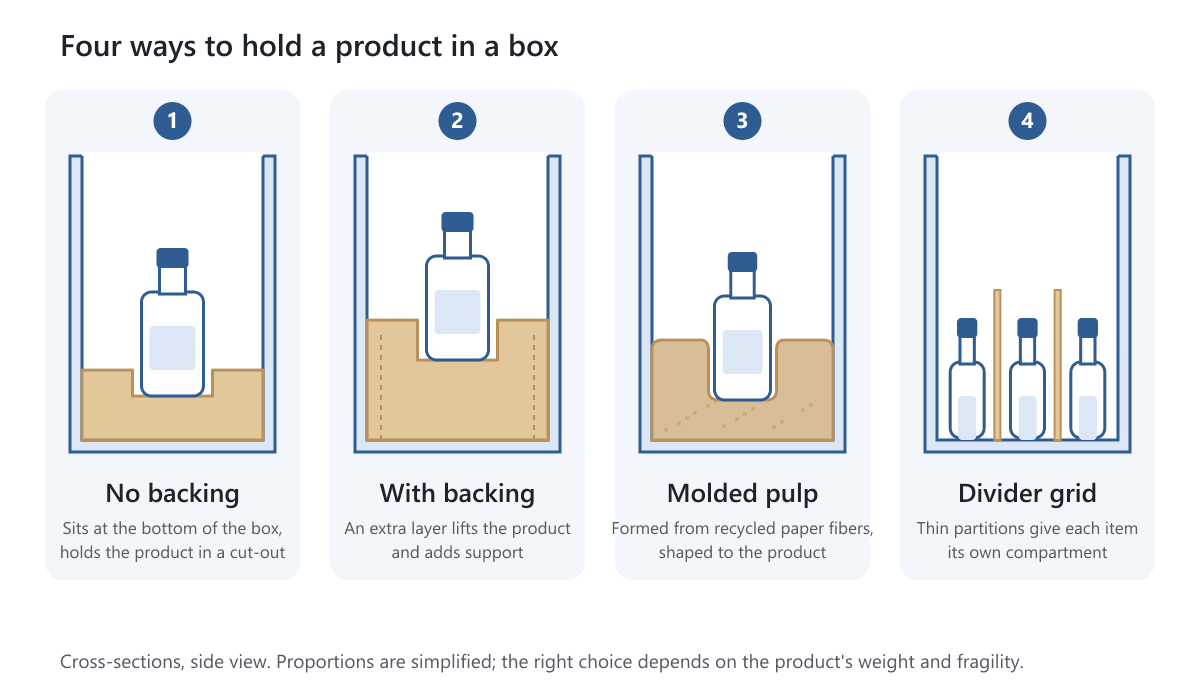
Cardboard Inserts: Without Backing
A box insert without backing sits at the bottom of the box and holds the product by its cut-out. It suits items that fit snugly at the bottom and do not need to be lifted. It is the simplest and usually the least expensive style, and it works well when your products are a similar size.
Cardboard Inserts: With Backing
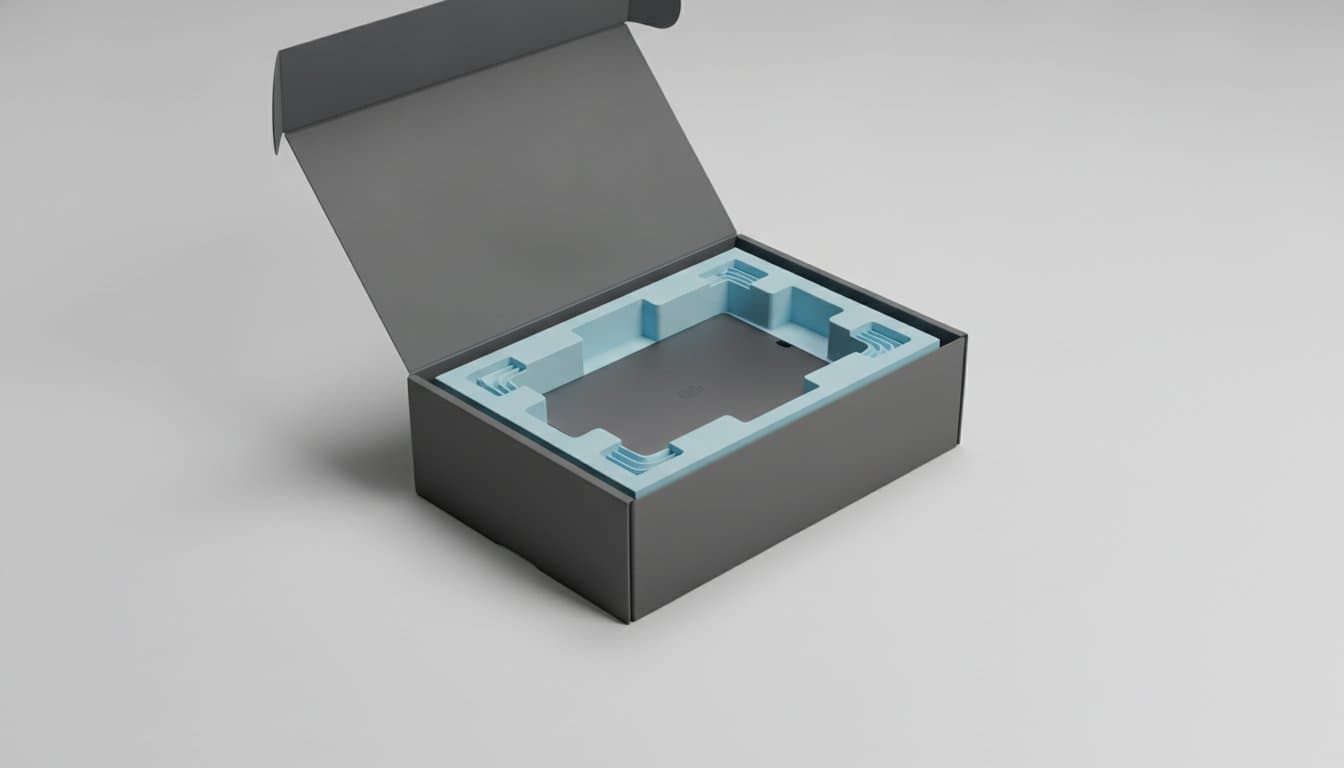
An insert with backing has a second layer behind or under the cut-out. That layer lifts the product and adds support, so the product sits higher in the box and is easier to see and to lift out. It is a good choice for items that need extra support or a more finished presentation.
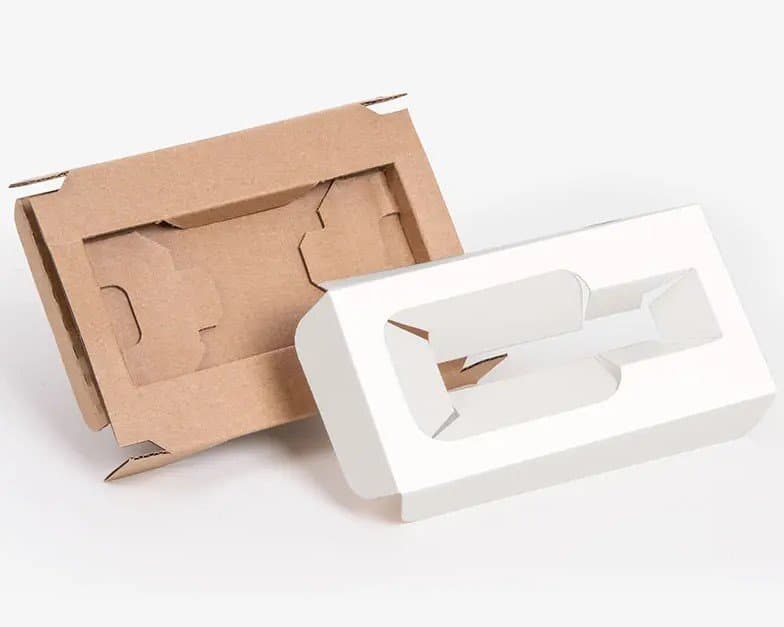
Paperboard and Corrugated
Cardboard inserts come in two board types. Paperboard, a solid single-layer board of about 300 to 400gsm, suits light products that are not delicate. Corrugated board has a wavy layer between two flat liners, which makes it stiffer and better at absorbing shock. We offer E-flute, with a flute thickness of about 1.2 to 2 mm, and B-flute, about 2.5 to 3 mm. B-flute suits bulky and heavy items. Gsm means grams per square meter, and a higher number means thicker board.
Molded Pulp Inserts
Molded pulp inserts are made from recycled paper fibers, molded into a specific shape. Because the piece is formed rather than cut and folded, it can cradle awkward or rounded products that a flat insert cannot. The finish is a natural, textured fiber look, and the shape is fixed once the tool is made.
Foam and Plastic Tray Inserts
Foam inserts absorb impact and vibration, so they suit delicate items that travel a long way. Plastic tray inserts are pre-formed trays with compartments that hold products in place and keep them organized. Both are listed on our box inserts page. They are not paper-based, so they are harder to recycle than cardboard, and you may prefer a paper option if sustainability matters to your customers.
Dividers and Partitions
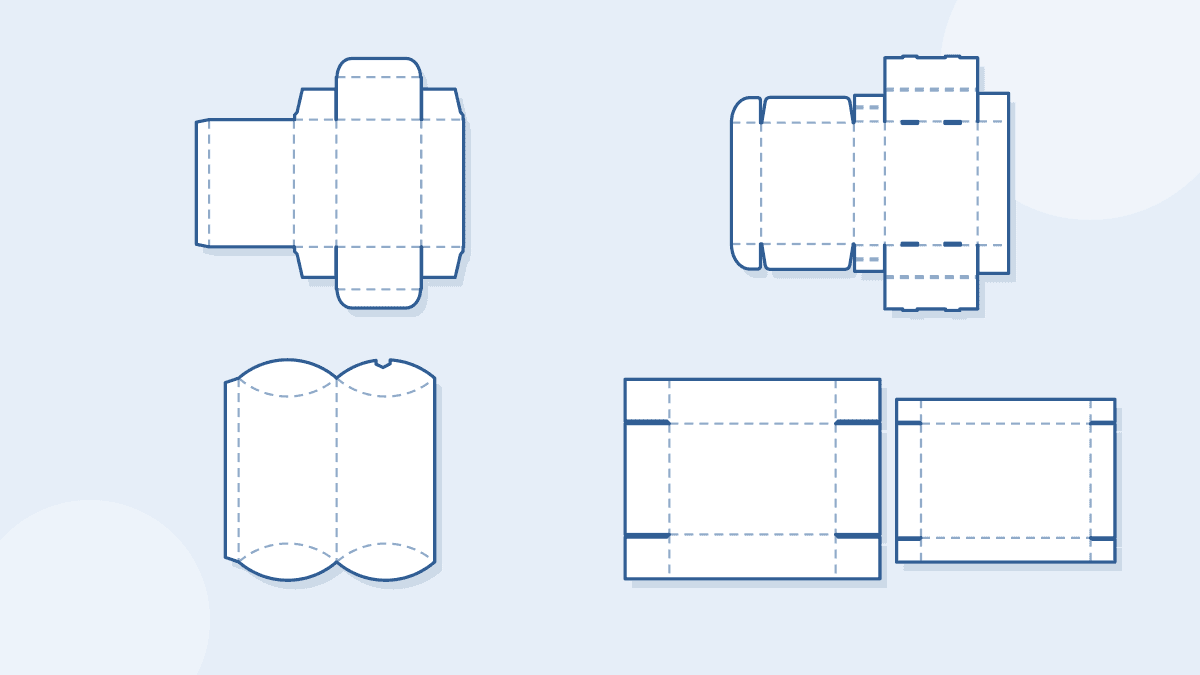
For several items of similar size, a divider grid is often simpler and cheaper than a shaped insert. One-piece dividers fold from a single sheet. Multiple-piece partitions slot together and can make equal compartments across several rows. You can try a free grid dividers dieline to see how the compartments are laid out.
Which Type Fits Which Job
| Type | Best for | What you give up |
|---|---|---|
| Cardboard, no backing | Similar-sized items sitting at the bottom of the box | No lift, less support for heavier items |
| Cardboard, with backing | Items that need lift or a finished display | A little more material and assembly |
| Corrugated | Heavy, delicate or shipped items | Thicker walls take room from the inside |
| Paperboard | Light, sturdy retail items | Little shock absorption |
| Molded pulp | Rounded or awkward shapes | Fixed shape, textured look |
| Foam | Very delicate items on long journeys | Harder to recycle, not paper-based |
| Divider grid | Several items of similar size | No grip on a single product |
How to Choose an Insert by Weight and Fragility
Two questions decide most insert choices: how heavy is the product, and how easily does it break or scratch? Weight decides how strong the board must be. Fragility decides how much cushioning and how tight a hold you need.
| Product | Weight and fragility | A sensible starting point |
|---|---|---|
| Soap bar, lip balm, small cosmetic tube | Light, sturdy | Paperboard insert, no backing |
| Perfume or serum bottle | Light to medium, glass | Paperboard with backing, or E-flute |
| Candle jar, ceramic mug | Heavy, fragile | Corrugated insert, B-flute for the heaviest |
| Electronics accessory | Light, delicate surface | Paperboard with backing, soft-touch finish |
| Gift set of three items | Mixed | One-piece insert or a divider grid |
| Awkward or very fragile item | Any weight | Molded pulp or foam; ask us for advice |
These are starting points, not rules. As a rough guide, products under about 8 ounces (250 g) are light, those between 8 ounces and 2 pounds are medium, and anything above about 2 pounds (1 kg) is heavy and needs corrugated board. A heavy product that ships needs more than a retail product that sits on a shelf. If you are unsure, tell us the weight, the material and how the product is shipped, and we will suggest a board. A sample settles most doubts.
Retail Shelf or Shipped to the Customer
A product in a retail box gets handled gently and sits still, so a light insert is usually enough, and the look matters more. A product shipped to a customer faces drops, stacking and vibration inside a carrier network, so use stronger board and a tighter hold. The same product may need a different insert for each route. Our guide to choosing the right box for your product covers the outer box, which works together with the insert.
Sizing the Insert and Fitting It to the Box
An insert has to fit twice: the product has to fit the insert, and the insert has to fit the box. Both fits start from measurements, so measure carefully before you order. Our guide to measuring the dimensions of a box correctly explains inside and outside dimensions and board thickness.
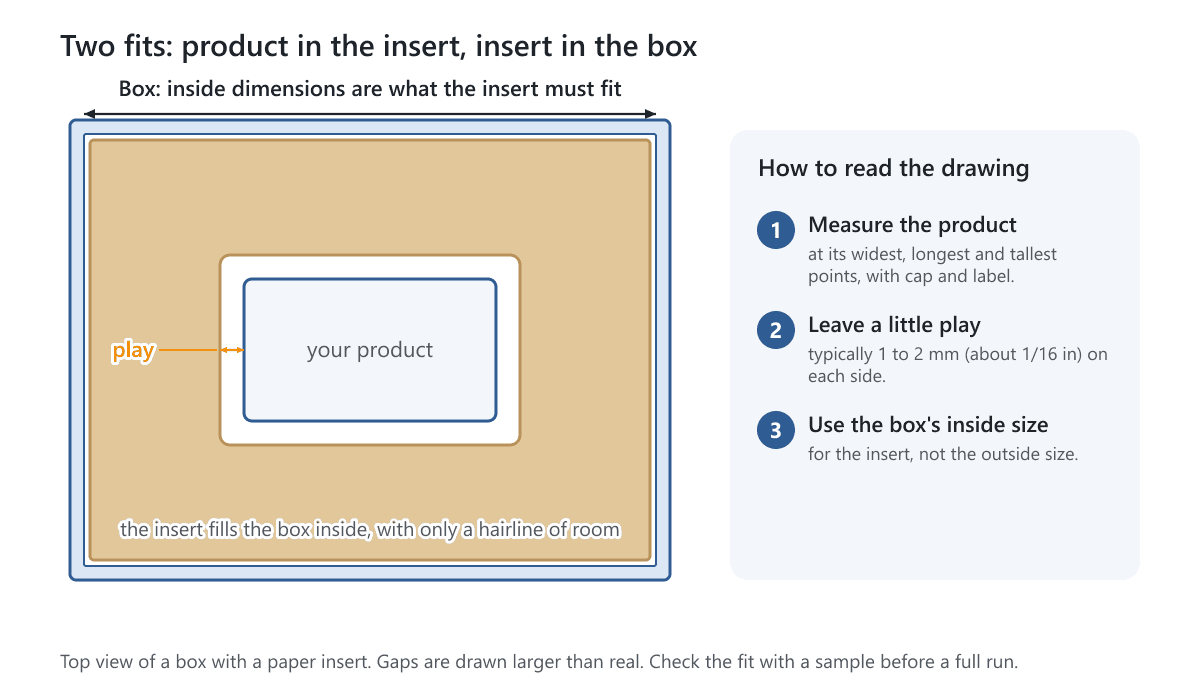
Fit the Product to the Insert
Measure the product at its widest, longest and tallest points, including caps and labels. Then decide how snug you want the hold. A cut-out that is exactly the product size is hard to load and can scuff the product. Most inserts leave a small amount of play, typically 1 to 2 mm (about 1/16 inch) on each side, but the right figure depends on the board and on whether the product is soft or hard. Measure more than one unit, because products vary a little.
Fit the Insert to the Box
The insert must fit inside the box with the board thickness taken into account. Give us the inside dimensions of the box, not the outside. An insert that is slightly too big bends and buckles, and one that is slightly too small moves. If the box has a lid or a tuck flap, check that the insert and the product together do not push up against it. Pressure on the lid damages both the print and the closure.
Height and Stacking
Check how high the product stands above the insert, and whether anything goes on top, such as tissue paper, a card or a second layer. Add that height to the box depth. If boxes are stacked in a carton, the insert is also what carries the weight from above, so a taller product needs stronger board.
If you are making the box and the insert together, try the fit with an unprinted prototype. A structural sample is an unprinted prototype that shows the size and form, and our Samples page lists every sample type.
Materials, Colors and Printing
Most paper inserts come in white or brown kraft. White board is made from bleached paperboard and gives the cleanest print. Brown kraft is unbleached, has a natural look and prints black or white only. If your brand looks better against kraft, a plain kraft insert in a printed white box is a common pairing.
Printing and Coatings
Inserts can be printed in CMYK, the four-ink process used for full-color artwork, or in Pantone, which matches an exact brand color. Our guide to color systems explains the difference. Many inserts are left unprinted, because the product is the star, and a plain kraft or white insert looks tidy and costs less. Printing makes sense when the insert shows, for example under a transparent lid or on a raised platform.
Coatings protect the print from scuffs, and finishes change how it feels. Varnish is a thin coating, and lamination is a film layer that protects more. Matte, glossy, satin and soft touch finishes are available. For the details, read varnish vs lamination.
Recycling and Disposal
Plain paperboard and corrugated without plastic film are generally the easiest to recycle, because paper and cardboard are widely collected where facilities accept them. Lamination, foil and mixed materials can make recycling harder, and rules differ by town. Recycled stock options are available on request. Our guide to whether cardboard gets recycled explains what happens to it after use.
Assembly Time and Packing Speed
An insert that looks great but takes a long time to fold slows every order you pack. This cost is easy to overlook, because it shows up in labor, not on the invoice.
As an example, take a brand that packs 500 boxes a month. If a complicated insert takes 20 seconds longer to fold and place than a simple one, that adds 10,000 seconds, or about 2 hours and 45 minutes, every month. Over a year, it is more than a full working day. A simpler insert, or one that arrives ready to drop in, can save more than a slightly cheaper but more fiddly one.
- Count the steps. How many folds, tabs or separate pieces does it take?
- Check who packs. A brand owner packing at a kitchen table has different needs from a fulfillment team.
- Test with a packer. Ask the person who will do the work to try the sample and time it.
- Consider flat shipping. Inserts that ship flat take little storage room, but they have to be folded before use.
What Drives the Cost
We do not list insert prices in this guide, because they depend on the order. The starting price per unit is on the box inserts page. These are the factors that move the price.
- Board type and thickness. Corrugated costs more than paperboard, and a thicker flute costs more than a thinner one.
- Size. A larger insert uses more board, so the open size of the flat piece matters.
- Complexity. More cut-outs, tabs and folds mean more cutting work.
- Printing and finishing. A printed, coated insert costs more than a plain one.
- Quantity. Most inserts start at 100 units, and the cost per unit drops as quantity rises.
- Tooling. A custom shape needs a cutting die, and that setup is spread over the order.
The total cost of packaging also includes damage, returns and packing time. If an insert prevents even a small number of breakages, it can pay for itself. Our guide to the impact of packaging costs on product pricing shows how to count all of it.
Examples by Product
These examples are illustrations, not customer cases. They show how the choices above come together.
A Glass Serum Bottle
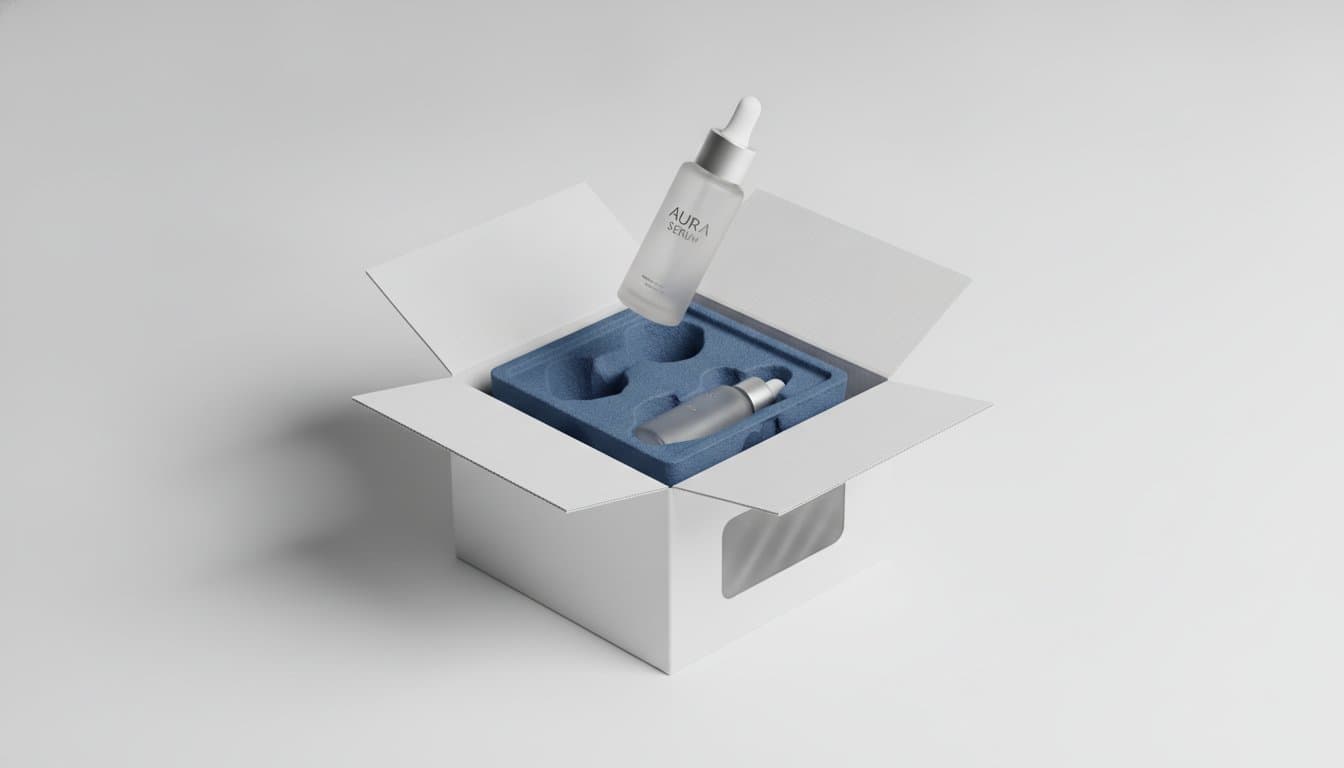
A 30 ml glass bottle is small and light but breakable. A paperboard insert with a round cut-out and a backing holds the bottle upright and lifts it to the opening of a tuck box. A tight hold matters more than thickness here. See our tuck boxes for the outer box.
A Candle Jar
An 8 oz candle in a glass jar weighs about a pound and shifts easily because it is round and heavy. A corrugated insert with a base cavity keeps the jar from rolling and spreads a knock across more board. For shipping, put the whole set in a mailer box.
A Three-Item Gift Set
A lip balm, a hand cream and a soap bar need three different cut-outs. A one-piece insert with three openings, or a small divider grid with a card slot, keeps each item in place. This is where an insert and a printed card work together, and our cards can fill that slot.
A Ceramic Mug
A mug is heavy, has a handle that breaks, and ships by post. Use B-flute corrugated, with a cavity for the body and a notch or pocket to hold the handle. Test a drop from about waist height before you order.
A Subscription Box With Four Items
Four items of different sizes can use a divider grid sized to the tallest item, with a card slot at the front. Because you will pack hundreds a month, keep the folding simple and time it.
Common Mistakes With Inserts
- Measuring the product without its cap, label or wrap.
- Sizing the insert from the outside of the box instead of the inside.
- Choosing paperboard for a heavy or fragile product to save a little.
- A cut-out with no finger space, so the product is hard to lift out.
- Ignoring board thickness, so the insert is too tight or too loose.
- Not testing the fit with real products and a real packer.
- Forgetting that the lid or tuck flap needs clearance above the product.
- Using one insert for products that vary in size.
Order Your Inserts: Next Steps
Write down the product's size and weight, the inside size of your box, and how the product ships. Then use our inserts checklist to go through the details, and send us your answers with a free quote request. We offer free design support, and our quotes include shipping. Inserts start at 100 units, and our Standard Sample Kit costs $50 with shipping included. Ask us about a structural sample of the insert type you want to test.
Frequently Asked Questions
What is a packaging insert?
A packaging insert is a fitted piece inside a box that holds the product in place and protects it. It is cut or molded to the product, and it can also organize several items or help present them. It differs from a divider, which only splits the box into compartments.
What are packaging inserts made of?
Most are paperboard or corrugated cardboard, in white or brown kraft. Molded pulp is made from recycled paper fibers. Foam and plastic tray inserts are also used for delicate items. See the box inserts page for the options we list.
How do I choose between paperboard and corrugated inserts?
Choose paperboard for light, sturdy products and corrugated for heavy, delicate or shipped ones. Paperboard of 300 to 400gsm is a good fit for retail products. Corrugated, in E-flute or B-flute, absorbs more shock. If you are unsure, ask for a sample.
What does an insert with backing mean?
An insert with backing has an extra layer under or behind the cut-out. It lifts the product and adds support, so the product sits higher and looks more finished. An insert without backing sits at the bottom of the box and is simpler.
How much room should an insert leave around the product?
Typically 1 to 2 mm, about 1/16 inch, on each side for a snug hold, but it depends on the board and on whether the product is hard or soft. Too tight is hard to load and can scuff the product, and too loose lets it move. Test with a sample.
Can packaging inserts reduce shipping damage?
They can reduce it, because they stop the product moving and spread knocks across the board. They cannot replace a strong outer box. Test the packed box with a drop from waist height and a shake test before you order a full run.
What is the minimum order for custom inserts?
Most inserts start at 100 units. The minimum is on the product page, and some styles may differ. Tell us the size and quantity you need, and we will confirm the minimum with your quote.
Are paperboard inserts recyclable?
Plain paperboard and corrugated without plastic film are generally the easiest to recycle, because paper and cardboard are widely collected where facilities accept them. Coatings, laminations and mixed materials can make it harder, and local rules differ. Recycled stock options are available on request.
Written by the PacksDo Team
We make custom printed packaging, from boxes and mailers to bags, labels and inserts. Questions about this guide? Ask us.