In this article
Yes, cardboard is recycled in most of the United States, and it is one of the most widely collected packaging materials. Clean, dry corrugated cardboard and plain paperboard usually go in the paper recycling bin. The exceptions are cardboard that is soaked with grease or food, coated with wax or foil, or covered in plastic, which many programs cannot accept.
This guide explains how cardboard recycling works, which kinds of cardboard are accepted, what ruins a batch (contamination), how to prepare a box step by step, why local rules differ, and what to do before you recycle at all. It also has a section for sellers on making boxes easier to recycle. If you are new to the topic, our overview of eco-friendly packaging materials puts cardboard next to the alternatives.
Key takeaways
- Clean and dry is the rule. Plain cardboard is accepted nearly everywhere. Grease, food and water are what cause problems.
- Corrugated and paperboard both count. Shipping boxes (corrugated) and cereal-type cartons (paperboard) go in the same paper stream in most places.
- Coatings and plastic can stop it. Wax, foil, plastic film and plastic windows make a box harder or impossible to recycle.
- Flatten and keep it dry. Flat boxes save space in the bin and the truck. Wet cardboard loses value.
- Check your local program. Rules about tape, labels, size and sorting differ by town.
- Reuse comes first. A box that gets a second life has not become waste yet.
How Cardboard Recycling Works
Most of what happens to cardboard after your bin is picked up is simple and mechanical. The steps are broadly the same across facilities.
- Collection. Cardboard is picked up at the curb or dropped at a recycling center. In some towns it is mixed with other recyclables (single-stream), and in others it is kept separate.
- Sorting. Workers and machines separate cardboard from plastic, glass, metal and other paper. Cardboard is bulky and light, so it is baled to travel.
- Pulping. The cardboard is mixed with water and broken down into a fibrous slurry called pulp.
- Cleaning. Screens and filters remove tape, staples, plastic bits and ink. This is where contamination causes problems, because some materials cannot be filtered out.
- Pressing and drying. The clean pulp is pressed into sheets and dried, then made into new paper and cardboard.
Paper fibers get shorter each time they are recycled, so they can only go round a limited number of times. This is one reason new fibers are mixed in. It is also why keeping cardboard clean matters: fewer contaminants means more of the batch becomes useful pulp.
Corrugated vs Paperboard
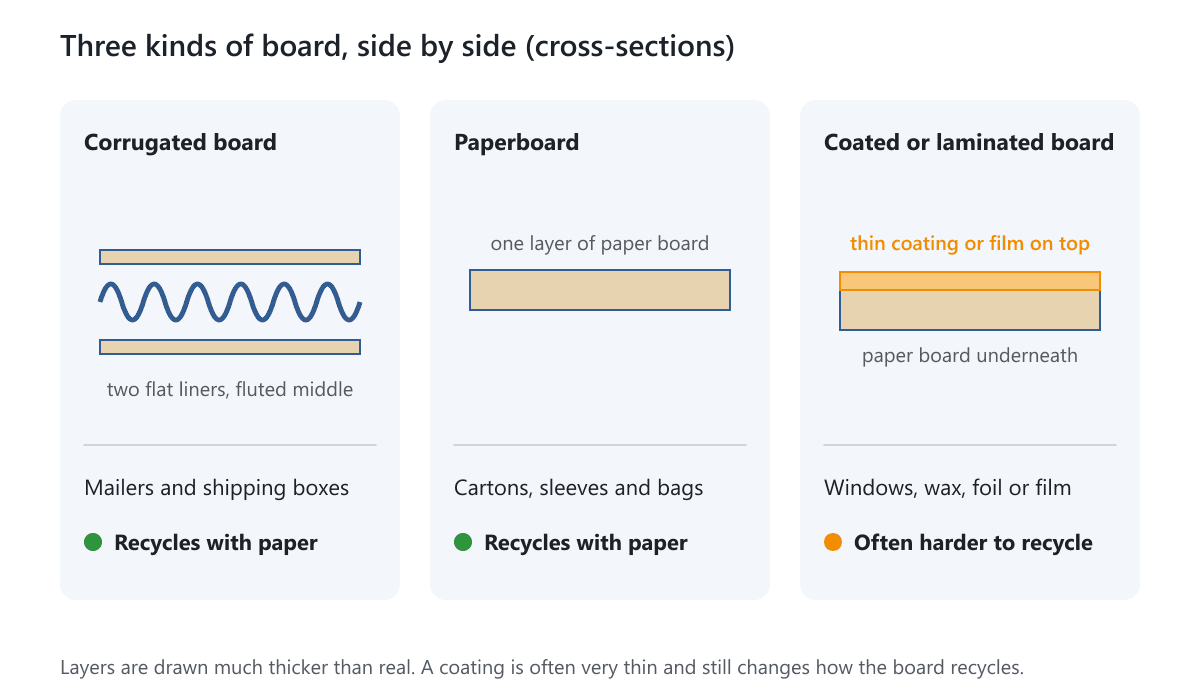
People say "cardboard" for two different things. Corrugated board is the thick, wavy-centered material of shipping boxes. Paperboard is a thinner, single layer, used for cereal boxes, shoe boxes, tuck boxes and sleeves. Both are paper, and both are generally accepted.
| Type | What it is | Typical items | Recycling note |
|---|---|---|---|
| Corrugated board | Two flat liners with a fluted layer between | Shipping boxes, mailer boxes | Widely accepted; flatten it |
| Paperboard | A single layer of paper board | Cereal boxes, tuck boxes, sleeves | Widely accepted; remove plastic liners |
| Coated or laminated board | Board with a film, wax or foil layer | Frozen food cartons, some gift boxes | May not be accepted; check the label |
| Molded fiber | Paper fiber pressed into shapes | Egg cartons, bottle trays | Often accepted when clean |
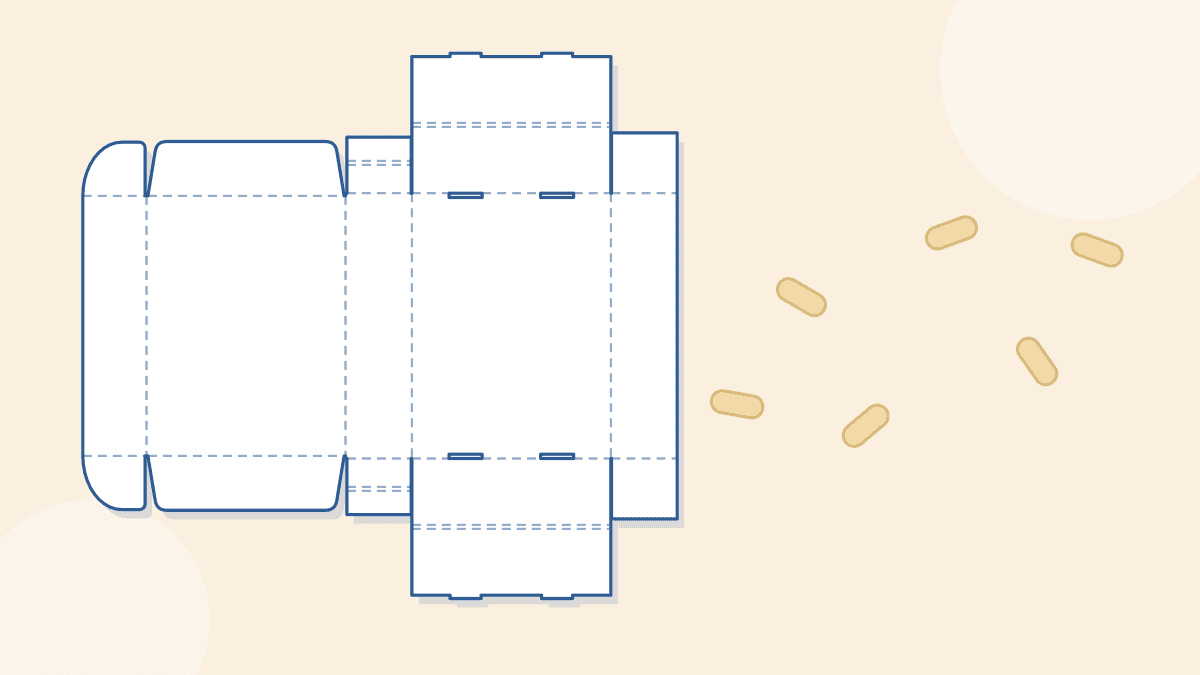
Our mailer boxes and shipping boxes are corrugated, and our tuck boxes are paperboard. Read more about styles on our corrugated packaging page.
What Is Usually Accepted
- Shipping boxes, mailer boxes and other corrugated cardboard.
- Cereal, cracker, tissue and shoe boxes, and other paperboard cartons.
- Cardboard tubes from paper towels and toilet paper.
- Paper egg cartons and molded paper trays.
- Paper bags and kraft paper, in most programs.
Staples and small pieces of tape are usually fine because the process screens them out. A few programs ask for large boxes to be cut down or tied in a bundle, so check the size limits.
What Contaminates Cardboard
Contamination means something in the bin that damages the recycling process or the quality of the new paper. A few contaminated boxes are usually tolerated, but a lot of them can cause a whole load to be rejected.
Grease and Food
Oil and food soak into fibers and do not wash out. The usual advice for a greasy pizza box is to tear off the clean lid for recycling and put the greasy part in the compost bin or trash, but some programs accept the whole box, so check yours.
Wax and Foil Coatings
Some boxes for frozen food, produce or cold drinks are coated in wax to resist water. Wax does not break down in the normal recycling process. Foil-lined cartons have a similar problem. If a box is shiny, stiff and repels water, it may be coated, and the label should say.
Plastic Film, Liners and Windows
A plastic window or a thin plastic film on the surface can be separated in some mills, but many programs ask you to remove it. Plastic liners inside cereal-type cartons come out easily and belong in a different stream.
Large Tape and Labels
A small strip of tape is fine. Long runs of plastic tape or big plastic shipping labels are better peeled off where it is easy to do so. Paper-based tape is easier on the process.
Wet and Moldy Cardboard
Wet cardboard has weaker fibers and clumps together, and moldy cardboard can spoil other paper. Keep boxes dry until collection day.
Lamination and Heavy Finishes
A plastic film laminated to paper makes it hard to turn into pulp. Water-based varnish is generally easier on the process. Our guide to varnish and lamination explains the difference.
How to Recycle Cardboard Step by Step
It takes about a minute per box, and no special tools.
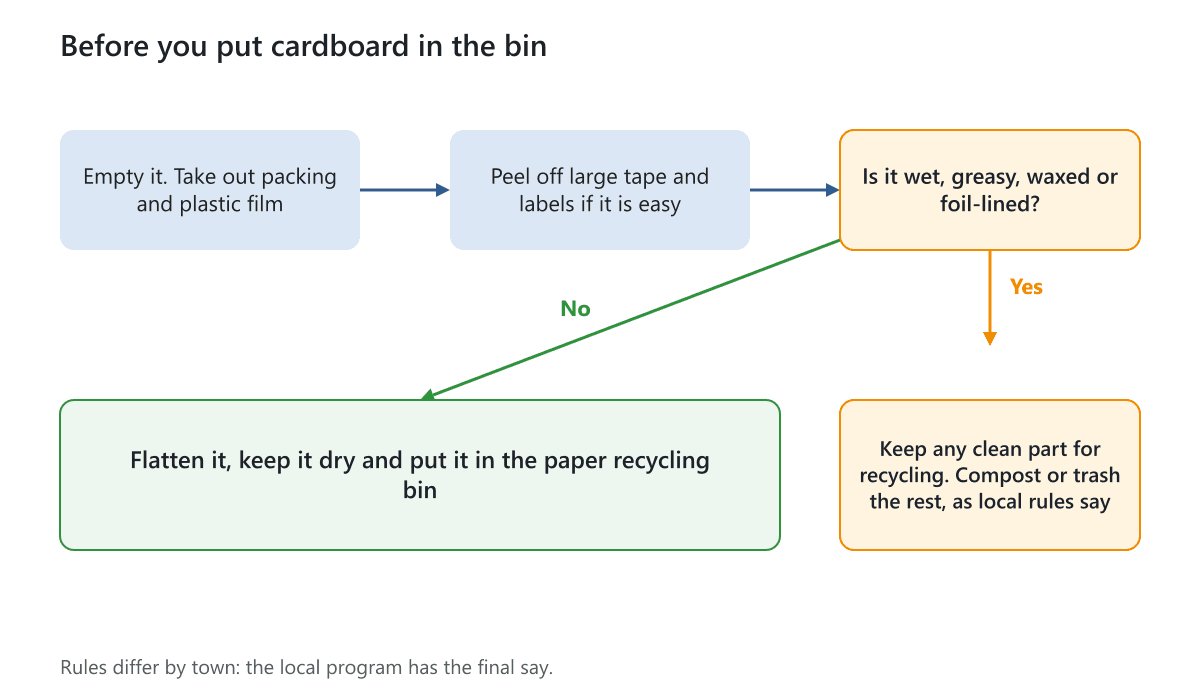
- Step 1: Empty the box. Take out the product, paper filler, plastic bags and packing materials.
- Step 2: Peel off large tape and labels if it comes away easily. Do not worry about small bits.
- Step 3: Check for grease, wax, foil and plastic. Remove or separate what you can.
- Step 4: Flatten the box. Cut the tape or push in the tabs, and press it flat. Bundle or cut large ones to fit your bin or follow the local size limit.
- Step 5: Keep it dry until pickup, and place it in the paper or cardboard bin, not in a plastic bag.
Local Rules and Why They Differ
Each town or hauler sets its own rules, and they depend on the equipment and the buyers of the sorted material. That is why a symbol on a box cannot promise recycling at your curb.
- Single-stream or sorted. Some programs mix paper with bottles and cans. Others want paper kept apart.
- Flattening and size. Many programs want boxes flat, and some limit the size or ask you to cut large ones.
- Bags. Many programs want loose paper in the bin, not in a plastic bag.
- Drop-off options. If your curbside program does not take a certain item, a drop-off center sometimes does.
Check your local waste authority's website or call it. If the label on a box has a recycling symbol, it is a hint, not a guarantee.
Reuse Before You Recycle
The best box is the one you do not throw away. A sturdy shipping box can ship again after you remove old labels, and a good-looking box can store things or become a gift box. Our guide to ways to reuse packaging boxes has ideas for home and for businesses. Plain cardboard that is no longer useful, and has no coatings, can also be shredded and added to a compost pile as a brown material.
If you ship a lot, remember that recycling is the last step, not the first. Related guides cover packing peanuts and bubble mailers, two materials that cause more trouble than cardboard.
For Sellers: Make Your Boxes Easier to Recycle
If you sell products in boxes, you can make recycling easy for your customers.
- Use plain paper-based board. Corrugated or paperboard without plastic is the simplest.
- Keep coatings and windows to a minimum. A plastic window or lamination makes the pack harder to recycle. Use them only if they add real value.
- Choose paper-based tape and labels when you can.
- Size the box to the product. Less board and less filler is less to recycle. Our measuring guide shows how.
- Add a short note. "Flatten and recycle with paper" helps, if it is true where your customers live.
Our boxes are paper-based, and a finished box can be recyclable where local facilities accept it. That depends on the board, the inks, the coatings and the adhesives. Recycled stock options are available on request. See our eco-friendly packaging page for the options.
Common Mistakes
- Putting a greasy pizza box in the bin whole without checking local rules.
- Leaving boxes outside in the rain before collection.
- Bagging cardboard in plastic bags.
- Assuming a shiny or stiff box is plain paper.
- Leaving plastic liners or bubble wrap inside.
- Putting a plastic-windowed box in the bin without separating the window when the program asks for it.
Your Next Step
Look up your town's cardboard rules once, and note whether flattening, size limits or sorting apply. If you sell products, choose plain board with light finishes so your customers can recycle the pack easily. To compare options in your hands, the Standard Sample Kit costs $50, shipping included, or get a free quote.
Frequently Asked Questions
Does cardboard get recycled?
Yes. Clean, dry corrugated cardboard and plain paperboard are accepted by most recycling programs in the United States. Cardboard that is soaked with grease or food, coated with wax or foil, or wet and moldy may not be accepted.
Can I recycle cardboard with tape on it?
Usually, yes. Small amounts of tape are screened out during recycling. Peel off long runs of plastic tape and large labels if it is easy, and paper-based tape is simpler for the process.
Can I recycle a greasy pizza box?
It depends on your program. A common approach is to tear off the clean lid for recycling and put the greasy bottom in the compost or trash. Some programs accept the whole box, so check your local rules.
Can wet cardboard be recycled?
Often not. Wet fibers are weaker and moldy cardboard can spoil other paper. Keep boxes dry, and if a box gets wet, dry it out before putting it in the bin or check with your hauler.
Is corrugated cardboard the same as paperboard when it comes to recycling?
Both are paper and are generally recycled in the same stream. Corrugated board has a fluted layer between two liners, and paperboard is a single layer. Remove plastic liners or windows from either one.
Can cardboard with a plastic window be recycled?
Some programs accept it, and others ask you to remove the window first. Check your local rules. If you sell products, choosing a box without a window makes recycling simpler for your customers.
Are your boxes recyclable?
Our boxes are paper-based. A finished box can be recyclable where local facilities accept it, depending on the board, inks, coatings and adhesives. Tell us your goals when you request a quote, and recycled stock options are available on request.
Written by the PacksDo Team
We make custom printed packaging, from boxes and mailers to bags, labels and inserts. Questions about this guide? Ask us.