In this article
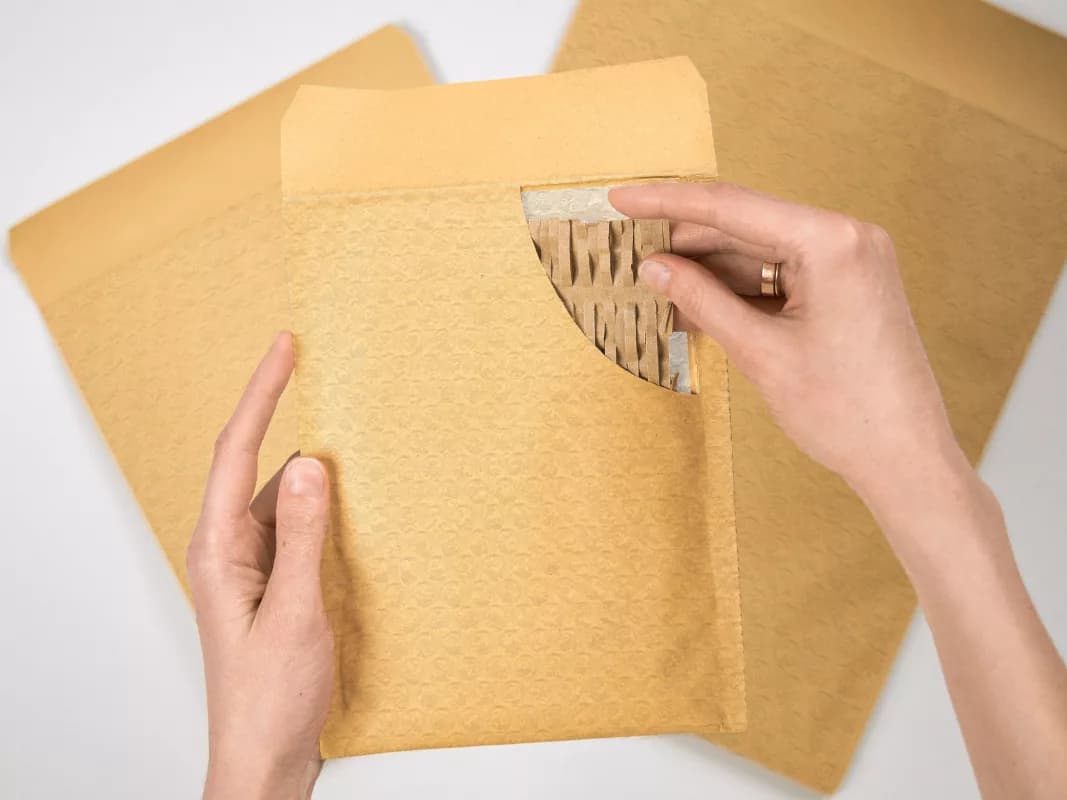
Most bubble mailers are hard to recycle, and many cannot go in your curbside bin. The common type has a paper outer layer glued to a plastic bubble lining, and recyclers cannot easily separate the two. An all-plastic bubble mailer may be accepted at a store drop-off for plastic film, and an all-paper padded mailer usually goes in paper recycling.
This guide explains what bubble mailers are made of, why they are hard to recycle, how to dispose of each type, how to reuse them, and what to use instead. If you are a seller, it also covers how to choose a mailer and how to mark it so customers know what to do. Rules differ by town, so treat this as a guide and confirm locally.
Key takeaways
- Check the material first. Paper outside with plastic bubbles inside is a mixed material, and most curbside programs do not accept it.
- All-plastic mailers are a film. Clean, dry film may be accepted at a store drop-off bin, but not in most curbside bins.
- All-paper padded mailers are the easiest. They usually go with paper recycling where accepted.
- Reuse is the best option. Cover the old label and send the mailer again.
- Alternatives exist. Paper mailers, corrugated mailer boxes and paper padding replace plastic bubbles for many products.
- Do not overclaim. If you sell in bubble mailers, say what they are made of instead of calling them recyclable.
Types of Bubble Mailers
"Bubble mailer" covers several constructions. They look similar from the outside, which is why they cause confusion. The differences are in the layers.
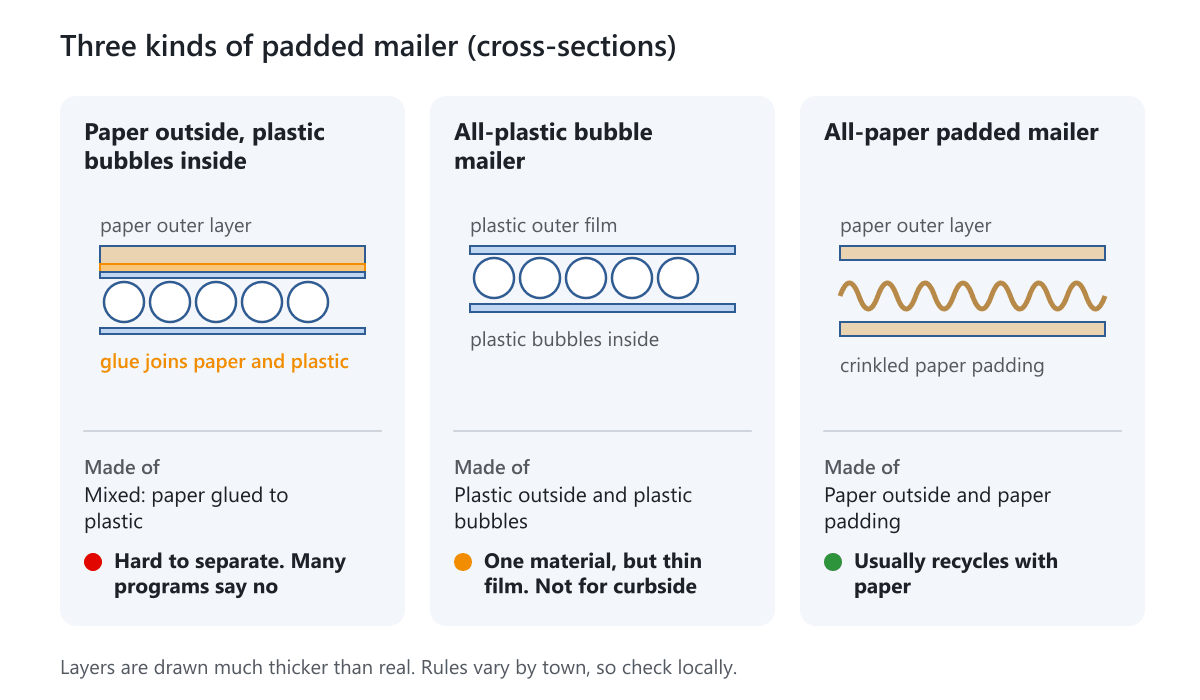
| Type | Made of | Usual disposal | Notes |
|---|---|---|---|
| Paper outside, plastic bubble lining | Kraft paper glued to a bubble film | Often trash; some can be split by hand | The most common type; mixed materials |
| All-plastic bubble mailer | Plastic outer film and plastic bubbles | Store drop-off for plastic film, if accepted | Water-resistant; not for curbside bins |
| All-paper padded mailer | Paper outer layer and paper padding | Paper recycling | Less water-resistant; check the label |
| Compostable padded mailer | Plant-based film or paper with a compostable lining | Composting where accepted | Needs a composting route; check the certificate |
If you are not sure which one you have, tear a small edge. If the paper peels away from a clear, rubbery bubble layer, it is the mixed type. If the whole thing stretches like a plastic bag, it is all plastic. If it is paper all the way through, it is paper-based.
Why Bubble Mailers Are Hard to Recycle
There are a few connected reasons, and they apply to most mixed-material packaging.
- Mixed materials. Paper recycling needs paper. When plastic is glued to it, the plastic ends up in the pulp as a contaminant.
- Thin film jams machines. Plastic film wraps around the sorting equipment in many recycling plants. That is why many curbside programs ask you not to put plastic bags or film in the bin.
- Small, light pieces. Bubble film is light and small, so it falls through sorting screens and mixes with other material.
- Adhesives and labels. Glue, peel-and-seal strips and shipping labels add more material that has to be removed.
- Unclear labeling. Many mailers have no clear instructions, so people guess.
That does not make every bubble mailer a lost cause. It means the type and the local rules decide, and the best route is often not recycling at all.
How to Dispose of a Bubble Mailer
Work through this order. Each step is better than the next.
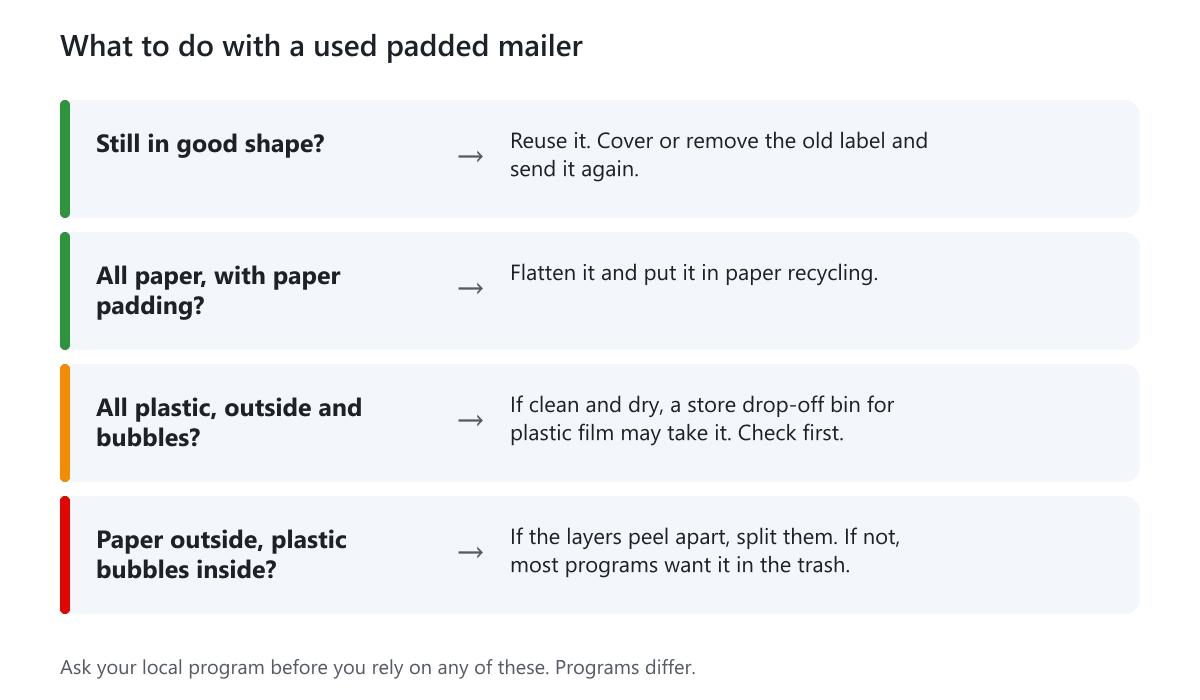
- Step 1: Reuse it. If it is intact, put it to use again (see the next section).
- Step 2: Check the label. Some mailers have a recycling note or a store drop-off symbol. Follow it.
- Step 3: Identify the type. All paper goes with paper recycling, flattened and clean.
- Step 4: For all-plastic mailers, remove the label and any paper, keep the film clean and dry, and ask whether a nearby store drop-off bin takes it.
- Step 5: For mixed paper and plastic, if the layers peel apart, put the paper in paper recycling and the plastic in film drop-off. If they do not, most programs want it in the trash.
About Plastic Film Drop-Off Programs
In many places, grocery and big-box stores have bins for clean, dry plastic film such as shopping bags and some wrapping. Some programs list bubble wrap or air pillows. Programs differ in what they accept and in how they treat mailers, so check the sign on the bin or the program's website before you drive there. Do not put film in your curbside bin unless your program says it takes film.
Reuse Before You Recycle
Reuse keeps the mailer out of the waste stream altogether. A mailer that is still intact can do more work.
- Ship again. Cover the old shipping label and barcodes completely, or remove them, so the carrier scans only the new one. Use a fresh label.
- Send small items. A used mailer is fine for light, non-fragile items such as clothing, books or paper goods.
- Return shipments. Some sellers pack returns in the mailer the item arrived in.
- Protect other things. The bubble lining can wrap a fragile item inside another box.
- Storage. Padded mailers make decent covers for small items in a drawer or toolbox.
More ideas for boxes and packaging are in our guide to ways to reuse packaging boxes.
Alternatives to Plastic Bubble Mailers
If you ship products and want to move away from mixed-material mailers, there are options. The best one depends on what you ship.
| Option | Good for | Trade-offs |
|---|---|---|
| Paper mailing bag | Clothing, books, soft goods | No cushion unless padded; less water-resistant |
| All-paper padded mailer | Light fragile items | Less water-resistant than plastic |
| Corrugated mailer box | Fragile or shaped items | Takes more room; higher unit cost |
| Poly mailer, film options | Soft goods in wet conditions | Film still needs a disposal route |
| Box with paper void fill or insert | Heavy or fragile goods | Needs more packing steps |
Our paper mailing bags replace plastic mailers for light goods. A corrugated mailer box protects fragile products and is recycled with paper. For cushioning, packing paper and void fill are paper-based, and box inserts hold a product in place. Our kraft paper bubble mailers have an outer layer of kraft paper with a bubble lining inside, so ask us about the lining before you promise customers anything about recycling. Recycled stock options are available on request. For poly mailers, ask us about the film options.
For Sellers: Choosing and Marking Mailers
If you ship with mailers, a few choices make life easier for your customers and protect you from making claims you cannot support.
Choose the Right Level of Protection
Not everything needs bubbles. Folded clothing, books and paper goods are fine in a paper bag or a plain poly mailer. Fragile items, such as glass, ceramics and electronics, need a rigid outer layer, so a corrugated box with an insert is safer than any bubble mailer. A returned or damaged product is a worse result for everyone than a slightly bigger pack. Use our guide to choosing the right box if you are not sure.
Mark the Mailer Clearly
- State what it is made of, for example "Paper outer layer with plastic bubble lining".
- Add one line of disposal advice that is true where most of your customers live.
- Add "Reuse me" or "Please reuse" if you want to encourage it.
- Do not call a mixed-material mailer "recyclable" unless a local program accepts it and you can show it.
If you want a custom printed mailer, tell us the material and your disposal goal when you get a free quote, and we will confirm what is possible. Please note that in the United States, environmental claims on packaging should be specific and backed by evidence.
Special Cases
- Selling in bulk. If you ship hundreds of parcels a month, the choice of mailer adds up. Ask your supplier for a sample of each option and compare protection, weight and how customers will dispose of it.
- Fragile or high-value goods. Use a corrugated box with an insert. A mailer of any kind gives little crush protection.
- Wet climates or long trips. Paper takes up moisture, so a plastic film option may protect better. Pick the film that has a clear disposal route.
- Shipping abroad. Disposal rules differ by country, so a note that is true at home may not be true elsewhere. Keep claims general, such as the material the mailer is made of.
- Returns. If customers send items back, a mailer that can be reused for the return saves a second pack.
Common Mistakes
- Putting bubble mailers in the curbside recycling bin.
- Assuming a paper-looking mailer is all paper.
- Reusing a mailer without covering the old shipping label.
- Using a bubble mailer for a fragile product that needs a box.
- Labeling a mixed-material mailer "recyclable" without evidence.
- Driving to a drop-off bin without checking that it accepts mailers.
Your Next Step
If you are a customer, check the type of mailer and follow the order above. If you are a seller, decide whether your products need bubbles at all, and if you want to try a paper-based alternative, the Standard Sample Kit costs $50, shipping included. Related reading: our guides to packing peanuts and whether cardboard gets recycled.
Frequently Asked Questions
Are bubble mailers recyclable?
It depends on the type. Mailers with a paper outside and a plastic bubble lining are mixed materials and are not accepted by most curbside programs. All-plastic ones may be accepted at store drop-off bins for plastic film. All-paper padded mailers usually go in paper recycling.
Can I put a bubble mailer in my curbside recycling bin?
In most places, no. Plastic film and mixed-material mailers cause problems at sorting plants. Check your local program, and use a drop-off bin only if it says it accepts the item.
Can I recycle the paper and the bubbles separately?
Only if you can pull the layers apart by hand. If they come apart, put the paper in paper recycling and the clean plastic in a film drop-off. If they are bonded together, most programs treat the mailer as trash.
Can I reuse a bubble mailer?
Yes, and reuse is the best option. Cover or remove the old shipping label and barcodes completely, add a new label and use it for light, non-fragile items. The bubble lining can also wrap fragile things inside a box.
What is a good alternative to a bubble mailer?
Paper mailing bags suit soft goods, a corrugated mailer box protects fragile items, and paper packing material replaces bubbles for cushioning. The right choice depends on what you ship, so test a sample before ordering.
Can you make recyclable mailers?
Recycled stock options are available on request for our paper-based products. For poly mailers, ask us about the film options and what we can document with your quote, and check that your customers have a way to dispose of them.
How do I know if my mailer is paper or plastic?
Check the label first. Then tear a small edge: paper tears with a fibrous edge, plastic film stretches. If paper peels away from a clear bubble layer, it is a mixed-material mailer.
Written by the PacksDo Team
We make custom printed packaging, from boxes and mailers to bags, labels and inserts. Questions about this guide? Ask us.