In this article
- 1Rigid Box vs Corrugated Box at a Glance
- 2How Each Box Is Made
- 3Strength and Protection
- 4Look, Feel and Printing
- 5Shipping, Weight and Storage
- 6Cost: What to Expect
- 7Sustainability: What to Consider
- 8Best Uses for Each Box
- 9Can You Use Both Together
- 10How to Choose: A Decision Guide
- 11Common Mistakes
- 12Test Before You Order
What is the difference between a rigid box and a corrugated box? A rigid box is made of thick, dense board wrapped in printed paper, and it is built to impress. A corrugated box is made of fluted cardboard, and it is built to protect and ship. Choose rigid when presentation matters most, and corrugated when the box has to travel and take knocks.
This guide compares the two head to head: how they are made, how strong they are, how they look, how they ship, what they cost, and which one suits which product. If you are weighing rigid boxes against thinner retail cartons instead, see our guide to rigid boxes vs folding cartons.
Key takeaways
- Rigid is for presentation. Thick board wrapped in printed paper gives a heavy, premium, gift-grade box.
- Corrugated is for transit. Its fluted layer cushions shocks, so it is the standard for shipping.
- Rigid costs more per box. You pay for the board, the wrapping and the finishing.
- Shipping differs. Corrugated boxes and collapsible rigid boxes ship flat. Assembled setup boxes take more space and are priced separately.
- You can use both. A rigid gift box often travels inside a corrugated outer box.
- Test a sample. It shows how the board feels and whether the size fits.
Rigid Box vs Corrugated Box at a Glance
| Rigid box | Corrugated box | |
|---|---|---|
| Made of | Rigid board, 800 to 2000gsm, wrapped in printed paper | Fluted paper between two liners |
| Built for | Presentation and gifting | Protection and shipping |
| Feel | Heavy, solid, premium | Light, practical |
| Strength | Keeps its shape, resists squashing, can dent at corners | Cushions shocks, takes stacking and drops well |
| Ships | Flat if collapsible, or assembled | Flat, folded when needed |
| Cost per box | Higher | Lower |
| Minimum order | From 50 units | From 50 units for shipping boxes, from 100 for mailer boxes |
| Best for | Jewelry, cosmetics, electronics, gift sets | E-commerce, subscription boxes, books, bottles |
How Each Box Is Made
Rigid Boxes
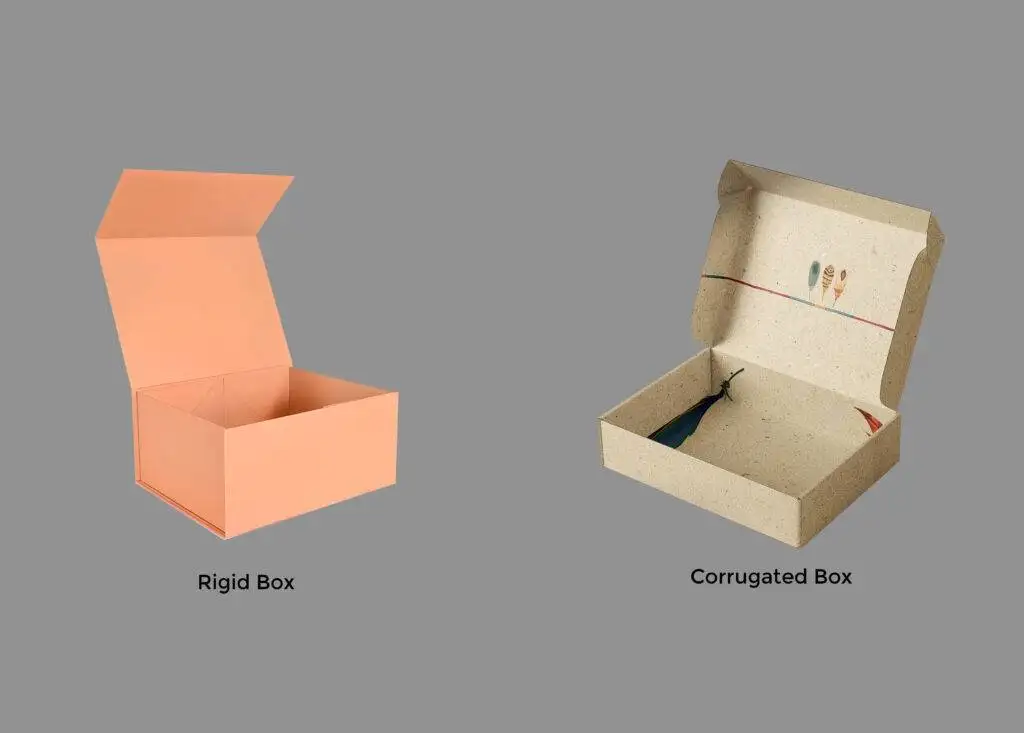
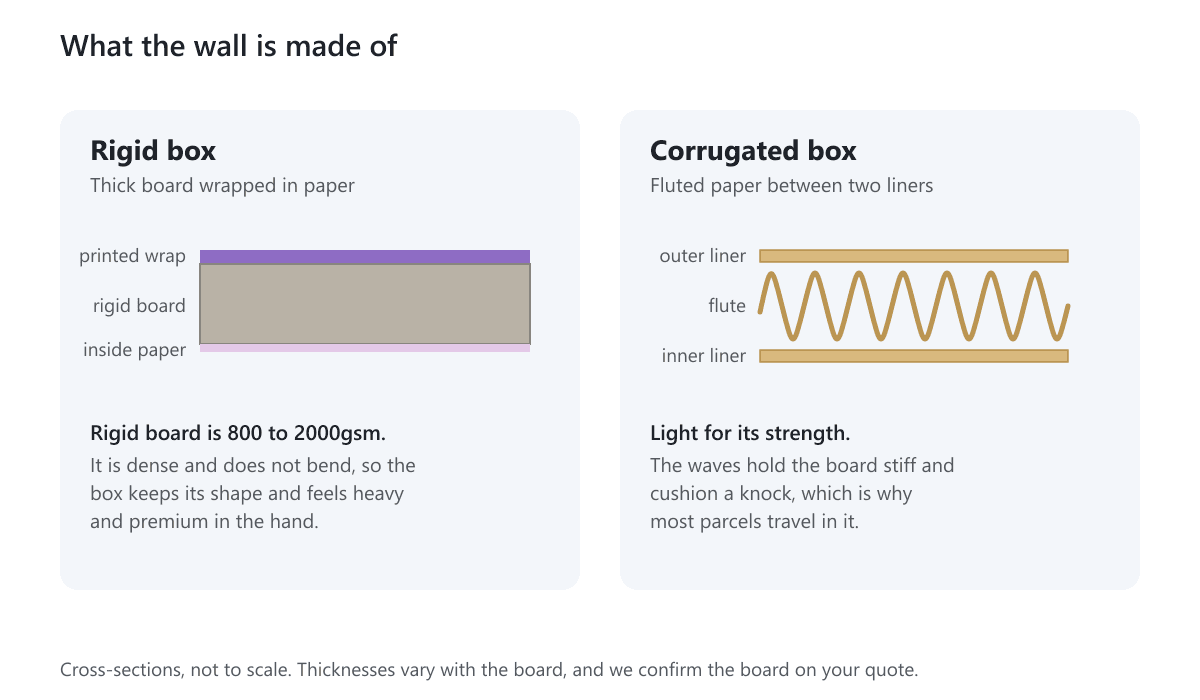
A rigid box is built from rigid board, a dense, thick paperboard in the range of 800 to 2000gsm, depending on the size of the box. The board is cut and shaped, then wrapped in printed paper. The wrap carries the color, the texture and the finish. The result does not bend or fold easily, so the box keeps its shape and feels solid in the hand.
Rigid boxes come in several styles. Two-piece boxes have a lid that lifts off a base. Hinged boxes have an attached lid, and magnetic boxes close with a magnet. Drawer boxes slide open. See our rigid boxes page for the styles we make.
Corrugated Boxes
Corrugated board is a wavy layer of paper, called the flute, glued between two flat liners. The waves work like small arches. They hold the board stiff and absorb knocks while the box stays light. Our corrugated boxes include mailer boxes and shipping boxes. Printed paper is applied to the liner to give full-color artwork.
Strength and Protection
The two kinds of strength are different, so the answer to "which is stronger?" depends on what you ask of the box.
- Crush and stacking. Corrugated is designed for this. Its flutes resist squashing, and boxes can be stacked in a carton or on a pallet.
- Shock and drops. The fluted layer cushions a knock. Corrugated is the usual choice for parcels.
- Shape and rigidity. A rigid box does not flex. It resists squeezing and keeps its form, which suits a product that is handled gently and displayed.
- Corners. The wrap on a rigid box can scuff or dent at the corners if the box is knocked. A tight, snug fit with an insert protects the contents even then.
In practice, a rigid box protects well on a shelf, in a drawer or in a customer's hands. For a long parcel journey, it is usually shipped inside a corrugated outer box. Our guide to which boxes are good for shipping explains the corrugated options.
Look, Feel and Printing
Rigid boxes win on first impressions. The weight, the wrapped finish and the way a lid lifts or a magnet closes all signal quality. They suit products where the box is part of the gift.
Corrugated boxes look more practical, but they can still be printed well. Our mailer boxes are printed inside, outside or both, and a printed mailer makes a good unboxing for the price.
| Rigid box | Corrugated box | |
|---|---|---|
| Printing | CMYK or Pantone on the wrap paper | CMYK or Pantone on the outer paper |
| Paper | White or kraft wrap, printed | White or brown kraft |
| Coatings | Matte, glossy, satin or soft touch, with varnish or lamination | The same options |
| Special finishes | Foil stamping, embossing or debossing, spot UV | Available, ask which suit your box |
| Look | Premium, boutique | Clean, direct |
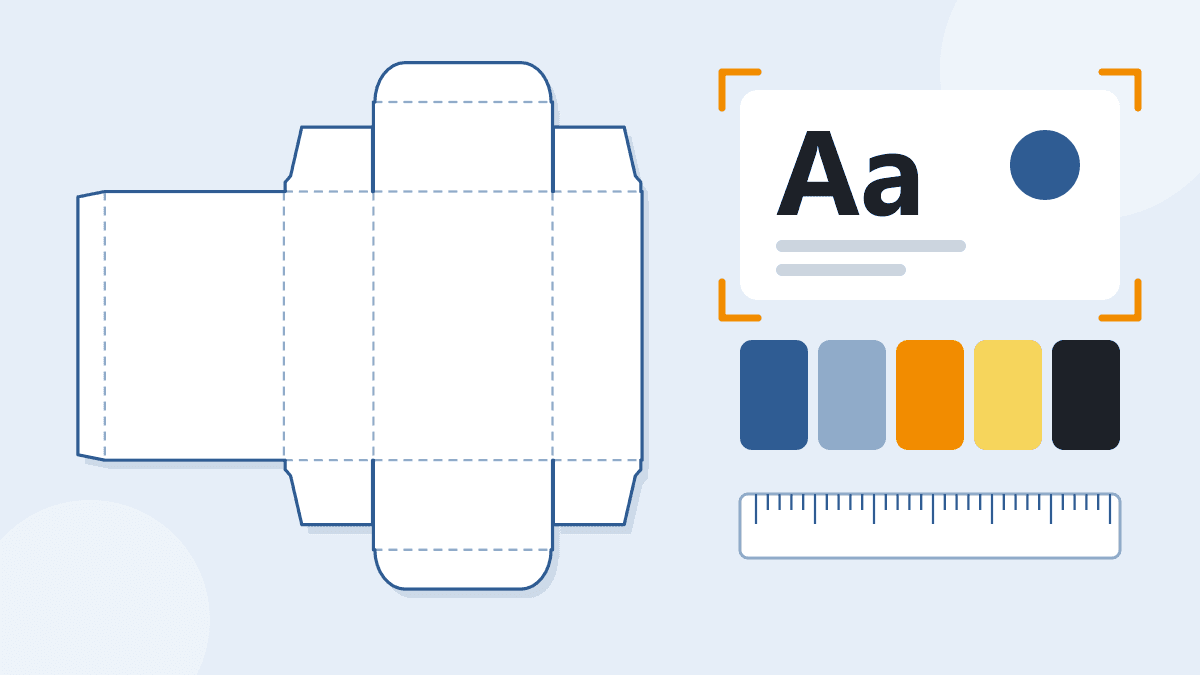
Finishes such as foil stamping, embossing or debossing and spot UV are available. Tell us the look you want and we confirm what works on the board you choose. Our free dieline templates let you preview the flat pattern of a box.
Shipping, Weight and Storage
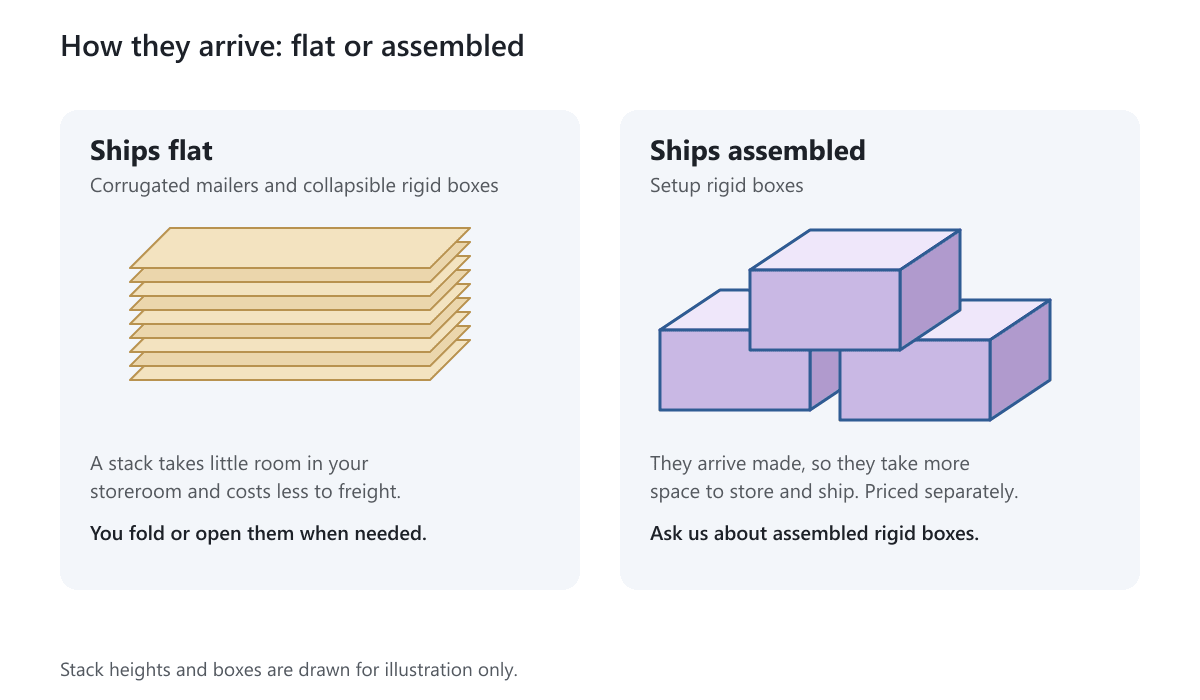
How a box arrives matters as much as how it looks, because it changes storage and freight.
- Corrugated boxes ship flat. You fold them up when you need them, so a large stock takes little room.
- Collapsible rigid boxes ship flat too. They fold down for freight and open into a rigid box.
- Setup rigid boxes ship assembled. They arrive ready to use, which takes more space to store and ship, and they are priced separately. The starting price on our rigid page is for collapsible rigid boxes delivered flat.
- Weight. Rigid board is dense and heavy. A rigid box adds weight to a parcel, while corrugated is light for its strength.
If your product will ship in an outer carton, count the extra layer: the rigid box plus the corrugated shipper. Our guide to measuring a box correctly explains inside and outside sizes and shipping size.
Cost: What to Expect
Rigid boxes cost more per box than corrugated ones. You are paying for denser board, the paper wrap, more hand and machine work, and finishing. The size of the gap depends on the style, the size and the finish, so see the starting price on each product page and ask for a quote on your own size.
Minimum orders are modest for both. Rigid boxes have a low minimum, shipping boxes start at 50 units and mailer boxes at 100 units. Each product page states its own minimum.
Think about total cost, not only the box. A corrugated mailer may be cheaper per box but may need an insert, while a rigid box may need an outer shipper. Our guide to packaging costs and product pricing explains what moves the price, and the one on custom shipping boxes shows how to work out break-even.
Sustainability: What to Consider
Both are paper-based, and neither is automatically greener. A few points help you compare.
- Recycling. Plain corrugated without plastic film is widely collected for recycling where local facilities accept it.
- Mixed materials. A rigid box often includes glue, a wrapped paper, sometimes magnets, ribbon or foam. Mixed materials can make recycling harder, and rules differ by town.
- Reuse. Many people keep rigid boxes for storage or gifts, which extends their life.
- Material per box. A rigid box uses more board than a corrugated mailer.
- Right-sizing. A box that fits closely uses less material and less filler, whichever you choose.
Recycled stock options are available on request. Whether a finished pack can be recycled depends on the board, the inks, the coatings and the adhesives, and on your local facilities.
Best Uses for Each Box
| Product or use | Better choice | Why |
|---|---|---|
| Jewelry and watches | Rigid | A gift-grade box with a magnet or a lid lifts the product |
| Cosmetics and fragrance gift sets | Rigid | Presentation and a keepsake box |
| Subscription box | Corrugated mailer | Printed, light, ships flat and holds a mix of items |
| E-commerce orders | Corrugated | Protects in transit at a lower cost |
| Books and heavy items | Corrugated shipping box | Strength and stacking |
| Premium electronics | Rigid, in an outer carton | Unboxing inside, protection outside |
| Food gifts | Either | Tell us if the food touches the box and we confirm suitable options |
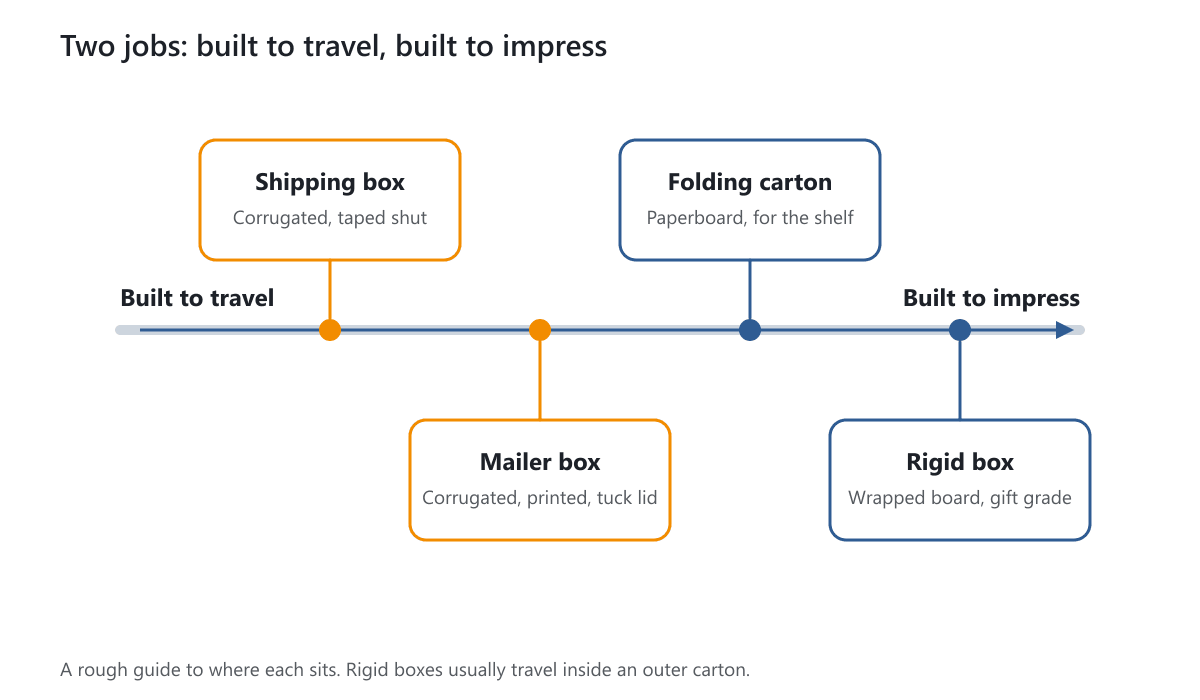
Can You Use Both Together
Yes, and many brands do. The pattern is simple: a rigid box holds the product and gives the unboxing, and a corrugated shipping box or mailer protects it on the way. This gives you the look of rigid and the protection of corrugated, at the cost of two boxes. If you use this setup, size the corrugated box around the rigid one and add a little paper or an insert so it cannot slide.
Another option is a printed corrugated mailer on its own. It looks good, ships well and costs less than a rigid box plus a shipper. See our mailer boxes and luxury packaging for the premium end, and our lid and base boxes page for two-piece options.
How to Choose: A Decision Guide
Answer these questions in order.
- What does the box need to do first? If it must survive a parcel journey alone, choose corrugated. If it must make the product feel like a gift, choose rigid.
- How heavy and fragile is the product? Heavy or fragile items need corrugated protection, with or without a rigid box inside.
- What does the product sell for? A premium price supports a rigid box. A low-margin product rarely does.
- How will it ship and be stored? Count space. Flat boxes save room, and assembled ones need more.
- Do you need a keepsake? If customers will keep or reuse the box, rigid earns its cost.
- What is your budget and run size? Check minimums and ask for quotes on both.
Common Mistakes
- Shipping a rigid box on its own and expecting it to survive the journey.
- Paying for rigid when the product is low-margin and nobody keeps the box.
- Ordering by looks without testing the fit.
- Forgetting that a rigid box and its outer carton add to the shipping size.
- Comparing an assembled setup box price with a flat-shipped one.
- Skipping an insert, so the product rattles in a rigid box.
Test Before You Order
Feel is hard to judge from a picture. A structural sample is an unprinted prototype that shows size and form, so you can check the fit and the feel before a full run. The Standard Sample Kit costs $50 with shipping included. It may not include rigid boxes or boxes that ship assembled, so ask us about rigid samples. The samples page lists every sample type.
When you are ready, tell us what you are packing and how it will ship, and we recommend a style: get a free quote. Design support is free.
Frequently Asked Questions
What is the difference between a rigid box and a corrugated box?
A rigid box is made of thick, dense board wrapped in printed paper for a premium, gift-grade look. A corrugated box is made of fluted cardboard that cushions shocks, so it is built for shipping and protection.
Is a rigid box stronger than a corrugated box?
They are strong in different ways. Rigid board keeps its shape and resists squeezing, while corrugated resists crushing and cushions drops, which is why parcels travel in it.
Can I ship a product in a rigid box?
You can, but a rigid box is usually shipped inside a corrugated outer box, because its corners can scuff or dent in transit.
Which is cheaper, rigid or corrugated?
Corrugated is usually cheaper per box. Rigid boxes cost more because of the denser board, the paper wrap and the finishing. See each product page for the starting price and ask for a quote for your size.
Do rigid boxes fold flat?
Some do. Collapsible rigid boxes ship flat and open up for use. Setup rigid boxes arrive assembled, which takes more space and is priced separately.
Are rigid boxes recyclable?
It depends on the build. Rigid boxes often combine board, glue, wrapped paper and sometimes magnets or foam, which can make recycling harder. Local rules differ, so check with your facility.
What is the minimum order for rigid and corrugated boxes?
Rigid boxes have a low minimum. Shipping boxes start at 50 units and mailer boxes at 100 units. Each product page states its own minimum.
Written by the PacksDo Team
We make custom printed packaging, from boxes and mailers to bags, labels and inserts. Questions about this guide? Ask us.