In this article
- 1Where to Put a Shipping Label on a Box: The Rules in Order
- 2Why Label Position Matters
- 3Label Size and Position on the Box
- 4Boxes With Seams, Mailers and Irregular Shapes
- 5Tubes, Bags and Envelopes
- 6Shipping More Than One Box
- 7Old Labels, Tape Over the Label and Keeping It Dry
- 8Return Address, Handling Marks and Extra Barcodes
- 9What to Check With Your Carrier
- 10Shipping Label Checklist
- 11Common Shipping Label Mistakes
- 12Plan the Label Area Into Your Packaging
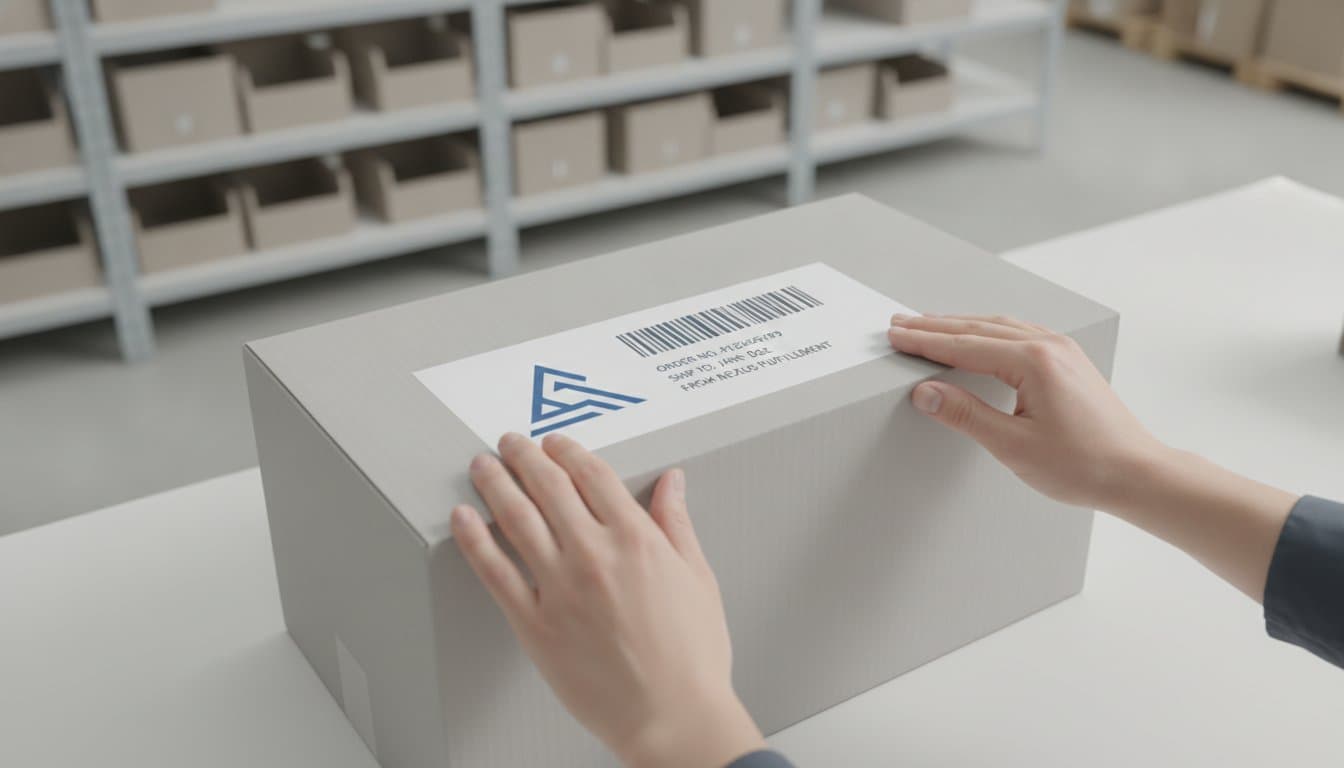
Put the shipping label on the largest flat side of the box, which is usually the top. Stick it flat on a single panel, away from seams, edges and corners, and leave the barcode uncovered so a scanner can read it.
That is the short answer. This guide shows exactly where to place a shipping label on a box, a tube, a bag and a shipment of several boxes. It also covers label size, what to do with old labels and tape, where the return address and handling marks go, and the mistakes that cause delays. Carriers publish their own rules and change them from time to time, so treat this as practical guidance and check your carrier's current requirements before you ship.
If you want your labels to do more than carry an address, see our guide to branding and labeling shipping boxes. This article is only about where the label goes.
Key takeaways
- Largest flat side. Usually the top. If the top has a taped seam, use a side panel with no seam.
- One flat panel. Never wrap a label over an edge, a corner, a seam or a fold.
- Keep the barcode clear. Do not cover it with tape, stickers, logos or handwriting.
- One current label. Remove or fully cover every old label and barcode.
- Press it down smooth. Work from the center out so there are no wrinkles or bubbles, then check that the barcode still scans.
- Check your carrier. Rules differ between carriers and change over time.
Where to Put a Shipping Label on a Box: The Rules in Order
Follow these steps in order and you will place the label correctly on almost any box. The whole job takes about a minute.
- 1. Pick the largest flat panel. On most boxes this is the top. On a tall, narrow box, it can be one of the long sides.
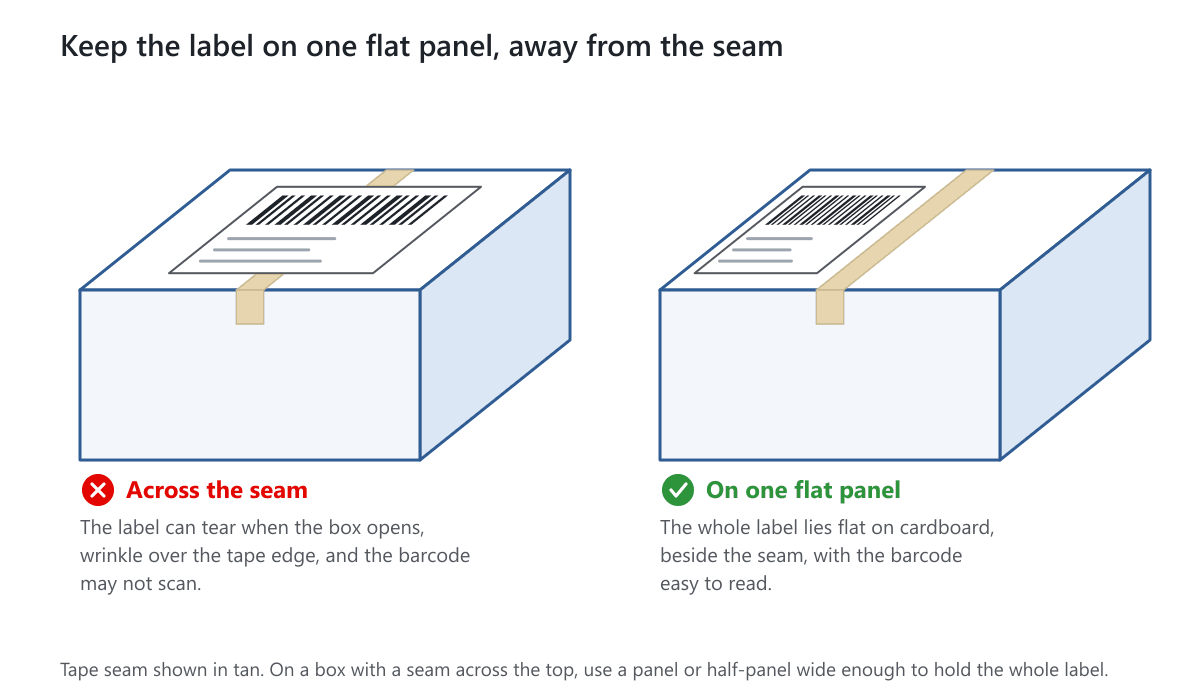
- 2. Check the panel is truly flat. Look for a taped seam, a fold, a hole, a handle, a bulge or a raised print area. If you find one, choose another panel.
- 3. Center the label on the panel. Leave a small margin of bare cardboard on every side, so the label never reaches an edge.
- 4. Line it up with the box. In most cases the long side of the label runs along the long side of the box, so it reads the right way up when someone looks at the box normally.
- 5. Press it on firmly. Start in the middle and smooth outward. Press the corners and edges down last.
- 6. Leave the barcode alone. Nothing goes over it, not tape, a sticker, a stamp or a marker.
- 7. Check there is only one label. If the box was used before, remove or cover the old one.
Why Label Position Matters
A shipping label is read by people and by machines. The barcode is scanned when the parcel is picked up, sorted, loaded and delivered. Some of those scans are by a handheld scanner, and some are by cameras or readers that look at a package as it moves past on a belt.
Machines read a barcode best when it is flat, clean and well lit. A label that curves around a corner, crosses a seam, sits under tape or has a wrinkle through it is harder to read. When a scan fails, the parcel often goes to a person to sort by hand. That costs time, and in the worst case it leads to a delay or a wrong turn on the way.
The address is the other half. A smudged or torn label that cannot be read by a person is a lost parcel waiting to happen. Good placement protects both.
Label Size and Position on the Box
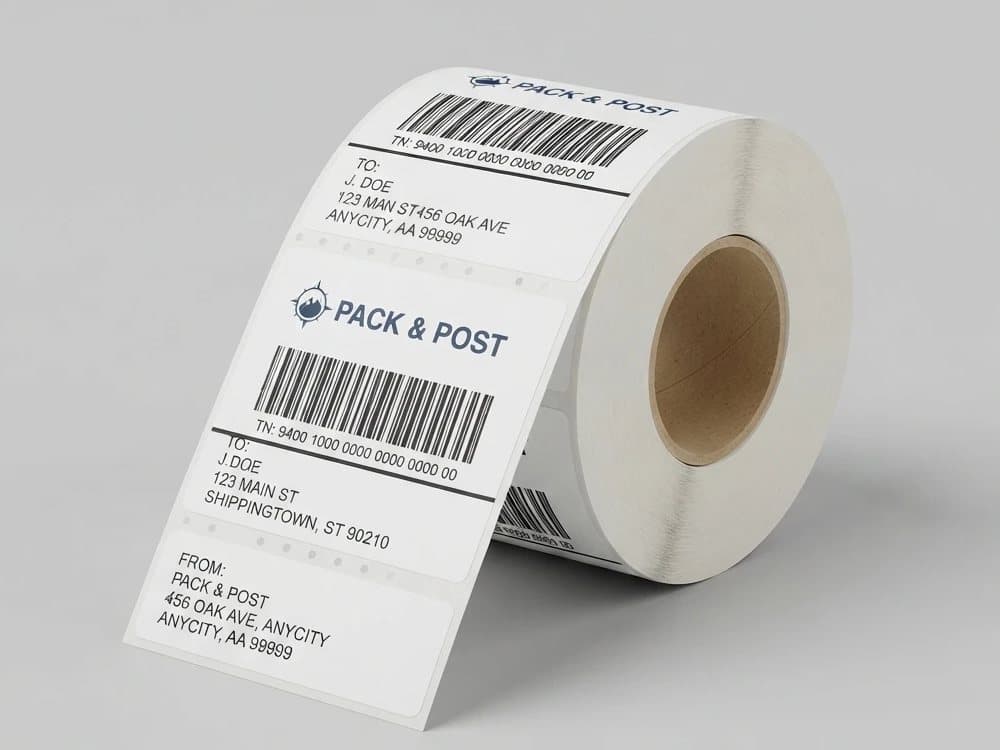
A label size you will see often is 4 x 6 inches, the common thermal shipping label. Your carrier, your printer and your shipping software decide the size you actually use. The rule for placement stays the same: the whole label must lie flat inside one panel with a margin around it.
FedEx suggests leaving at least 2 cm (about 0.8 inch) between the label and the edges of the box, if possible. A 4 x 6 inch label then needs a flat panel of about 5.6 x 7.6 inches. That is a guide from one carrier, not a rule for every carrier.
| Box or package | Best spot for the label | Avoid |
|---|---|---|
| Regular box with a taped top seam | A large side panel, or one half of the top if it is wide enough | Across the tape seam |
| Mailer box | The top of the lid, or a large flat side | Over the closing tab or hinge line |
| Tall, narrow box | The largest long side | The small end panels |
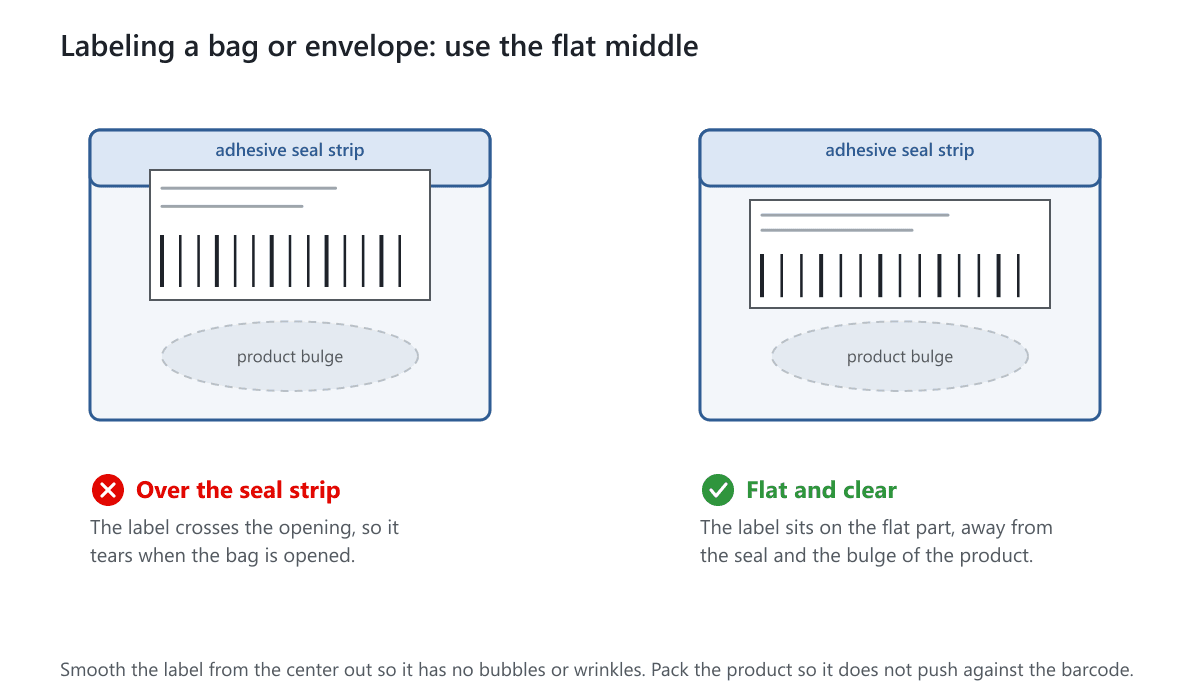
| Poly mailer or paper envelope | The flat middle of the front | The seal strip, zip or the bulge of the product |
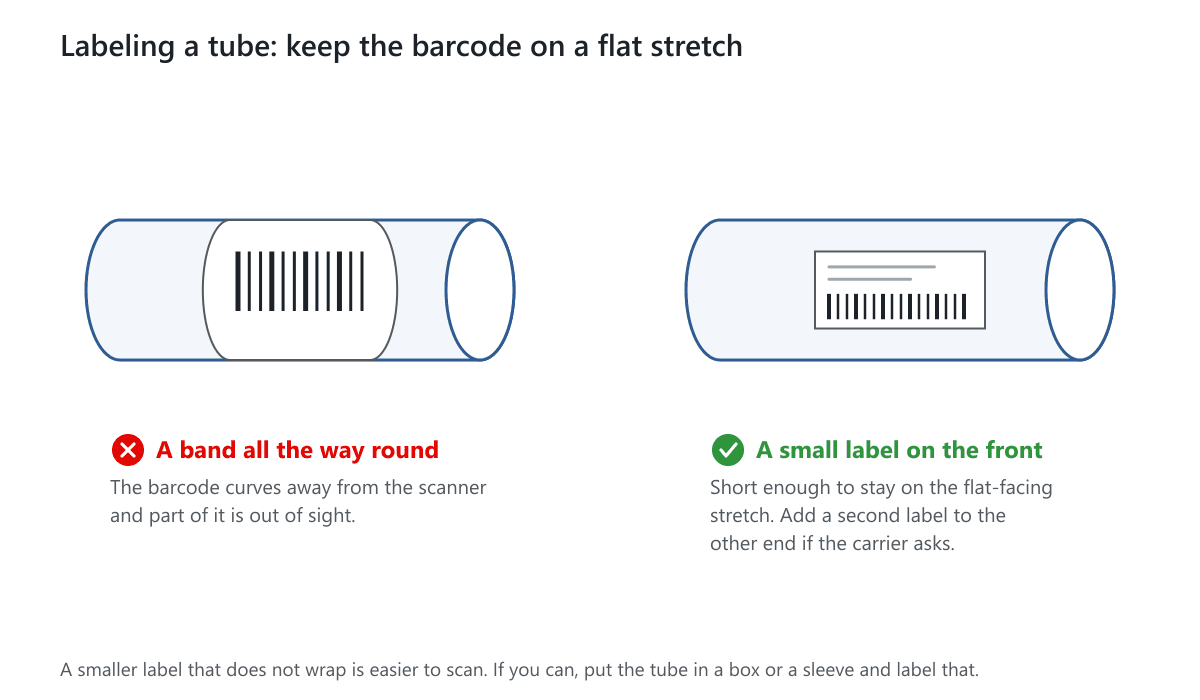
| Tube | A small label on the barrel, short enough not to wrap | A band all the way round |
| Irregular shape | Pack it in a box and label the box | Curved, bumpy or soft surfaces |
What if the Label Is Too Big for the Box
If the label does not fit on one panel with a margin, do not fold it around an edge. You have four choices.
- Use the largest panel and make sure no part of the label touches an edge.
- Print a smaller label if your carrier and shipping software allow it, as long as the barcode stays easy to read.
- Use a bigger box. A tiny box with no room for a label is a sign it may be too tight for shipping. Our guide to measuring a box correctly explains how size affects shipping cost.
- Ship the item inside an outer box or mailer and put the label on that.
Boxes With Seams, Mailers and Irregular Shapes
Regular Shipping Boxes
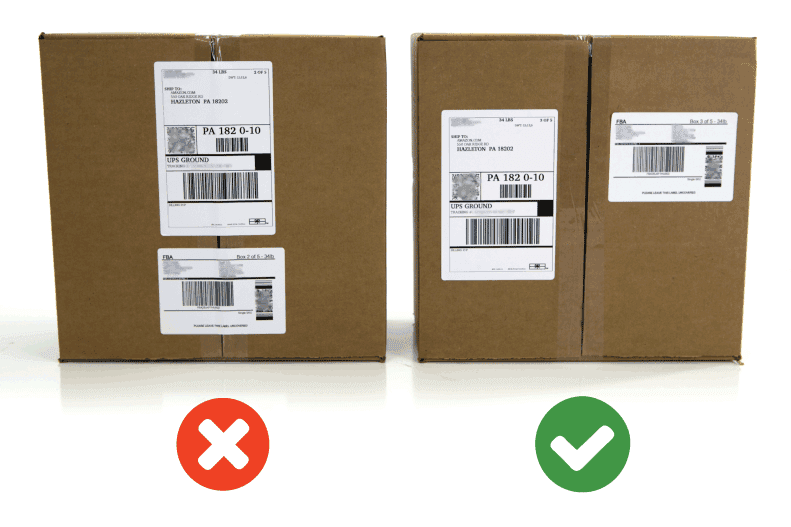
A regular shipping box is closed with tape along the top and bottom seams. The top is often the largest panel, but the seam runs through the middle of it. If one half of the top is wide enough to hold the whole label, you can place it there, beside the seam and not on it. If it is not, use a long side panel, which has no taped seam. Our custom shipping boxes are corrugated boxes made to your size, so you can also plan the panel you want for the label. If a label cannot avoid a seam, FedEx says to turn it so the address is on one side of the seam and the barcode is on the other, so the barcode stays flat.
Mailer Boxes
A mailer box has a one-piece lid, so the top is one clean panel with no tape seam. That makes it easy to place a label. Keep it off the tuck tab and the hinge line, and press it down so it does not catch when the lid opens. If you print the outside of the box, ask us to leave a plain, light area where the label will go, so a white label sits cleanly on the design. Our design support is free.
Irregular and Very Small Items
If an item has no flat panel big enough, do not stick the label on a curve or a soft bulge. Put it in a box or a mailer and label that. For a small product, a padded or poly mailer often gives you a flat front. Our guide to choosing a box for your product can help you pick the right outer package.
Tubes, Bags and Envelopes
Tubes and Round Packages
A barcode that bends around a tube is hard to scan, because part of it faces away from the scanner. Use a smaller label, apply it along the length of the tube on one side, and stop before it starts to wrap round. If you only have a big label, ship the tube in a box and label the box. Mailing tubes and cardboard tubes both follow this rule.
Poly Mailers, Padded Mailers and Envelopes
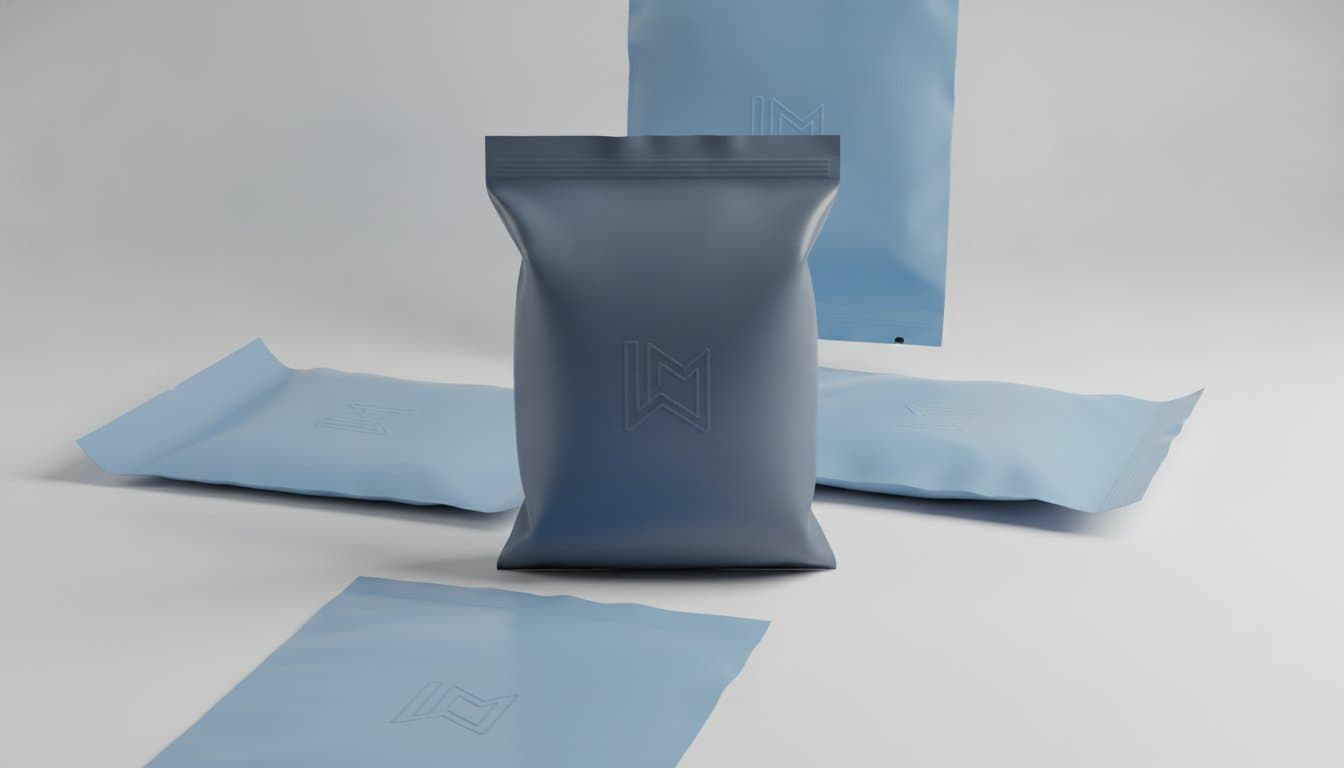
Put the label on the flat middle of the front. Keep it off the adhesive seal strip, the zip, the seams and the bulge where the product sits. If the product is lumpy, shift it to one end of the bag so the label area stays flat. Smooth the label from the center out so no bubbles form. See our poly mailers for branded shipping bags.
Shipping More Than One Box
Give every box its own label. One label per box is the general rule, and each box usually carries its own barcode so it can be tracked. Never stack the labels or put two on one panel.
- Mark the set. Many shippers write "1 of 3", "2 of 3" and "3 of 3" on the boxes, so a missing one is easy to spot. Ask your carrier if it prefers a different method.
- Do not bundle boxes with tape or strap unless the carrier allows it. UPS, for example, allows only boxes of the same size to be strapped together, and it requires an address label on each box.
- Pallets and freight are different. They have their own labeling rules, so ask your freight carrier.
Old Labels, Tape Over the Label and Keeping It Dry
What to Do With Old Labels
A used box can carry an old label and an old barcode. A scanner might read the wrong one. Peel the old label off if you can. If you cannot, cover every part of it with an opaque label or a sheet of plain paper held with tape, or block out the barcode completely. UPS asks shippers to remove or conceal old labels and shipment markings that no longer apply. Remove old handling marks and addresses that no longer apply too.
Can You Put Tape Over a Shipping Label
Tape is a common way to protect a label from rain and scuffs, but carriers warn about it. FedEx says not to put tape over the barcode, even clear tape, because the shiny surface can reflect light and cause scanning problems. USPS says barcodes with tape over them cannot be scanned by its equipment.
A safe approach is to use a label with an adhesive back, which usually needs no tape, or to use a clear label pouch. If you print on plain paper, tape only around the edges of the label and keep the barcode uncovered, then check that the barcode still scans with your phone or scanner. UPS, for example, advises covering a label with clear tape only on irregularly shaped items, so check your carrier's advice.
Keeping the Label Dry and Attached
A label sticks best to a clean, dry, dust-free surface. If a box has been in a damp place, wipe it first. Apply the label at room temperature if you can, because cold, damp cardboard holds adhesive poorly. Let printed ink dry before you handle the label, so it does not smudge.
Return Address, Handling Marks and Extra Barcodes
- Return address. Most carrier labels already include a "from" address. If you write one by hand, put it small, in the top left of the same panel, and keep it well away from the barcode.
- "This side up" and "fragile" marks. These help people, not scanners. Put them on at least two sides, away from the label panel and the barcode. Pack as if the box could be turned over, because machines handle many parcels.
- Extra barcodes and QR codes. A branding QR code or a second barcode near the shipping label can confuse a scanner that reads every code in view. Put marketing codes on a different panel, or inside the box.
- Dangerous goods. Batteries, aerosols and some liquids have extra labeling rules. Check them with your carrier and local law. This guide does not cover them.
What to Check With Your Carrier
Every carrier publishes its own packaging and labeling rules, and they can change. Before you build a routine, look up these points on your carrier's website:
- The label sizes and printing methods the carrier accepts.
- Whether plain paper labels taped to the box are accepted, or an adhesive label is needed.
- How to label packages in a multi-piece shipment.
- Where to put customs documents on an international parcel.
- Extra marks for special goods such as batteries or liquids.
Shipping Label Checklist
- The label is on the largest flat panel with no seam, fold or edge under it.
- A margin of bare cardboard surrounds the label.
- The label is smooth, with no wrinkles, bubbles or lifted corners.
- The barcode is clear and has nothing over it.
- Old labels are removed or fully covered.
- There is one label per box, marked "1 of 3" and so on when you ship several.
- The return address is on the label or small in the top left corner.
- Handling marks are on the sides, away from the barcode.
- You scanned the barcode once to test it.
Common Shipping Label Mistakes
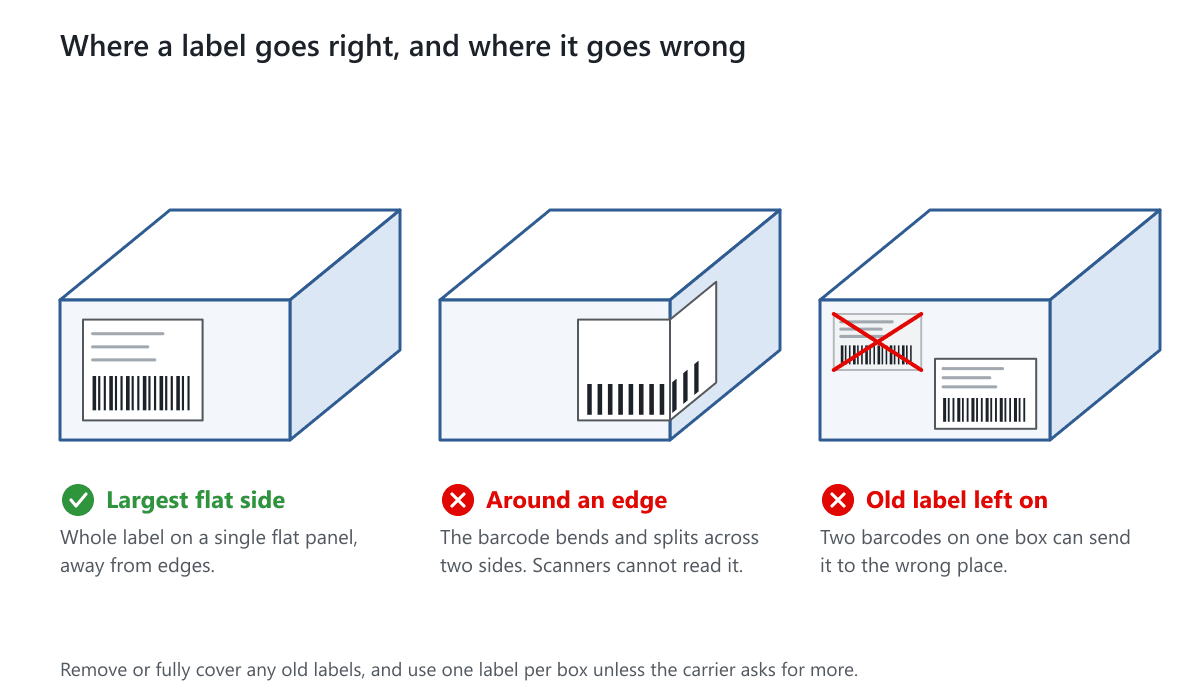
- Putting the label across the tape seam.
- Wrapping the label round an edge or corner.
- Leaving an old label on the box.
- Covering the barcode with tape of any kind.
- Using a label that is too big for the panel.
- Placing the label on the bottom or on a panel that is hidden when boxes are stacked.
- Printing at low quality, so the barcode is faint or fuzzy.
- Putting a marketing QR code next to the shipping barcode.
Plan the Label Area Into Your Packaging
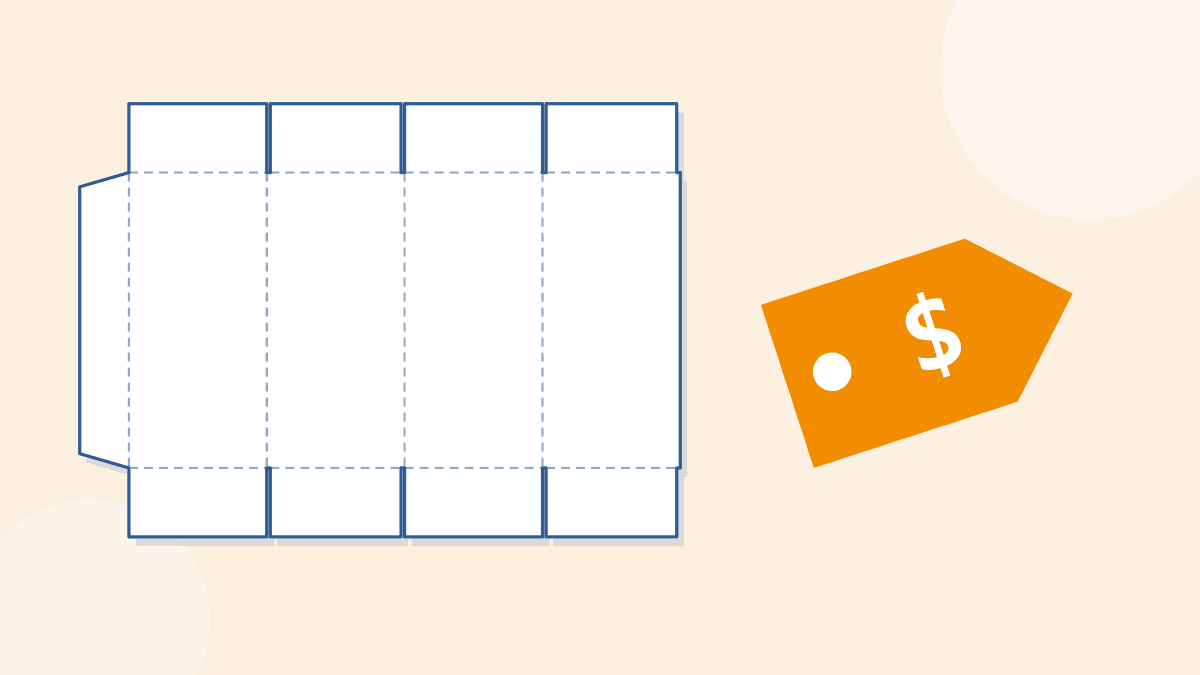
If you order custom boxes, plan the label panel before the artwork is final. Tell us where the label will go, and we leave a plain area for it in the design. You can see how your size and style lay out on our free dieline templates. If you also want branded stickers, tape or labels on a roll, see our custom stickers and labels.
Not sure which box to ship in? Try the Standard Sample Kit to hold the real thing, or get a free quote and tell us what you are shipping.
Frequently Asked Questions
Where do you put a shipping label on a box?
Put it on the largest flat side, usually the top, in the center of one panel. Keep it off seams, edges, corners and folds, and keep the barcode clear of tape and marks.
Can you put a shipping label on the side of a box?
Yes. If the top has a taped seam or is too small, use a large side panel. Place the label in the middle of the panel so it does not reach an edge.
Should a shipping label go on the top or the side of a box?
The top is the usual choice because it is easy to see and scan. Use a side panel when the top is cluttered, has a seam through the middle or is too small for the whole label.
What if the shipping label is too big for the box?
Do not wrap it around an edge. Use the largest panel, print a smaller label if your carrier allows it, move to a bigger box or ship inside an outer box.
Can you put clear tape over a shipping label?
Check your carrier first. FedEx and USPS say not to put tape over the barcode, even clear tape, because it can cause scanning problems. The safest option is a label with an adhesive back or a clear label pouch. If you must tape a paper label, tape around its edges and keep the barcode uncovered.
Where does the return address go?
Most carrier labels print it for you. If you write it by hand, put it small in the top left of the same panel, away from the barcode.
Does every box in a multi-box shipment need its own label?
Yes, each box normally carries its own label so it can be tracked. Marking the boxes "1 of 3", "2 of 3" and so on helps you spot a missing one. Check your carrier for its own method.
What do I do with the old label on a reused box?
Peel it off, or cover it completely with an opaque label or plain paper. UPS asks shippers to remove or conceal old labels and markings, and a scanner might still read an old barcode that is not fully covered.
Sources
- FedEx: How To Print, Manage and Create a Shipping Label (opens in a new tab) (largest surface, seams and edges, no tape over the barcode, one unique label per shipment)
- FedEx: How to Label a Package (Switzerland English site, metric units) (opens in a new tab) (2 cm from the edges if possible, tape around the edges only, poly mailers)
- UPS: Packaging Guidelines (PDF) (opens in a new tab) (file created November 12, 2024; no label on a seam, edge or closure, strapped boxes, old labels, irregular items)
- USPS: How to Prepare & Send a Package (opens in a new tab) (address parallel to the longest side, labels on one side, not bent, folded or overlapped)
- USPS FAQs: Should I Use Tape or Write On Envelopes and Boxes? (opens in a new tab) (October 18, 2019; tape over a shipping label barcode)
Checked on October 7, 2026
Written by the PacksDo Team
We make custom printed packaging, from boxes and mailers to bags, labels and inserts. Questions about this guide? Ask us.