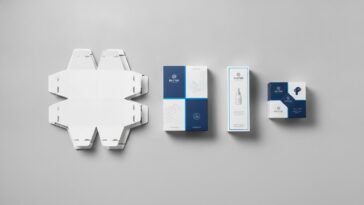
Why spend thousands on digital marketing only to deliver a generic box that fails to protect your hard-earned investment? You’ve likely felt the sting of high return rates due to shipping damage or the frustration of seeing a premium product arrive in a “boring” package that lacks personality. It’s a common hurdle for brands looking to scale, yet the right packaging inserts can turn these logistical headaches into your greatest competitive advantage. You deserve a solution that matches the quality of the products you carefully create.
This guide shows you how to strategically use these tools to safeguard your products, delight your customers, and transform every unboxing into a powerful branding moment. We’ll help you move from logistical necessity to brand elevation with ease. Discover how custom-engineered paperboard provides the structural integrity you need for zero shipping damage while simultaneously sharpening your brand aesthetic. We will explore cost-effective, sustainable materials and design strategies that turn a simple delivery into a social-media-ready experience that drives loyalty and distinguishes your brand in a crowded marketplace.
Key Takeaways
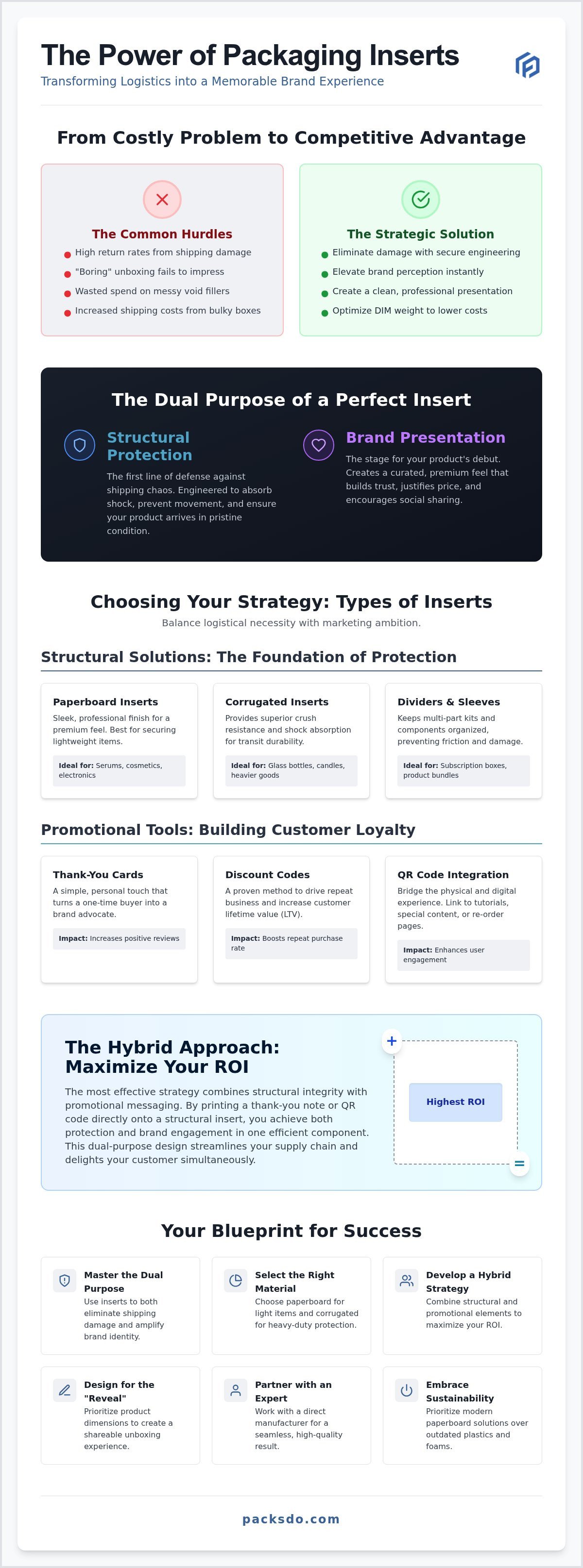
- Master the dual purpose of internal packaging to eliminate shipping damage while amplifying your brand’s visual identity.
- Identify the specific benefits of paperboard versus corrugated materials to select the most professional fit for your product weight.
- Develop a hybrid strategy that combines structural support with promotional elements to maximize your return on investment.
- Follow a precise design workflow that prioritizes product dimensions and the “reveal” moment to create a shareable unboxing experience.
- Partner with a direct manufacturer to ensure your packaging inserts provide a seamless, high-quality match for your custom folding cartons.
What are Packaging Inserts? Defining the Core of Product Presentation
At its core, a packaging insert is any secondary material placed inside a box to secure or enhance your product. It’s the bridge between a simple shipping container and a high-end brand experience. These components serve a vital dual purpose: they provide rigorous physical protection during transit and act as a sophisticated vehicle for aesthetic brand communication. When you choose high-quality packaging inserts, you’re not just buying a piece of paperboard. You’re investing in a professional safeguard that ensures your product arrives exactly as intended.
As we move through 2026, the industry has pivoted sharply away from non-recyclable plastics and bulky foams. Modern brands now prioritize sustainable paperboard solutions that offer the same structural integrity with a significantly smaller environmental footprint. Beyond aesthetics, precision-engineered inserts are critical for controlling Dimensional Weight (DIM weight) shipping costs. By eliminating unnecessary air space and securing products in the smallest possible footprint, you can use smaller outer boxes. This directly lowers your fulfillment expenses while maintaining a premium look.
The Functional Role of Structural Inserts
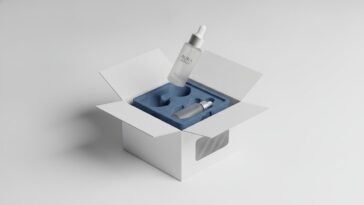
Custom box inserts are your first line of defense against the chaos of the shipping cycle. They prevent internal movement and friction, ensuring that your items don’t bounce against the box walls or collide with other components. For brands selling fragile items like glass serums or delicate cosmetics, “snug fit” engineering is non-negotiable. A well-designed insert locks the product in place, absorbing shocks that would otherwise lead to shattered glass and costly returns. By adopting these tailored solutions, you also eliminate the need for messy void fillers like packing peanuts or excessive bubble wrap. This results in a cleaner, more professional presentation that customers appreciate immediately upon opening.
The Emotional Role of Brand Inserts
Design is about more than just protection; it’s about perception. A high-quality insert creates a “curated” feel that justifies premium price points and builds instant trust with your audience. Strategic placement allows you to guide the customer’s eye exactly where you want it. Whether it’s a specific label or a complementary accessory, the layout ensures the most important part of the product is seen first. Think of your insert as the stage for your product’s debut, providing the structure and spotlight necessary for a truly memorable performance. This level of intentionality transforms a standard delivery into a signature brand moment that encourages social media sharing and repeat purchases.
Types of Packaging Inserts: Choosing the Right Strategy for Your Brand
Selecting the right variety of packaging inserts requires a balance between logistical necessity and marketing ambition. You likely need to solve two problems simultaneously: keeping your product secure and keeping your customer engaged. While structural inserts focus on the physical integrity of the shipment, promotional inserts aim for emotional resonance. A hybrid approach often yields the highest ROI. By combining a structural cradle with a printed thank-you message or a QR code, you streamline your supply chain while delighting the end-user. This dual-purpose strategy ensures that every square inch of your packaging is working toward brand growth.
Structural Inserts: Custom Die-Cut Solutions
Precision is the hallmark of structural design. These are the heavy lifters of the packaging world, engineered to absorb shock and prevent movement. For lightweight items like serums or lipsticks, folding carton inserts offer a sleek, professional finish that mirrors the quality of the product inside. If you’re shipping heavier goods, such as glass bottles or large candles, corrugated inserts provide the necessary crush resistance to survive the rigors of national shipping. Organization is equally vital for multi-part kits or subscription boxes; here, custom dividers and sleeves ensure each component stays in its designated place, preventing friction and maintaining a pristine presentation.
Promotional Inserts: Building Customer Loyalty
Promotional elements are about building long-term loyalty after the initial sale. A simple thank-you card or a personalized note can turn a one-time buyer into a vocal brand advocate. Including discount codes for a next purchase is a proven way to drive repeat business and increase customer lifetime value. In 2026, QR codes have become essential. They bridge the gap between the physical box and digital assembly videos, social sharing prompts, or exclusive loyalty program sign-ups. These small additions carry significant weight in how a customer perceives your brand’s value and attention to detail.
Functional branding is a rising trend where the insert itself serves as the instruction manual. Instead of adding a separate paper leaflet, print your usage guides directly onto the paperboard. This reduces waste and ensures the information is front and center. Adopting a mono-material strategy, where you use the same paperboard for both your outer box and its internal components, simplifies the recycling process for your customers. It shows a commitment to sustainability without sacrificing style. Explore how custom box inserts can be engineered to fit your specific product dimensions while maintaining this professional polish.
Consistency in material and color is the final piece of the puzzle. When your insert matches your outer box perfectly, it signals a level of craftsmanship that generic solutions simply cannot replicate. This unified look reinforces your brand’s authority and makes the unboxing experience feel like a cohesive narrative rather than a collection of random parts. By choosing materials that are both durable and easy to recycle, you meet the modern consumer’s demand for eco-conscious luxury.
Material Science: Comparing Paperboard vs. Corrugated Inserts
Selecting the right substrate for your packaging inserts is a pivot point between logistical failure and brand success. You must evaluate three core variables: the physical weight of your product, its inherent fragility, and the internal dimensions of your outer box. Heavy items require structural rigidity to prevent the box from collapsing; lightweight items benefit from the refined finish of paperboard. Engineering the perfect fit means choosing a material that absorbs energy during drops while maintaining its shape. This technical precision ensures your product remains the hero of the unboxing experience, protected by a material choice that reflects your brand’s commitment to quality.
Folding Carton Inserts: Precision and Polish
Folding carton inserts are the gold standard for retail-ready presentation. These paperboard solutions are exceptionally versatile, allowing for intricate die-cut shapes that hold small items with surgical precision. Because paperboard offers a smoother, more uniform surface than corrugated board, it supports high-resolution printing and luxury finishes like spot UV or foil stamping. This makes them the ideal choice for Custom Lipstick Boxes and delicate serums where the tactile experience is just as important as the visual. When designing these, pay close attention to “Caliper,” which refers to the paper’s thickness measured in points. A higher caliper, such as 24pt, provides a substantial, premium feel that signals durability to your customer.
Custom Corrugated Inserts: The Heavy-Duty Shield
When your shipping environment involves high-impact transit or heavy e-commerce handling, corrugated fiberboard becomes your most reliable ally. Unlike flat paperboard, corrugated material features a fluted medium between two liners, creating an internal cushion that excels at shock absorption. This is essential for glass containers, electronics, or bottled beverages that face significant vibration. Most brands utilize E-flute for a slimmer profile that saves space, or B-flute for maximum crush resistance in larger kits. To ensure your design meets industrial standards, consult a technical custom packaging inserts checklist to verify your flute choice against your product’s specific protection requirements.
Consistency across your packaging suite isn’t just about color; it’s about material harmony. Using high-quality paperboard for both your folding cartons and your internal supports creates a seamless “mono-material” look that simplifies the unboxing process. It also streamlines your recycling message, as customers can dispose of the entire package in a single bin. By mastering the science of these materials, you transition from simply shipping a product to delivering a meticulously crafted brand statement that survives the journey intact.
Designing for the Unboxing Experience: A Step-by-Step Approach
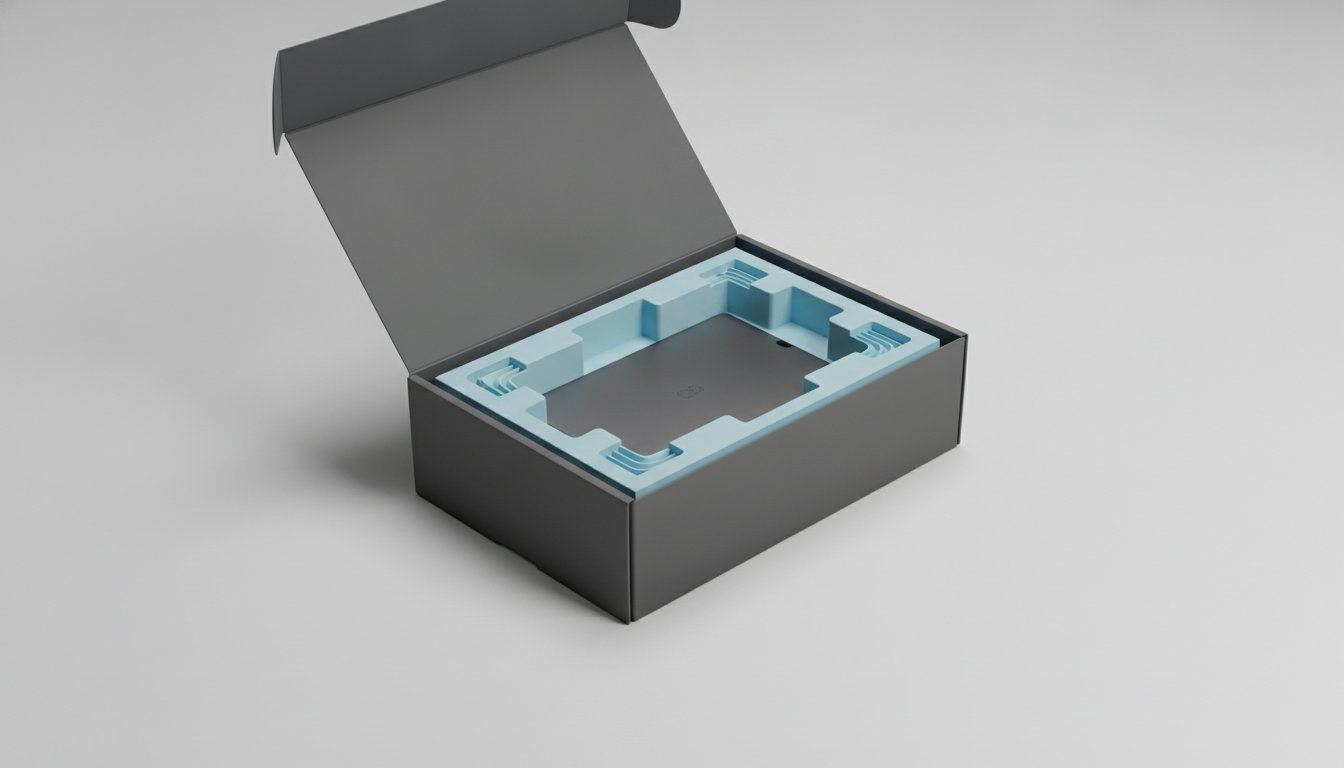
Designing the perfect unboxing experience is a calculated process that begins with engineering. You aren’t just filling space; you’re choreographing a sequence of events. Precise product measurements are non-negotiable at this stage. Even a deviation of a single millimeter can result in a loose fit or a box that won’t seal correctly. Start by capturing the exact length, width, and height of your product. This data allows your packaging inserts to provide the structural “snap” that signifies high-end quality and professional reliability.
Once the dimensions are set, determine the unboxing “reveal.” Decide which side of the product faces the customer immediately upon opening. This orientation is your chance to showcase your primary label or a unique design feature. Use the flat surface area of the insert to integrate your branding. Instead of leaving the paperboard blank, print logos, brand stories, or social media handles directly onto the material. This turns a functional component into a high-impact marketing tool that communicates your brand’s values the moment the lid is lifted.
Before committing to full-color production, request a “plain” structural sample. Testing a white or kraft prototype allows you to verify the fit and the unboxing flow without the distraction of graphics. It’s the only way to ensure the physical experience matches your digital design. Consulting with a custom packaging supplier during this phase is vital to ensure die-line accuracy and manufacturing feasibility. Their expertise can help you avoid common pitfalls like weak fold lines or improper clearance for product removal.
Maximizing the ‘Reveal’ with Die-Cutting
Die-cutting offers creative freedom to frame specific features. Use custom cut-outs to highlight product labels or unique bottle shapes, creating a visual spotlight. Incorporate “thumb notches” to allow customers to remove the product with ease, avoiding the frustration of digging into a tight space. A well-designed insert eliminates “box rattle” and the perceived cheapness of loose items, replacing it with a sense of deliberate, professional craftsmanship that justifies your price point.
Sustainability as a Design Choice
Modern design prioritizes the environment as much as aesthetics. Focus on “glue-less” inserts that rely on clever folding patterns to stay in place. This reduces chemical use and simplifies the assembly process for your fulfillment team. Encourage your customers to participate in your brand’s values by printing clear disposal instructions directly on the paperboard. Using soy-based inks further enhances the recyclability of your packaging inserts, ensuring that your premium presentation doesn’t come at an ecological cost. Ready to elevate your presentation? Start your custom insert project today to see the difference precision engineering makes.
Partnering with PacksDo for Professional Custom Inserts
Achieving a flawless unboxing experience requires a partner who understands the synergy between outer shells and internal supports. We specialize in both folding cartons and matching packaging inserts, ensuring a seamless fit every time. By working with a direct supplier, you eliminate the communication gaps that often occur when dealing with separate vendors. This results in perfect color matching and material consistency across your entire packaging suite. You aren’t just buying components; you’re building a cohesive brand narrative that starts the moment the package arrives. Our direct-to-brand model ensures that your vision isn’t lost in translation between a broker and a factory.
Our approach integrates high-quality custom product boxes with tailored internal engineering. This total solution is built for scalability, allowing your packaging to grow as your business expands. Whether you’re a boutique soap maker or a national skincare brand, our production capabilities are designed to meet your specific volume requirements. We prioritize cost-efficiency through our direct manufacturing model, providing professional-grade materials without the middleman markup. This allows you to invest more in your product while maintaining a premium presentation that distinguishes you from the competition.
Customization Without Complexity
We act as your creative enabler by removing the technical barriers to professional packaging. You don’t need to be a structural engineer to get world-class results. From custom candle boxes to intricate serum displays, we provide the steady hand needed to navigate the complexities of production. Our team supports diverse industries, ensuring that your unique brand voice is translated into a tangible reality. We understand that every millisecond of the unboxing process matters. We’re here to help you move from a state of logistical need to a vision of total brand elevation. Our process is transparent, efficient, and focused on your success.
Next Steps: From Vision to Production
Moving from a concept to a finished product is a straightforward journey when you have the right partner. Start by gathering your product’s weight and precise dimensions. This data allows us to provide an accurate quote and suggest the best material caliper for your specific packaging inserts. Once the design is approved and the die-lines are verified, our national US coverage ensures efficient production and reliable shipping to your doorstep. We handle the manufacturing complexities so you can focus on scaling your business. Ready to elevate your brand? Explore PacksDo’s custom insert solutions today.
Elevate Your Brand Strategy for 2026 and Beyond
Mastering the art of internal presentation transforms a simple shipment into a signature brand moment. You now understand how the right material choice, whether refined paperboard or durable corrugated fiberboard, ensures your product survives the journey while looking impeccable. Strategic packaging inserts do more than just prevent damage; they act as silent brand ambassadors that build customer loyalty and encourage social sharing. By focusing on precise dimensions and a curated reveal, you move from basic fulfillment to true brand elevation.
Partnering with a specialist ensures your vision is executed with industrial precision. We bring deep expertise in folding cartons and engineered inserts to every project, offering national US manufacturing and shipping that you can rely on. Our specialized solutions for skincare, candles, and cosmetics are designed to help you scale with confidence. Upgrade your unboxing experience with custom inserts from PacksDo and transform your logistical needs into a competitive edge. The transition from logistical necessity to market distinction is within your reach. Take the next step toward a more secure, stunning, and successful brand presence.
Frequently Asked Questions
What are the most common materials used for packaging inserts?
Paperboard and corrugated fiberboard are the industry standards for modern brands seeking a balance of protection and professional polish. Paperboard offers a smooth, high-quality printable surface that is ideal for luxury items like cosmetics or skincare. Corrugated materials provide the fluted cushioning necessary for heavier products, such as candles or glass bottles, that require extra shock absorption during national shipping cycles.
How do I measure my product for a custom die-cut insert?
Measure your product’s longest, widest, and deepest points using a digital caliper for the highest level of accuracy. These precise dimensions allow for the creation of packaging inserts that lock your item in place, preventing any internal movement or “box rattle.” Don’t forget to account for any protruding caps, pumps, or accessories that might affect how the item sits within the cutout.
Can packaging inserts really reduce my shipping costs?
Yes, precision-engineered inserts allow you to utilize smaller outer boxes, which directly lowers your Dimensional Weight (DIM weight) charges. By eliminating unnecessary air space and securing your products in a compact footprint, you optimize the volume your package occupies on a carrier’s truck. This strategy often results in lower fulfillment fees and reduced waste over high-volume shipping operations.
What is the difference between a box insert and a packaging sleeve?
A box insert is an internal structural component designed to hold and protect your product, while a packaging sleeve is an external branding element that slides over a box. Inserts focus on the unboxing “reveal” and physical security during transit. Sleeves provide an additional layer of marketing real estate and can serve as a cost-effective way to update branding without changing your primary box design.
Are custom paperboard inserts as strong as plastic or foam?
Custom-engineered paperboard inserts offer comparable protection for most retail goods without the negative environmental impact of plastic or foam. Through strategic folding patterns and structural ribbing, paperboard provides the rigidity needed to prevent product shifting and crushing. For high-impact needs, corrugated inserts absorb the shocks of e-commerce handling while remaining fully recyclable in standard paper streams.
How can I make my packaging inserts more sustainable?
Adopt a mono-material strategy where your box and packaging inserts both use the same recyclable paperboard. You can also implement glue-less designs that rely on clever interlocking tabs instead of chemical adhesives. Using soy-based inks further enhances the eco-friendly profile of your package, ensuring that the entire unboxing experience is as responsible as it is beautiful.
Do I need a professional designer to create an insert die-line?
You don’t need to hire an outside agency, as many direct manufacturers provide technical die-line support as part of the production process. Providing accurate product specs and dimensions is usually enough for a supplier to generate a precise template for your approval. This technical collaboration ensures that every fold and cutout is optimized for both structural integrity and manufacturing efficiency.
What is the typical lead time for custom-engineered inserts?
Timelines vary based on design complexity, but most projects move from final design approval to national shipping within a few weeks. This period includes the time required for structural prototyping, high-quality printing, and final die-cutting. Working with a domestic manufacturer helps minimize transit times and ensures you can restock your custom solutions quickly as your business grows.