In this article
- 1What Retail Packaging Is (and What It Is Not)
- 2What Retail Packaging Has to Do
- 3Anatomy of a Retail Pack
- 4Types of Retail Packaging
- 5What Retail Packaging Is Made Of
- 6Design Principles for the Shelf
- 7Retail Packaging vs Shipping Packaging
- 8Information and Compliance: Check These
- 9Examples: Three Shelf Situations
- 10Cost and Trade-Offs
- 11Common Retail Packaging Mistakes
- 12Retail Packaging Checklist
- 13Your Next Step
Retail packaging is the packaging a product is sold in: the box, carton, bag, sleeve or tag that the shopper sees and handles in a store, or sees in a photo when buying online. It protects the product, tells the shopper what it is, and helps it stand out against other products on the shelf.
That separates it from shipping packaging, which exists to get goods from one place to another and is rarely seen by the customer. This guide explains what retail packaging has to do, the types, how a retail pack is built, the design principles that work on a shelf, and the compliance details to check. If you want to see what we make for the shelf, visit our retail packaging page.
Key takeaways
- Retail packaging is the layer the shopper sees, usually a box or carton around the product.
- It has five jobs: protect, inform, attract, fit the display and carry the codes a store needs.
- The front of the pack gets a few seconds. Show the brand, the product name and one clear benefit.
- Required text is your responsibility. Ingredients, warnings, barcodes and claims depend on the product and the market, and you must check them.
- Fit the shelf. Ask the retailer for size, hanging and barcode requirements before you design.
What Retail Packaging Is (and What It Is Not)
Packaging comes in layers, and people mix them up. The same product can have all three.
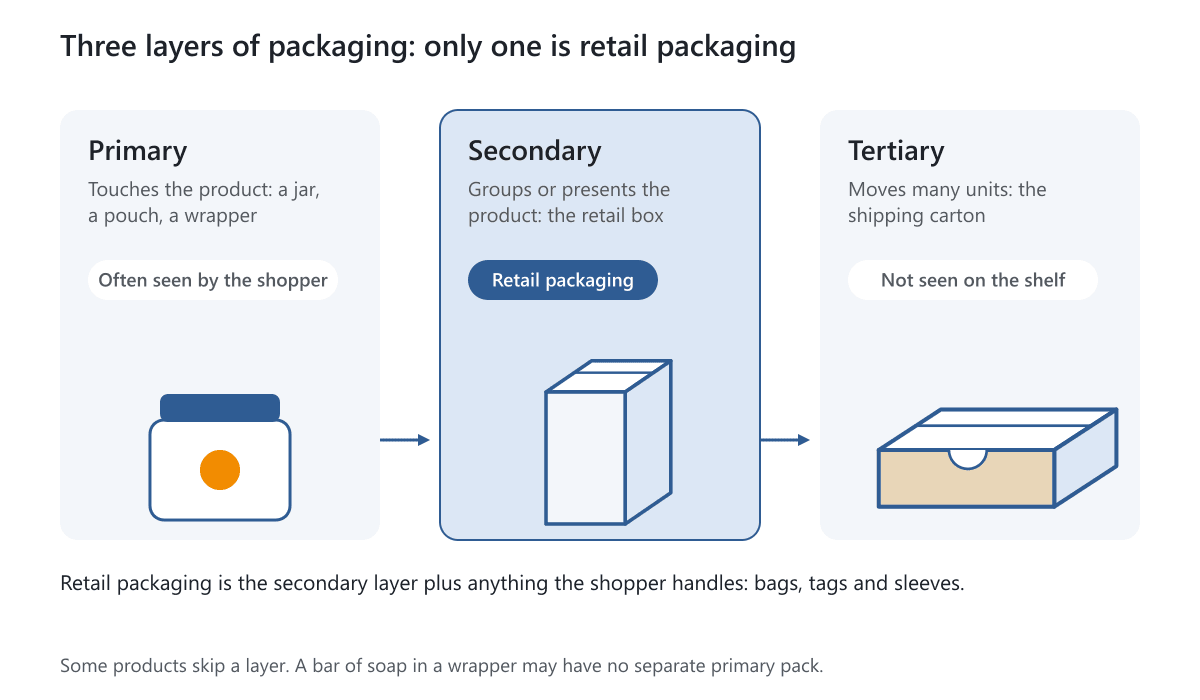
- Primary packaging touches the product. Examples are a jar, a pouch or a wrapper.
- Secondary packaging holds or presents the product. A retail box or carton is the common example, and this is what most people mean by retail packaging.
- Tertiary packaging moves many units at once. A shipping carton or a pallet wrap is tertiary.
Retail packaging also covers things the shopper handles: a paper bag to carry the purchase, a hang tag on a garment, a sticker seal or a sleeve around a box. They are not always required, but they add to the picture.
What Retail Packaging Has to Do
A good retail pack does five jobs. If it fails at one, the product suffers.
1. Protect the Product
A pack has to survive handling, stacking and a trip to the store. It also has to protect the product from being crushed or scuffed on the shelf. A snug fit and the right board matter more than extra layers.
2. Inform the Shopper
The pack tells the shopper what the product is, who it is for and why it is worth buying. This includes the product name, the main benefit, the size or count, and required information such as ingredients or warnings.
3. Attract Attention
On a crowded shelf, the pack has a few seconds. Color, shape, finish and a clear layout decide whether a person picks it up. A window or a tactile coating invites a closer look.
4. Fit the Display
Products are shown in different ways: stacked on a shelf, hung from a peg, shown in a counter display or stood in a row. The pack has to suit the way it will be shown, including how it is opened by the shopper.
5. Carry the Codes a Store Needs
Most stores need a barcode so the product can be scanned at the till. Some also want a SKU or lot code. These must be printed where scanners can read them.
Anatomy of a Retail Pack
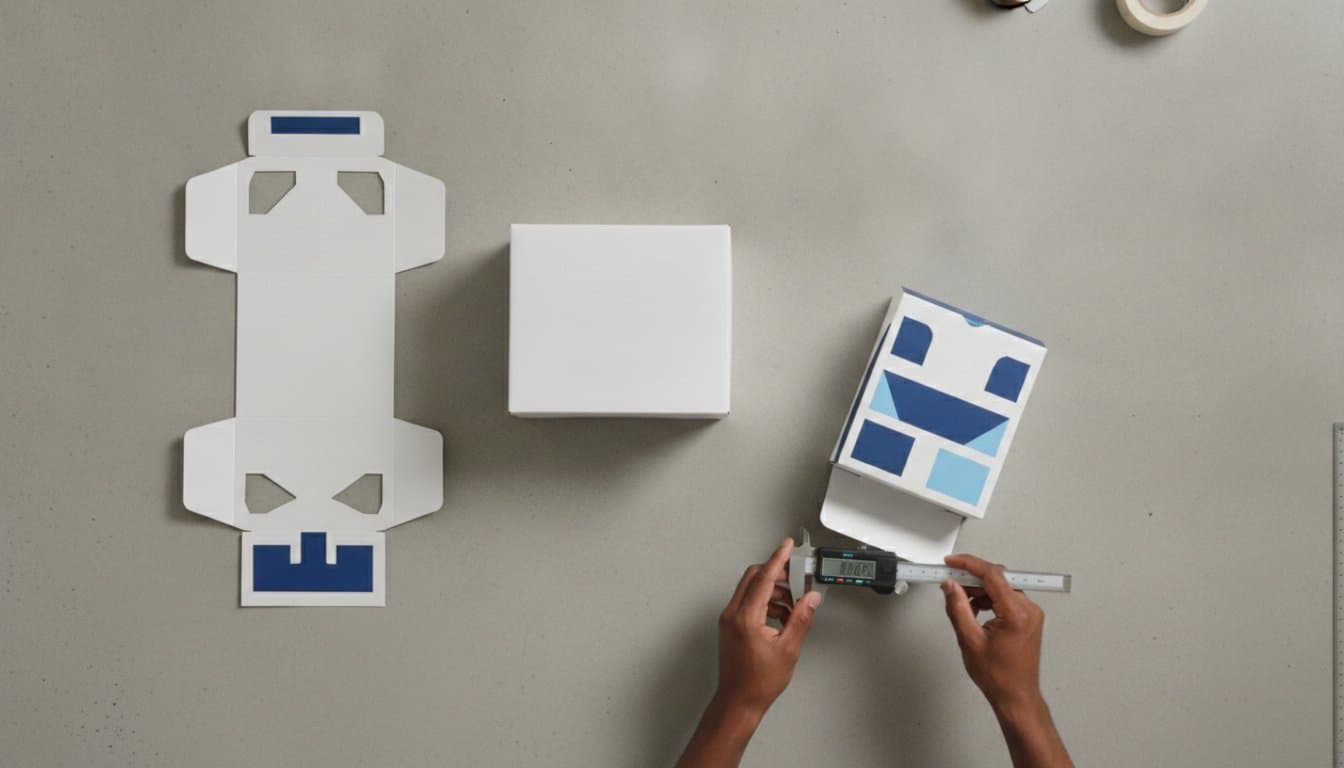
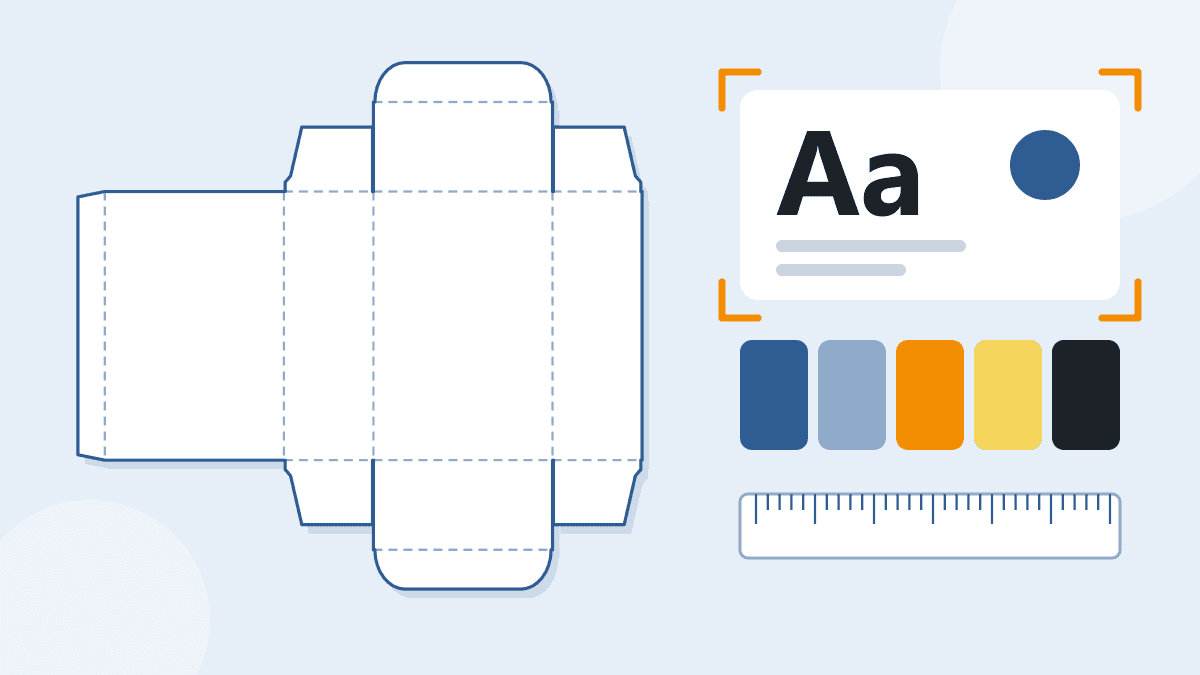
Look at a few boxes on a shelf and you will see the same parts in different forms. The drawing shows a simple example.
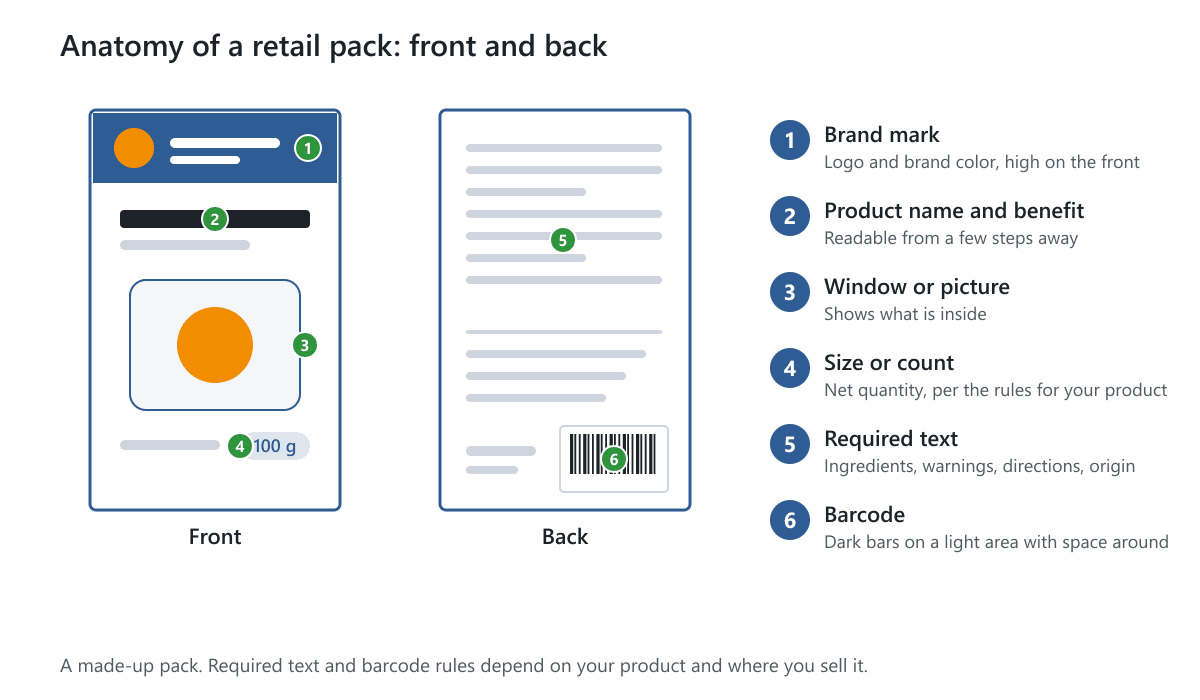
- Front panel. The brand mark, the product name, one benefit and often a window or picture. Keep it simple, since a shopper sees this first.
- Side panels. Useful for secondary information, a repeating pattern, or the product name again when boxes are stacked and only the side shows.
- Top panel. Visible when boxes sit on a low shelf, so it is worth a logo.
- Back panel. Ingredients, directions, warnings, contact details, the barcode and legal text.
- Hang tab or hang hole. For products that hang on a peg. It needs to line up with the retailer's hooks.
- Closure. A tuck flap, a tear strip or a seal. It should be easy to open and, where a store expects it, show that the pack has not been opened.
Types of Retail Packaging
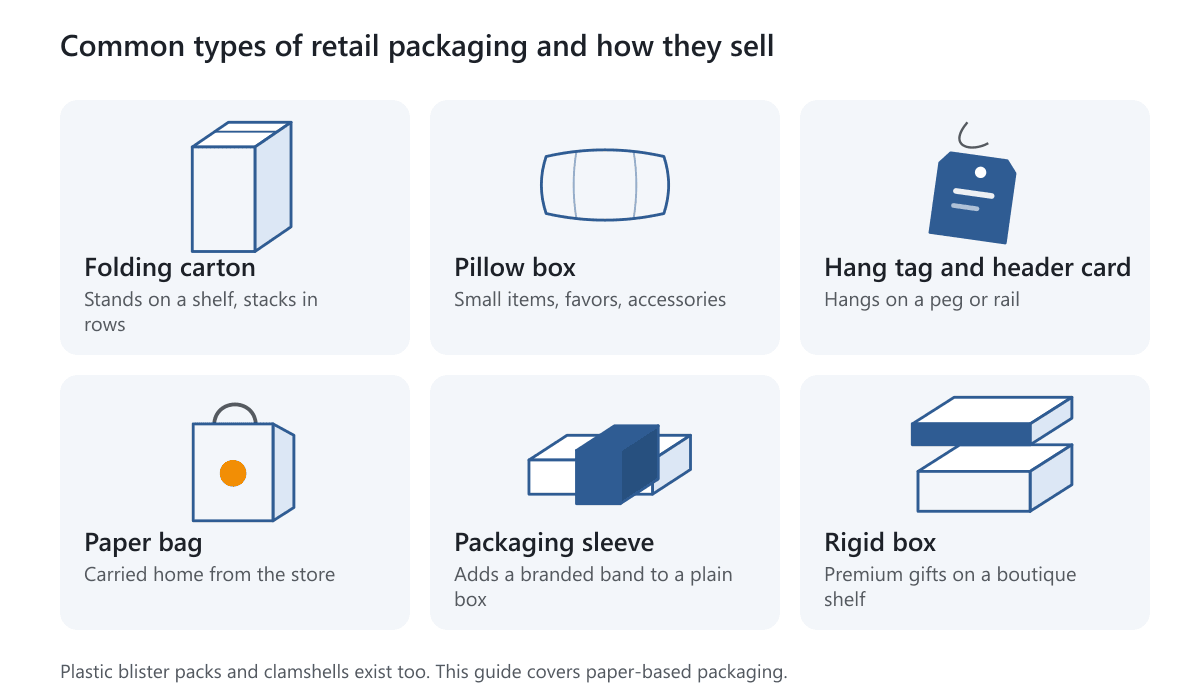
There is no single best type. The product, the price and the way it is displayed choose it for you.
| Type | How it is built | Typical use | Our page |
|---|---|---|---|
| Folding carton | Paperboard, folded and glued, often with a tuck closure | Cosmetics, soap, candles, supplements | Tuck boxes |
| Pillow box | Curved paperboard, glued along one edge | Small items, favors, accessories | Pillow boxes |
| Display box | Folds into a tray or stand for counters | Impulse items, snacks, small goods | Display boxes |
| Rigid box | Thick board wrapped in printed paper | Premium gifts, jewelry, electronics | Rigid boxes |
| Sleeve | A printed band that slides over a box or product | Adds a brand to a plain box | Packaging sleeves |
| Hang tag | A printed card on a string or loop | Apparel, accessories, candles | Hang tags |
| Paper bag | Printed paper with a handle | Carry-home bag for store purchases | Paper bags |
Plastic blister packs and clamshells are also common in retail, especially for small hardware and electronics. This guide covers paper-based packaging.
What Retail Packaging Is Made Of
Most retail cartons use paperboard, a smooth, thin board that prints well. Weight is given in gsm, grams per square meter, and folding cartons typically use 300 to 400gsm. Paperboard comes white or brown kraft, and it can take a coating. Corrugated board is used for larger or heavier displays, and rigid board wraps premium gift boxes.
The surface treatment changes how the pack looks and feels. A matte or soft touch coating suggests a calm, premium product. A glossy coating makes colors look bright. Foil stamping, embossing and spot UV add detail. Our guide to varnish vs lamination explains the two coating methods.
If recyclability matters to your shoppers, remember that plain paperboard without plastic film is generally the easiest to recycle, and that laminations, foils and plastic windows can make recycling harder. Rules differ by town, so say what you can stand behind. Recycled stock options are available on request.
Design Principles for the Shelf
Shoppers decide quickly. These principles help a pack work in those first seconds.
- One main message. Put the brand, the product name and one benefit on the front. If everything is loud, nothing is seen.
- Strong contrast. Dark text on a light panel, or the reverse. Test the front at arm's length and from a few steps away.
- Readable sizes. Product names and key benefits should be large. Small print belongs on the back, but required text still has to be legible.
- Show the product when it helps. A window or a clear picture reduces doubt, especially for food and gifts.
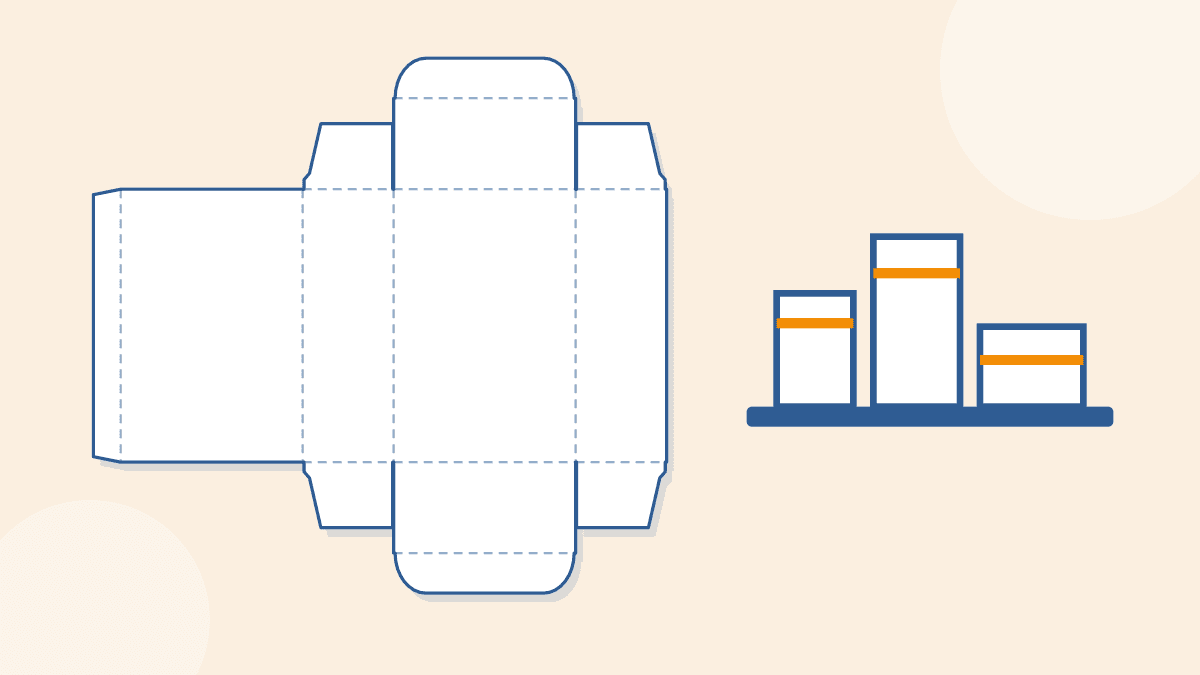
- Make the range easy to scan. When you sell several flavors or scents, keep the layout the same and change a color or a label, so the shopper finds the right one quickly.
- Think about the stack. If boxes will be stacked or shelved on their sides, the top or side may be all the shopper sees. Put the brand there too.
- Use finishes with purpose. One foil logo on a matte box can say more than a busy design. See what makes a box branded for the levels.
Colors work as a system on the shelf, so read our guide on choosing the right colors for your packaging before you finalize them.
Retail Packaging vs Shipping Packaging
Many products need both. They have different jobs, so they are built and designed differently.
| Retail packaging | Shipping packaging | |
|---|---|---|
| Main job | Present and sell the product | Protect it in transit |
| Who sees it | The shopper | The carrier, then the customer |
| Typical board | Paperboard, rigid board | Corrugated board |
| Full artwork, finishes | Often a logo or none | |
| Tested for | Look, fit on the shelf, handling | Drops, stacking, vibration |
| Example | A tuck box around a candle | The carton the boxes travel in |
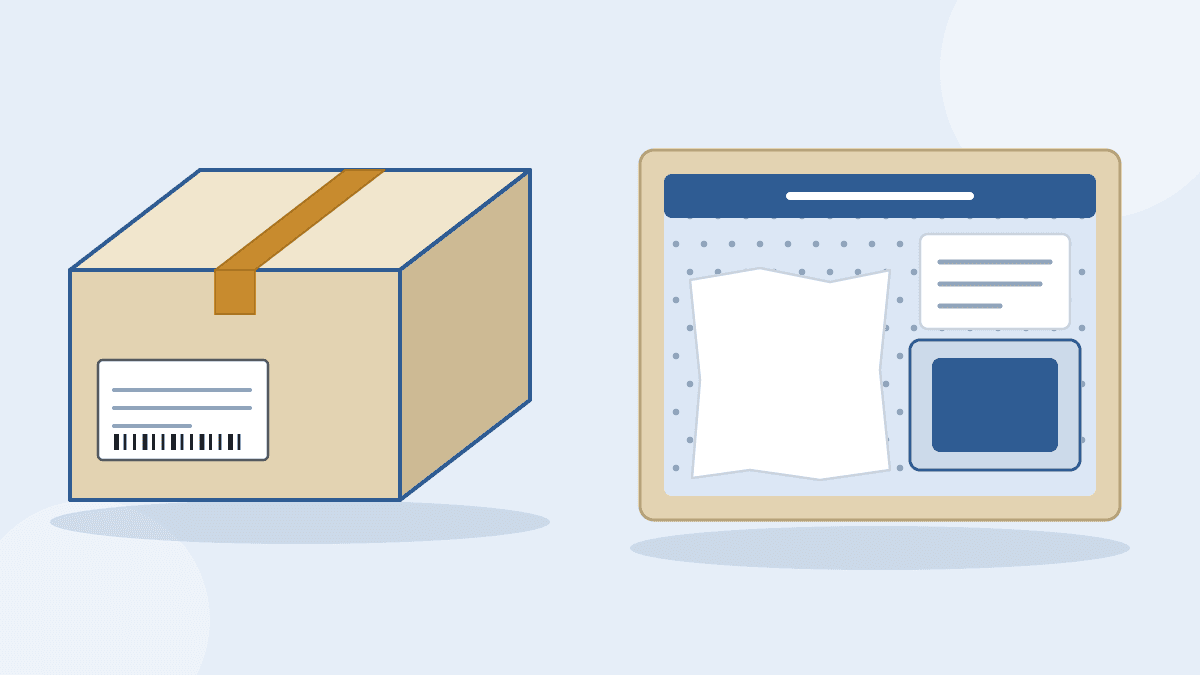
Online brands often combine the two in one: a branded mailer box that is both the shipping box and the first thing the customer sees. If you sell in stores and online, you may need a retail carton plus a shipping carton, so plan both. Our guide to choosing the right box for your product covers the options.
Information and Compliance: Check These
Retail packaging often has to carry required information. What is required depends on the product type and where you sell it. The brand owner is responsible for the text on the pack, not the printer.
- Product identity and quantity. The name of the product and how much is inside, in the units your market expects.
- Ingredients and allergens for food, cosmetics and many household products.
- Warnings and directions for use, storage or safety.
- Company details, such as a name and address or contact.
- Origin and date information when your market requires it.
- Barcode. Stores usually need a scannable code. Print dark bars on a light area, and leave blank space around them. Ask your barcode provider or retailer for size guidance.
- Recycling marks and eco claims. Only state what you can support. Environmental claims can be reviewed by regulators, so do not use words such as biodegradable without evidence.
Rules change, and they differ by product, state and country. Check with the relevant authority, your retailer or a specialist before you print. If your product is regulated, such as food, supplements, cosmetics, or anything with child-resistant requirements, tell us early. We confirm what is possible and which documents you need, and we print the text you approve.
Examples: Three Shelf Situations
These are invented examples to show how the choices change. They are not real customers.
A Candle Maker Moving From Markets to a Boutique
At markets she wrapped each candle in paper. A boutique wants a shelf-ready box with a barcode. She picks a paperboard tuck box with a window so the color of the wax shows, puts the scent name on the front and the burn instructions and barcode on the back, and asks the boutique for its shelf depth first.
A Hair Accessory Brand Selling on a Peg
Her products hang on a rack. She needs a card with a hang hole in the right place, a clear window or picture, and a brand block at the top where it is visible when hung. A header card or a small pillow box with a hang tab fits.
A Skincare Brand Entering a Store
The product is in a glass jar. The store wants a carton to protect the jar and show ingredients. She picks a tuck box with a soft touch coating and a foil logo, and checks ingredient and warning text with her advisor before the artwork is final.
Cost and Trade-Offs
Retail packaging costs more as it becomes more complex: thicker board, more colors, special finishes, windows and inserts. Larger runs lower the cost per box. We do not list prices here, because starting prices are on each product page. Our guide to the impact of packaging costs on product pricing shows how to work the box into your price.
A common trade-off is between a striking pack and one that is easy to fill and ship. A window needs a film patch. A very tall box takes more shelf height. A rigid box feels premium but costs more and takes more storage than a box that ships flat.
Common Retail Packaging Mistakes
- Designing before asking the retailer for shelf, peg and barcode requirements.
- Putting too many claims on the front.
- Leaving required text until the end, then squeezing it onto a panel too small to hold it.
- Choosing a color that looks good on a screen but gets lost on a crowded shelf.
- Skipping a sample, then finding the product slides around or the closure opens too easily.
- Making packaging too big for the product, which wastes shelf space and board.
Retail Packaging Checklist
- I know how the product will be displayed: stacked, hung or on a counter.
- I asked the retailer for size and barcode requirements.
- The front shows the brand, the product name and one benefit.
- The back has all required text, checked for my product and market.
- The barcode is dark on light, with space around it.
- The box fits the product with a little clearance. See how to measure a box correctly.
- I used a free dieline template to place artwork.
- I tested a sample before the full run.
Your Next Step
Start with how the product will be displayed, then pick the box type. Visit our retail packaging page to compare options, or get a free quote and tell us what you sell and where. We include free design support. A Standard Sample Kit costs $50, shipping included, and lets you hold a few styles before you decide. It may not include rigid boxes or boxes that ship assembled.
Frequently Asked Questions
What is retail packaging?
Retail packaging is the packaging a product is sold in, such as a box, carton, bag or tag. The shopper sees and handles it in a store or online. It protects the product, informs the shopper and helps the product sell.
What is the difference between retail packaging and shipping packaging?
Retail packaging presents and sells the product, so it is designed and printed for the shopper. Shipping packaging protects the product in transit and is often plain corrugated board. Many online brands combine both in a branded mailer box.
What are the types of retail packaging?
Common types are folding cartons, pillow boxes, display boxes, rigid boxes, sleeves, hang tags and paper bags. Plastic blister packs and clamshells are also used. The best choice depends on the product, its price and how it is displayed.
What must be printed on retail packaging?
It depends on the product and the market. Typical items are the product name, quantity, ingredients, warnings, directions, company details and a barcode. The brand owner is responsible for checking the rules. Ask your retailer or an advisor before printing.
How does retail packaging affect sales?
It cannot guarantee sales, but it shapes first impressions. Clear branding, a readable front and a good fit on the shelf help a shopper notice and trust a product. Poor packaging can hide a good product.
What material is best for retail packaging?
Paperboard suits most retail cartons, because it prints well and is light. Corrugated board suits larger or heavier displays, and rigid board suits premium gifts. Match the board to the product, the display and the budget.
Do I need a barcode on my retail packaging?
Most stores need one so that the product can be scanned at the till. Check with your retailer. Print it dark on a light area with space around it, and ask your barcode provider for size guidance.
Written by the PacksDo Team
We make custom printed packaging, from boxes and mailers to bags, labels and inserts. Questions about this guide? Ask us.