In this article
- 1What Makes a Box Branded?
- 2Where Branding Shows Up on a Box
- 3Four Levels of Branding
- 4Finishes That Add a Branded Feel
- 5Keep Your Look Consistent
- 6Branding and the Unboxing Moment
- 7Cost vs Impact: Where to Spend First
- 8Examples by Business Type
- 9Common Branding Mistakes
- 10A Branded Box Checklist
- 11Your Next Step
Branded boxes are boxes that carry your brand: your logo, colors, type, patterns and finishes, printed or applied so that people know who made the product. The box can be any style. What makes it branded is that the customer can tell it is yours before they read the name.
This guide focuses on the branding side of a box. It shows where a brand appears on a box, the levels from simple to premium, what each choice costs in general terms, and how to keep your look consistent. If you are new to packaging, start with what custom packaging boxes are, which covers sizes, structures and ordering.
Key takeaways
- A branded box is not only a logo. Color, pattern, finish, inside print and extras all say something about you.
- You can brand at four levels, from a plain box with a sticker to a premium rigid box with foil and an insert.
- Spend where the customer looks and touches. That is the front of the box, the feel of the surface and the first look inside.
- Consistency beats variety. The same logo, colors and type on every item build recognition.
- Start simple. A clean one-color print often does more than a busy full-color design.
What Makes a Box Branded?
Your brand identity is the set of visual and verbal choices that make you recognizable: the logo, the colors, the typefaces, the style of images and the way you write. A branded box is a box that carries that identity.
The words are close but not the same. A custom box is made to your size and structure. A branded box carries your identity. Most boxes are both, but you can brand a stock box with a sticker, and you can order a custom box with no branding at all.
Branding also lives in how a box feels. A thick rigid lid, a soft touch coating or a tight, tidy fit all send a message. People notice those details even when they cannot say why.
Where Branding Shows Up on a Box
There are more places to put your brand than most people expect. This is the full list, from the most obvious to the most overlooked.
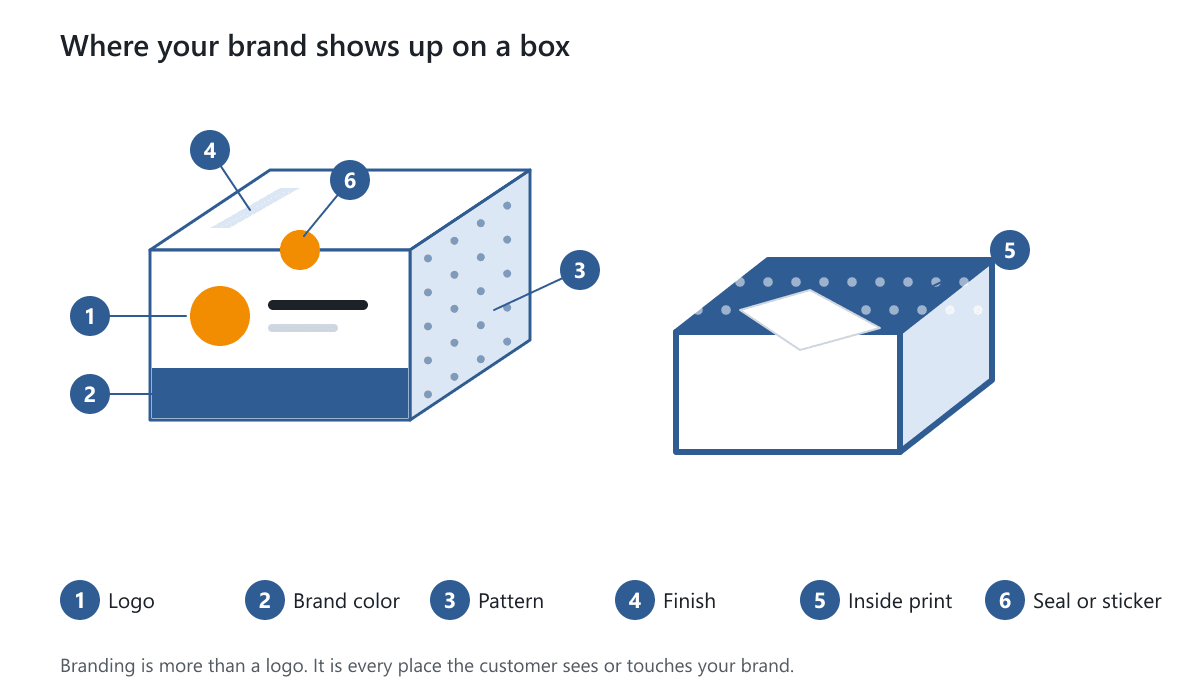
- Logo. Place it where a shopper's eyes land first, usually the front panel. Leave clear space around it.
- Brand color. One or two main colors, used the same way each time. A solid color field is often more memorable than a detailed picture.
- Typography. The typefaces you use. Choose one for headings and one for small text, and keep sizes readable.
- Pattern or illustration. A repeating pattern on the sides or the inside can become your signature. Keep it simple so it reproduces cleanly.
- Inside print. Printing the inside of a mailer or a lid turns opening the box into a moment. It costs more than outside print only, so use it where the reveal matters.
- Finishes. Foil stamping, embossing or debossing and spot UV add shine or texture to the logo or a detail. We cover these below.
- Seals and stickers. A branded sticker on the flap closes the box and adds a brand mark for little cost. See stickers and labels.
- Inserts and tissue. An insert holds the product and can carry print too. Tissue paper is a low-cost way to add color. See box inserts.
- Short copy. A tagline, a thank-you line or care instructions in your own tone of voice.
Four Levels of Branding
You do not have to brand every surface. Think of branding as levels. Each one adds impact, and usually cost and lead time as well.
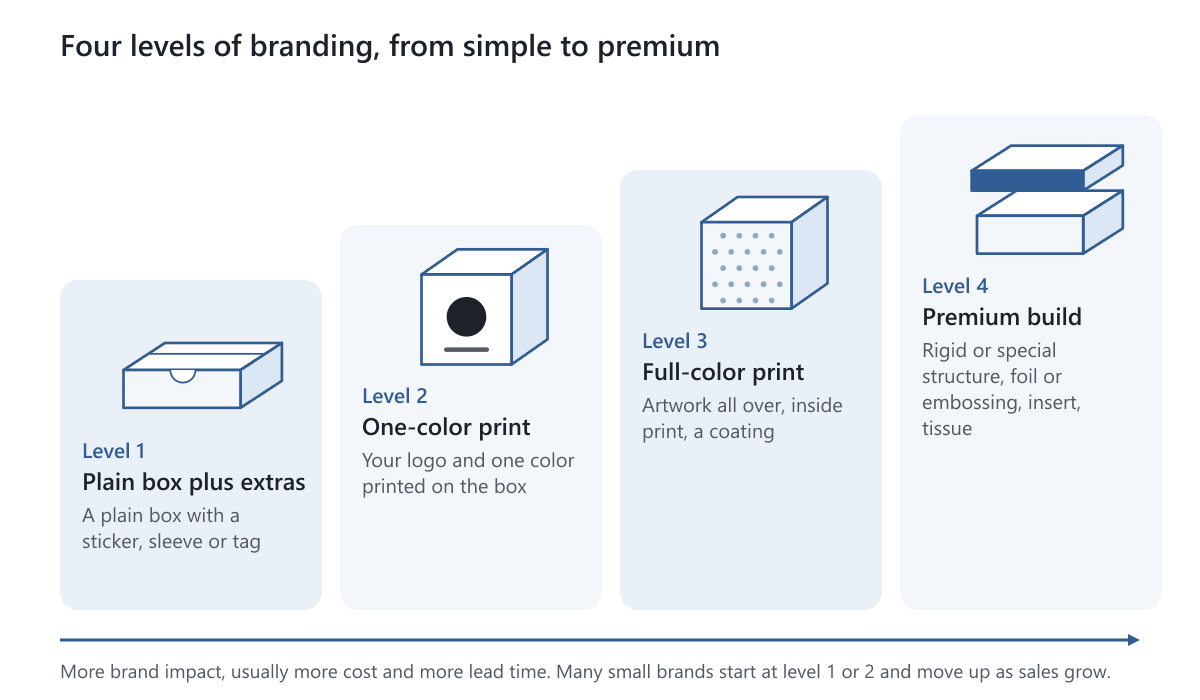
| Level | What it is | Good for | Trade-off |
|---|---|---|---|
| 1. Plain box, branded extras | A plain box with a sticker, sleeve or hang tag | Very small runs, testing a product | The box itself is not distinctive |
| 2. One-color print | Logo and one color on the outside | Simple, clean brands, kraft board | Limited artwork |
| 3. Full-color print | Artwork all over, often with inside print and a coating | Retail shelves, gift and e-commerce brands | Needs good artwork and a color proof |
| 4. Premium build | Rigid or special structure, foil or embossing, an insert and tissue | Luxury, gifts, high-value products | Highest cost and usually the longest lead time |
Many small brands start at level 1 or 2 and move up as sales grow. That is a sound way to work. A well-designed one-color box can look sharper than a crowded full-color one.
How to Decide Which Level Fits
- Price of the product. A higher-priced product can carry a higher level of packaging. A low-priced product usually cannot.
- How it is sold. Shelf products need strong front-of-box impact. Shipped products need a good unboxing moment.
- Who buys it. Gift buyers expect more care in the packaging than someone buying a refill.
- Volume. Setup cost is spread over the run, so level 3 and 4 make more sense at higher quantities.
Finishes That Add a Branded Feel
A finish is a treatment applied after printing. These are the ones we offer, and what each one does for a brand.
| Finish | What it does | Works well for |
|---|---|---|
| Matte or soft touch coating | A flat, velvety surface that feels premium | Skincare, wellness, quiet luxury looks |
| Glossy coating | Bright, shiny colors and a wipeable surface | Food, toys, bold color designs |
| Satin coating | A gentle sheen between matte and gloss | A middle choice for most products |
| Foil stamping | A thin metallic layer pressed on a logo or detail | Logos, borders and small accents |
| Embossing or debossing | The surface is raised (embossed) or pressed in (debossed) | Logos and patterns you can feel |
| Spot UV | A glossy clear coating on chosen areas only | Highlighting a logo or pattern against a matte background |
| Window patching | A clear film behind a cutout so the product shows | Products worth seeing, such as soap or candles |
Use finishes sparingly. One strong detail, such as a foil logo on a matte box, usually reads as more confident than five effects together. Our guide to varnish vs lamination explains the two coating methods. Laminations, foils and plastic windows can make a box harder to recycle, so weigh that if recyclability matters to your customers.
Keep Your Look Consistent
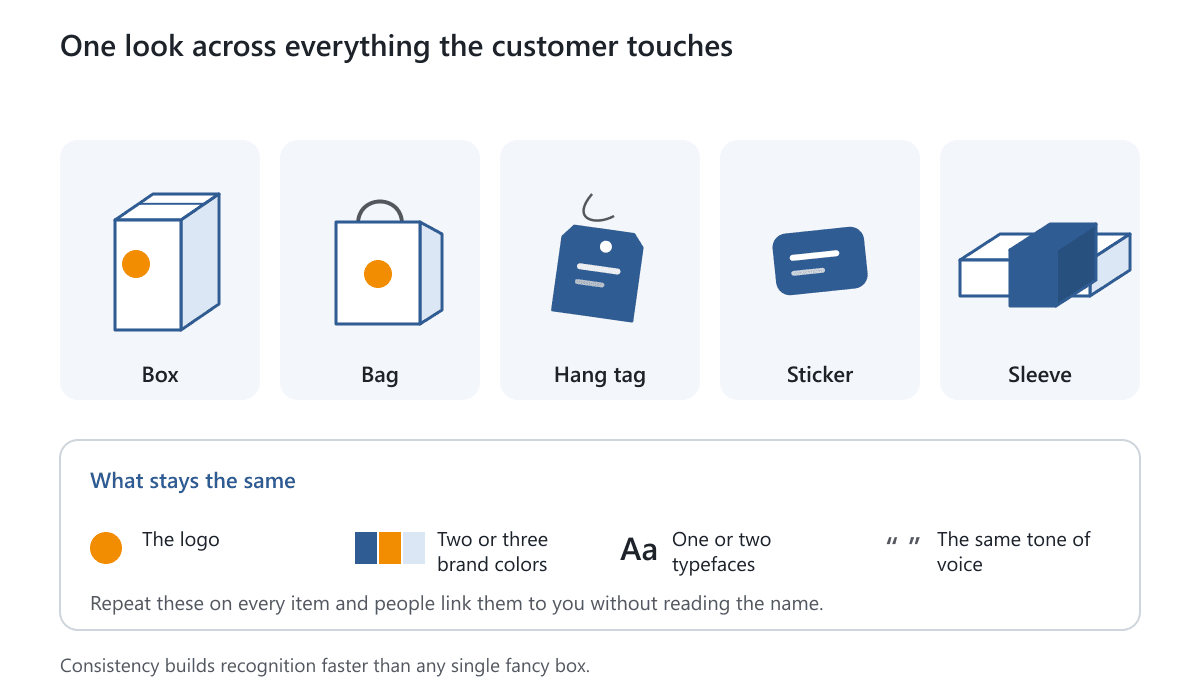
Consistency is what turns a pretty box into a brand. When the box, the bag, the tag and the sticker all use the same logo, colors and type, people begin to link them to you without reading the name.
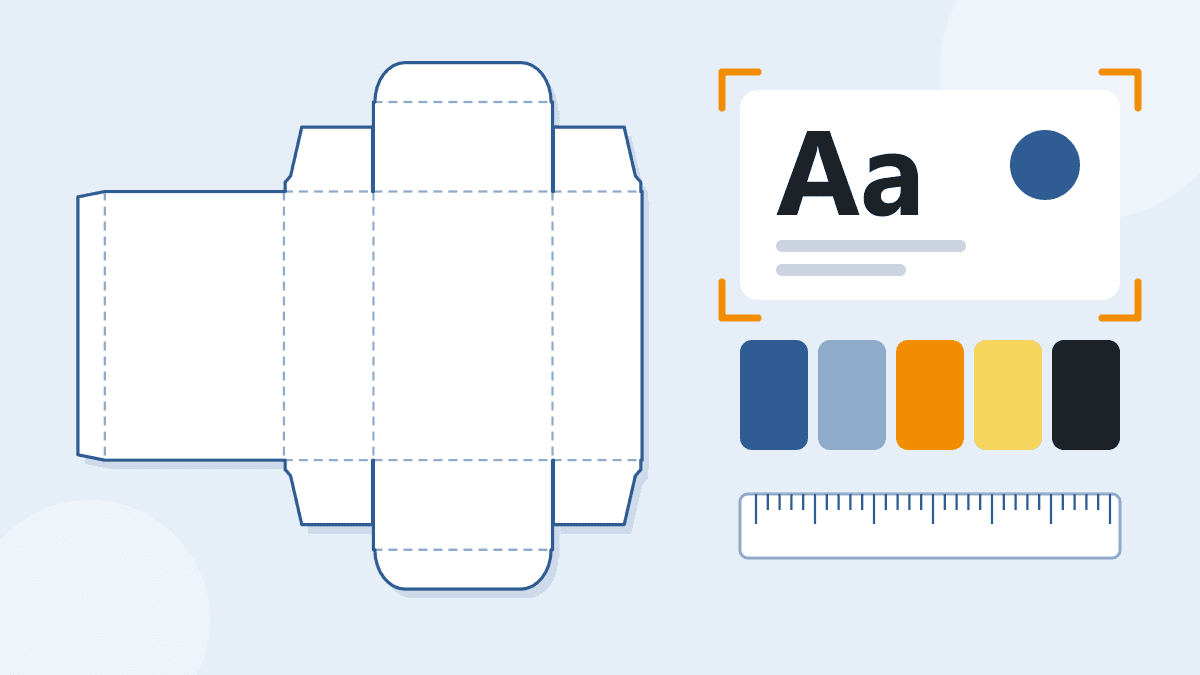
Build a Small Brand Sheet
A one-page sheet keeps the look steady, especially if more than one person or supplier touches the artwork.
- Your logo files as vectors, with a minimum size and clear space.
- Two or three brand colors, with their Pantone and CMYK values. Read our guide to choosing colors for packaging for how to pick them.
- One or two typefaces, with the sizes you use.
- Examples of how you write: formal, playful, short, warm.
The brand sheet is also what you send to us for artwork. It saves back-and-forth, and it lets the same look carry across hang tags, tuck boxes and packaging sleeves.
Branding and the Unboxing Moment
For products shipped to customers, the box is the first physical contact with your brand. Think of unboxing as a short sequence, and plan one small detail for each step.
- The outside. A shipping carton or a branded mailer box. Often a simple logo and a color is enough.
- The opening. A sticker seal, a pull tab or a tuck that opens cleanly.
- The reveal. Printed inside, tissue or a color that contrasts with the outside.
- The product. Held neatly by an insert so it does not slide around.
- The extras. A thank-you card or care card in your tone of voice.
A mailer box is the natural choice for this, because it can be printed inside and out and ships as one piece. For a gift or higher-priced product, a rigid box or a tray and sleeve box gives the reveal more weight.
Cost vs Impact: Where to Spend First
You will rarely have the budget to brand everything at the highest level, so decide what to spend on. We do not list prices here, because starting prices are on each product page. The pattern below holds for most brands.
| Spend on this | Impact | Cost direction |
|---|---|---|
| Front-of-box logo and color | High | Part of the base print |
| A good coating | Medium to high | Small step up |
| One foil or spot UV detail | High for the cost | Moderate step up |
| Inside print | High for e-commerce | Larger step up |
| Sticker seal or tissue | Medium | Low |
| Rigid box and several finishes together | High | Largest step up |
If the budget is tight, a clean front, a good coating and a branded sticker is a strong starting set. Our guide to the impact of packaging costs on product pricing shows how to work the box cost into your price.
Examples by Business Type
These are invented examples to show how the choices change with the business. They are not real customers.
| Business | Box that often fits | Where to put the brand |
|---|---|---|
| Skincare or beauty | Tuck box or a rigid box | Soft touch coating, foil logo, short product information |
| Candles and soap | Tuck box with a window or a sleeve | A clean color field, window to show the product |
| Apparel | Mailer box or a two piece box | Inside print, tissue and a sticker seal |
| Food gifts | Gable box or a tray and sleeve | Bright color, a clear flavor name, a handle |
| Jewelry | Rigid box with an insert | Embossed logo, a contrasting interior |
| Subscription box | Mailer box | Inside print that changes with the theme, a card |
For an idea of how the same product looks at different levels, see our luxury packaging page, and our page on custom product boxes for the full range.
Common Branding Mistakes
- Too many things on the front. A logo, five claims, three badges and a pattern compete with each other. Choose one message.
- Low contrast. Pale text on a pale background is hard to read. Check contrast before you print.
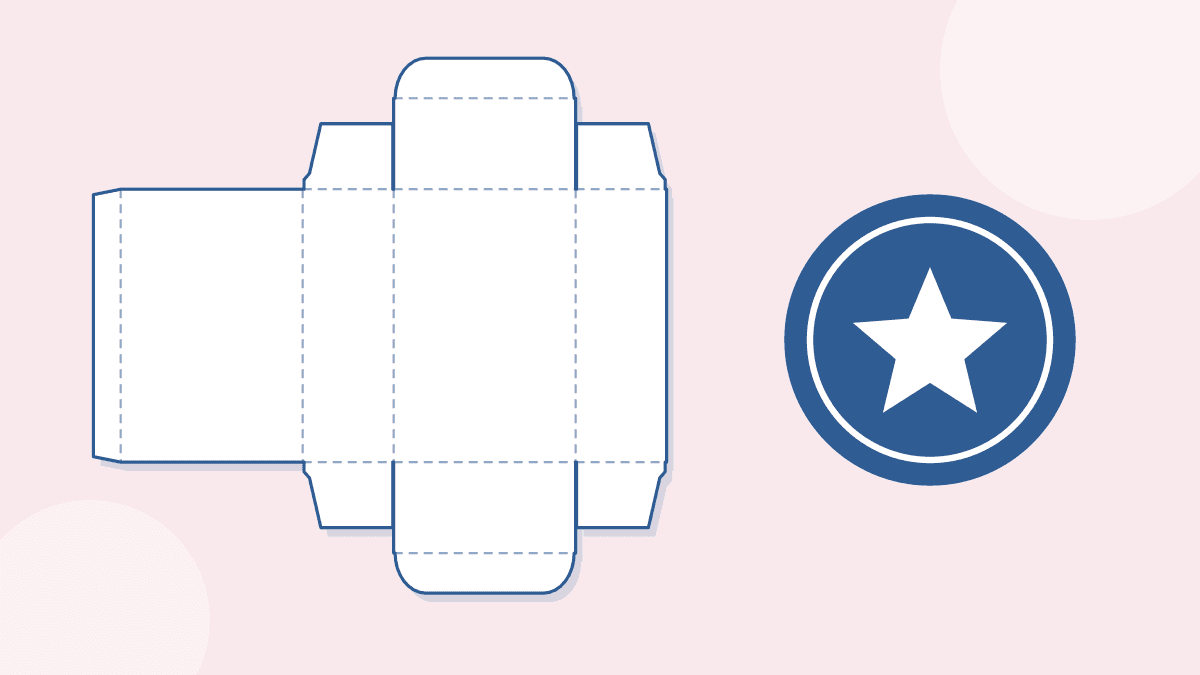
- A logo placed on a fold. Build your artwork on the dieline so the logo sits on a flat panel.
- Different colors on different items. The box, tag and sticker should match. Use the same Pantone or CMYK values.
- Skipping a proof. A color on screen can look different in print. Ask for a proof or a sample.
- Following a trend that does not suit the product. A style that suits a candle may not suit a tool.
A Branded Box Checklist
- I know the box style and the inside size.
- My logo is a vector file with clear space around it.
- I have chosen two or three brand colors, with Pantone or CMYK values.
- The main message on the front fits in a few words.
- I know which surfaces get print: outside, inside or both.
- I chose one or two finishes, not five.
- The tags, stickers and inserts use the same look.
- My artwork is built on the dieline and checked for bleed.
- I ordered a sample or a proof before the full run.
Your Next Step
Pick the level that fits your product and budget, then work outward from the front of the box. Download a free dieline template for your style to place your logo, and use the Standard Sample Kit at $50, shipping included, to feel a few materials and finishes first. When you are ready, get a free quote. We include free design support and reply within 1 business day.
Frequently Asked Questions
What are branded boxes?
Branded boxes are boxes that carry your brand identity: your logo, colors, typefaces, patterns and finishes. They make your product recognizable. A branded box can be any style, from a simple tuck box to a rigid gift box.
What is the difference between branded boxes and custom boxes?
A custom box is made to your size and structure, while a branded box carries your brand through print and finish. Most are both. You can brand a stock box with a sticker, and you can order a custom box with no print.
Do I need full-color printing to have branded boxes?
No. A one-color print of your logo on white or kraft board is a branded box, and it can look very clean. Full color suits detailed artwork, and it needs good files and a color proof.
Which finishes make a box look premium?
Soft touch coating, foil stamping, embossing or debossing and spot UV are the common ones. Use one or two. A matte box with a single foil logo often looks more refined than a box with many effects.
How do I keep my branding consistent across packaging?
Write a one-page brand sheet with your logo files, two or three colors with Pantone or CMYK values, your typefaces and your tone of voice. Use it on every box, tag, sticker and sleeve.
Can I brand a box if I order only a small quantity?
Yes. Minimums depend on the product, and each product page states its own. Most of our box types start at 50 or 100 units, and rigid boxes have a low minimum and shipping boxes start at 50. A branded sticker or sleeve on a plain box is another low-quantity option.
Is inside printing worth it?
It is worth it when the reveal matters, for example in a mailer box or a gift box. It adds cost, so use it where the customer opens the box and sees it first. For shelf products, front-of-box print usually matters more.
Written by the PacksDo Team
We make custom printed packaging, from boxes and mailers to bags, labels and inserts. Questions about this guide? Ask us.