In this article
A sleeve in packaging is a printed band or tube of paperboard that slides or wraps around a box, tray, product or cup. It is open at both ends, so it covers part of the pack without closing it, and it carries your branding, product details or a seasonal message.
This is the broad guide: what a sleeve is, the four main types, what each one is for, and how to choose. If you want the retail detail (sizes, paper, finishes, cost drivers), read our guide to the packaging sleeve. If you want to build one, see how to make packaging sleeves. For the board itself, see what sleeve paper is used for.
Key takeaways
- A sleeve is open at both ends. It wraps a box or product but does not close or protect it the way a box does.
- There are four common types: the belly band, the slide-over box sleeve, the sleeve of a tray and sleeve box, and the cup sleeve.
- A sleeve is mainly a branding surface. It lets you change the look, flavor or season of a product without changing the box underneath.
- It is usually cheaper than a full custom box, because it uses less board and a simpler structure.
- Choose by job: a band for a quick brand upgrade, a full sleeve to cover a plain box, a tray and sleeve for a gift reveal.
- Size is everything. A sleeve that is too loose slips off, and one that is too tight tears or bends the box.
What a Sleeve in Packaging Is (and What It Is Not)
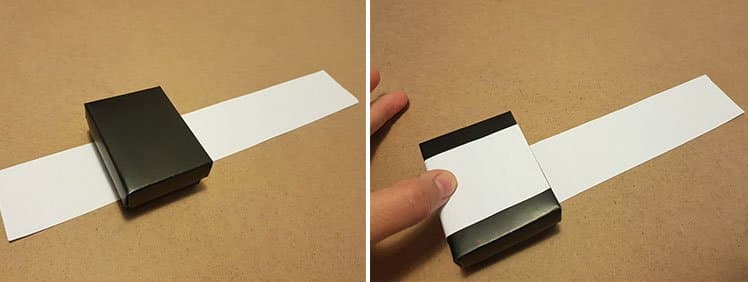
Start with the shape. A sleeve is a flat printed strip that is folded into a loop and glued or taped at one seam. The loop is open at both ends. You slide it over the item it covers, and it stays in place because it fits closely and, in some styles, because the ends are tucked or stuck down.
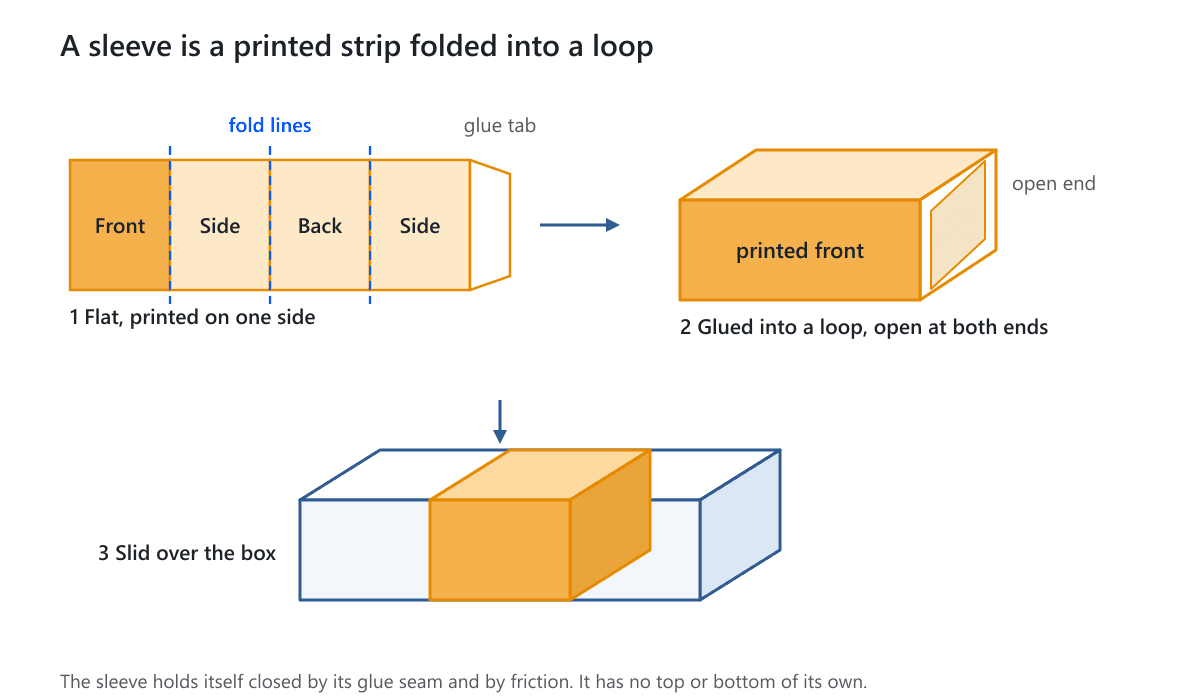
That open shape is what separates a sleeve from other packaging.
- A sleeve is not a box. A box has a bottom and a lid or closed ends, and it holds the product. A sleeve only covers the outside of something that already holds itself together.
- A sleeve is not a label or sticker. A label is stuck on one face. A sleeve wraps around the whole item and can be slid off and reused or replaced.
- A sleeve is not a wrapper. A wrapper encloses the item completely, like tissue paper or a paper wrap around soap.
The word is also used in other fields. A shrink sleeve is a thin plastic film that is heat-shrunk around a bottle, and a record or CD sleeve is a paper or plastic cover for a disc. This guide is about paperboard and kraft sleeves for boxes, products and cups.
The Four Main Types of Sleeve
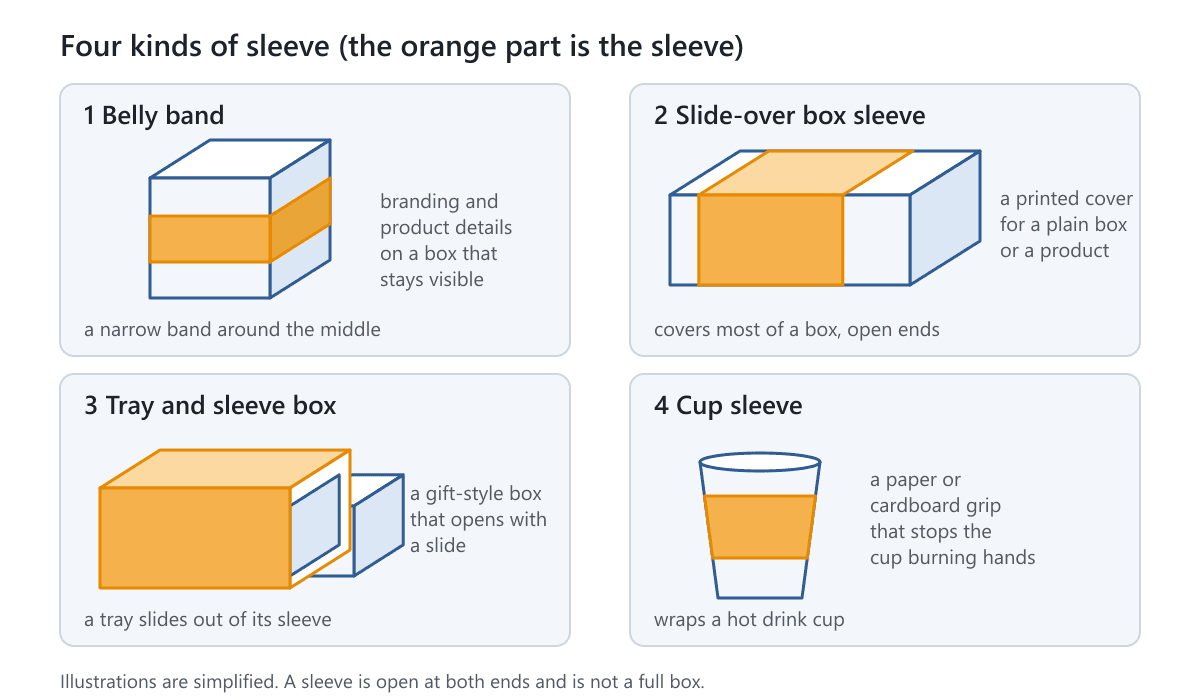
1. Belly Band
A belly band is a narrow sleeve around the middle of a box or product. Most of the item stays visible, so the band adds a name, a flavor or a message without hiding what is underneath. It is the lightest and lowest-cost kind of sleeve, and the easiest to change. Books, soap bars, candle boxes and gift sets often use one.
2. Slide-Over Box Sleeve
A slide-over sleeve is a wider tube that covers most of a box. It turns a plain white or kraft box into a fully branded one, because the sleeve carries all of the printed design. It also suits a product that has no box at all, such as a stack of cards or a wrapped bar. Many cartons are sold this way: a simple inner box and a printed sleeve over it.
3. The Sleeve of a Tray and Sleeve Box
A tray and sleeve box has two parts: a shallow tray that holds the product, and a sleeve that the tray slides into. You pull the tray out of the sleeve to open it. The sleeve here is part of the box structure, not an add-on, and it creates a small reveal moment that suits gifts and sets. See our tray and sleeve boxes, and the free tray and sleeve dieline.
4. Cup Sleeve
A cup sleeve is a paper or corrugated band that wraps a hot drink cup. It protects hands from the heat and gives a coffee shop a place for its logo. It is a different job from the other three, because the sleeve is about comfort first and branding second. Cup sleeves are usually bought alongside the cups, so tell us if you need one and we confirm what we can make.
What Sleeves Are Used For
A sleeve rarely does only one job. These are the common ones.
- Branding. A sleeve is a large printed surface you can redesign without redesigning the box.
- Product information. Ingredients, usage steps, barcodes, certifications you hold and legal text fit on a sleeve, which keeps the box itself clean.
- Variants. One plain box can carry five scents, flavors or sizes by changing only the sleeve. This keeps stock simple.
- Seasonal and limited editions. A holiday or promotion sleeve goes over the standard box, then you go back to the usual sleeve. Our guide to seasonal packaging without reprinting boxes shows this idea.
- Bundling. A band can hold two or three items together as a set.
- Opening evidence. A sleeve glued across the opening of a box shows if it has been opened. This is a light signal, not a security seal.
- Presentation. A tray and sleeve box uses the slide to make opening feel like a reveal.
Sleeve vs Other Ways to Add a Printed Layer
A sleeve is one of several ways to put printed branding on a pack. The table compares them.
| Option | What it covers | Best for | Trade-off |
|---|---|---|---|
| Belly band | A strip around the middle | A quick brand or flavor change | Covers little of the box |
| Slide-over sleeve | Most of the box | Branding a plain box or a stack | Needs an exact fit |
| Full custom box | The whole pack, with a closure | Protection and a complete brand look | More board, higher cost, more setup |
| Sticker or label | One face | A small mark or a short message | Does not wrap or change the whole look |
| Plastic shrink sleeve | A bottle or jar, fully | Curved containers | Plastic film; we do not make plastic sleeves |
If you are weighing a sleeve against a full box, our guide to choosing the right box for your product matches common products to box types. The two work well together: a stock or simple box under a printed sleeve is a common middle path.
Materials, Printing and Finishes
Our sleeves are made from paperboard, either white (solid bleached sulfate, called SBS) or brown kraft. White gives a clean base for detailed color. Kraft gives a natural look, and printing on it works best with simple, strong graphics, because the brown shows through light colors.
You can print in CMYK (the four-color process for photos and gradients) or Pantone (matched brand colors). A coating protects the print: varnish is a thin liquid coat and lamination is a thin film. Finishes include matte, glossy, satin and soft touch, and foil stamping, embossing or debossing and spot UV can add detail to a sleeve. Our varnish vs lamination guide explains the difference.
The weight of the board matters for how a sleeve feels and holds its shape. We cover the common ranges in what sleeve paper is used for. If you care about recycling, plain paperboard without plastic film is generally the easiest to recycle, and coatings and laminations can make it harder. Recycled stock options are available on request.
How to Choose the Right Type of Sleeve
Work through these questions in order. Most projects have a clear answer by the third.
- What is under the sleeve? If you already have a box you like, a band or slide-over sleeve fits. If you have no box yet, ask whether a full box would serve you better.
- How much surface do you need? A short name and logo fits a band. A full design, a product story or a lot of text needs a larger sleeve.
- How will it be put on? Packing by hand allows more variety. If many units are packed fast, an identical pre-glued sleeve that you slide on is simplest.
- Should the item stay visible? A band leaves the product showing. A full sleeve hides it.
- Is it a gift or a shipped item? A sleeve is not protection. A shipped item still needs a box, and the sleeve goes on it.
- How many will you order? Our packaging sleeves start from 50 units. See the packaging sleeves page for the current minimum and starting price.
| If you need | Choose |
|---|---|
| A cheap brand upgrade on an existing box | Belly band |
| A fully printed look on a plain box | Slide-over sleeve |
| A gift box with a slide-open reveal | Tray and sleeve box |
| A grip and logo on a hot drink | Cup sleeve |
| One box for many variants | A plain box with a different sleeve for each |
Examples by Product
These are invented examples to show the thinking, not customer stories.
- A candle brand with three scents. One plain kraft box, three printed sleeves. The brand orders one box type in volume and changes only the sleeve for each scent.
- A chocolate gift set. A tray and sleeve box: the tray holds the chocolates in a layer and the sleeve carries the design. Pulling the tray out is part of the gift.
- A soap maker. A belly band around a wrapped bar: logo, scent name and ingredients on a narrow strip, with the soap visible.
- A subscription brand. A sleeve with a seasonal design over a standard mailer box. The mailer stays the same all year, and the sleeve changes each month.
Common Mistakes to Avoid
- Sizing the sleeve from the box's outside corners without allowing for the board and a small fit gap.
- Putting the seam on the front, where it spoils the design. Place it on the back or a side.
- Leaving no space on the sleeve for a barcode, a legal line or a recycling note where you need one.
- Choosing a board that is too thin, so the sleeve sags or bows.
- Expecting a sleeve to protect. It adds a layer of printed board but it does not hold or cushion the product.
- Forgetting bleed: if the design reaches the edge of the sleeve, extend it past the cut line. Our guide to bleed in packaging explains how.
Next Steps
Measure the box or product the sleeve will cover, decide how much of it you want covered, and pick the type from the table. Our guide to measuring box dimensions shows how to take the numbers.
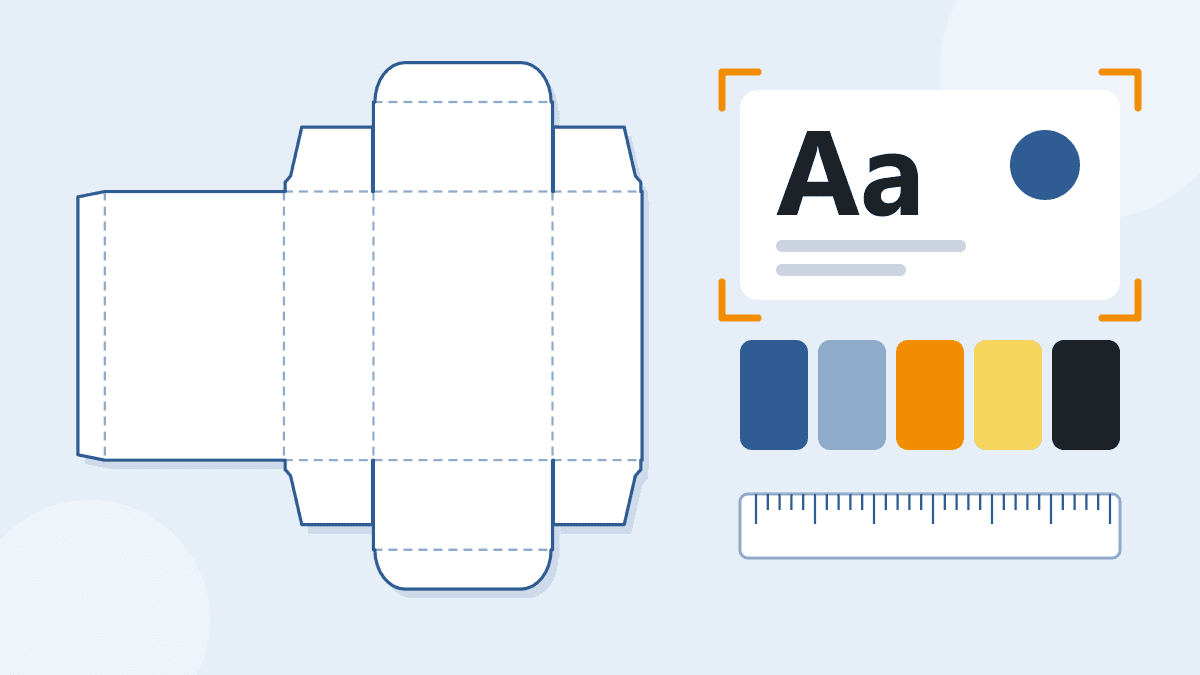
Then check the flat shape with our free packaging sleeve dieline, which gives a PDF, SVG or DXF file at real size. If you want to hold one before ordering, the Standard Sample Kit costs $50 with shipping included. When you are ready, get a free quote and tell us the size, the quantity and what the sleeve will go on. We offer free design support and reply within 1 business day.
Frequently Asked Questions
What is a sleeve in packaging?
A sleeve is a printed band or tube of paperboard that slides or wraps around a box, product or cup and is open at both ends. It adds branding and information but does not close or hold the product like a box does.
What is the difference between a sleeve and a belly band?
A belly band is a type of sleeve that is narrow and wraps only the middle of an item. A general sleeve can be wider and cover most of a box. Both are open at the ends and made from a strip folded into a loop.
Is a sleeve the same as a box?
No. A box has a base and a closure and holds the product. A sleeve covers the outside of something else, or forms the outer part of a tray and sleeve box. A sleeve alone gives printed branding and little protection.
What are sleeves used for in packaging?
They are used for branding, product information, flavor or scent variants, seasonal editions, bundling items together and creating a reveal on gift boxes. They let you change the look without changing the box underneath.
Are sleeves cheaper than boxes?
Usually yes, because a sleeve uses less board and a simpler structure. The final cost depends on size, board, printing, finish and quantity, so see the starting price on the packaging sleeves page and ask for a quote.
What sizes can a sleeve be?
A sleeve is made to fit the item it covers, so the size follows your box or product. You give the length, width and height of what it wraps, and we size the sleeve with a small fit gap. See the measuring guide for how to take the numbers.
Can a sleeve be recycled?
Plain paperboard sleeves can be recycled where local facilities accept paper and cardboard. Plastic film, foil and heavy coatings can make recycling harder, and rules differ by town, so check yours. Recycled stock options are available on request.
Written by the PacksDo Team
We make custom printed packaging, from boxes and mailers to bags, labels and inserts. Questions about this guide? Ask us.