In this article
- 1What Sleeve Paper Is
- 2Paper Weights: How Thick Should a Sleeve Be?
- 3Types of Board and Paper for Sleeves
- 4Grain Direction and Folding
- 5Coatings and Finishes on Sleeve Paper
- 6Printing on Sleeve Paper
- 7How to Choose the Right Sleeve Paper
- 8Uses of Sleeve Paper
- 9Recycling and Paper Sleeves
- 10Common Mistakes When Choosing Sleeve Paper
- 11Next Steps
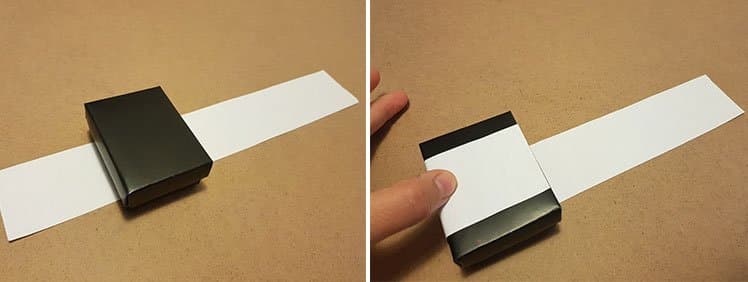
Sleeve paper is the paper or paperboard that is printed, cut and folded into packaging sleeves: bands and wraps that slide over a box or product to add branding and information. It is not one single product, so the useful question is which stock, which weight and which finish suit the sleeve you want to make.
This guide is about the material. It explains what sleeve paper is, the weights and stocks to choose from, why grain matters for folding, how coatings change the paper, and how to match the board to the job. For the product itself, see what a packaging sleeve is, and for the wider picture, what a sleeve in packaging is.
Key takeaways
- Sleeve paper means paperboard for sleeves, usually a stiff sheet in white or brown kraft, not thin office paper.
- Weight is measured in gsm (grams per square meter). Printed sleeves typically use roughly 250 to 350 gsm; larger or heavier items use more.
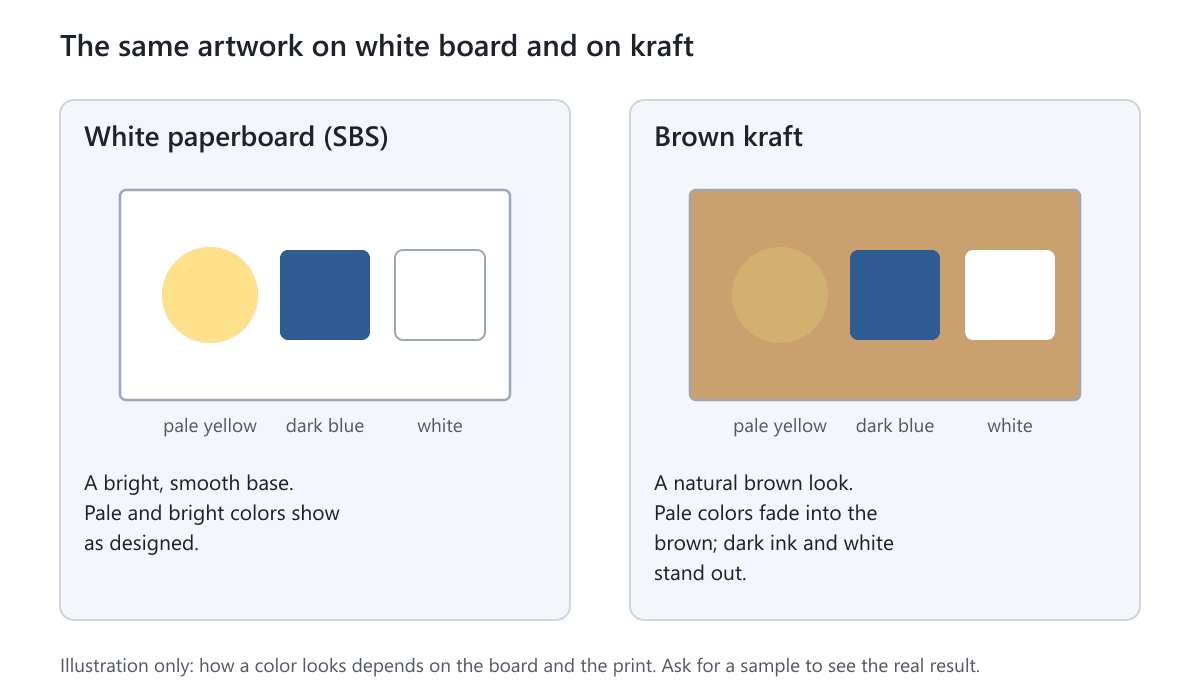
- White board is best for bright color, and kraft is best for a natural look with bold dark or white graphics.
- Grain affects folds. A fold that runs with the grain is cleaner than one across it.
- A coating protects the print. Varnish is light, lamination protects more, and the finish (matte, glossy, satin, soft touch) sets the feel.
- Plain paperboard is generally the easiest to recycle, and coatings and laminations can make recycling harder.
What Sleeve Paper Is
In packaging, sleeve paper means the board a sleeve is cut from. It is thicker and stiffer than ordinary paper, because a sleeve has to keep its shape as a loop, slide over a box without crumpling and stand up to handling.
The word is also used outside packaging, and it helps to separate the meanings.
- Packaging sleeve board is printed paperboard folded into a loop around a box or product. This is what we mean in this guide.
- Cup sleeves are paper or corrugated bands that insulate a hot drink cup. They use a similar idea with a corrugated or embossed layer.
- Record, CD and photo sleeves are paper or glassine covers that hold a flat item. These are protective covers, not branding bands.
- Shrink sleeves are plastic film heat-shrunk around a bottle. They are not paper at all.
Paper Weights: How Thick Should a Sleeve Be?
Paper weight is given in gsm, which stands for grams per square meter. A higher number means a heavier, thicker, stiffer sheet. In the United States you may also see thickness in points (pt), which is the thickness in thousandths of an inch, or weights in pounds. These do not convert exactly because boards differ in density, but as a rough guide 12 pt is about 250 gsm, 14 pt about 300 gsm and 16 pt about 350 gsm.
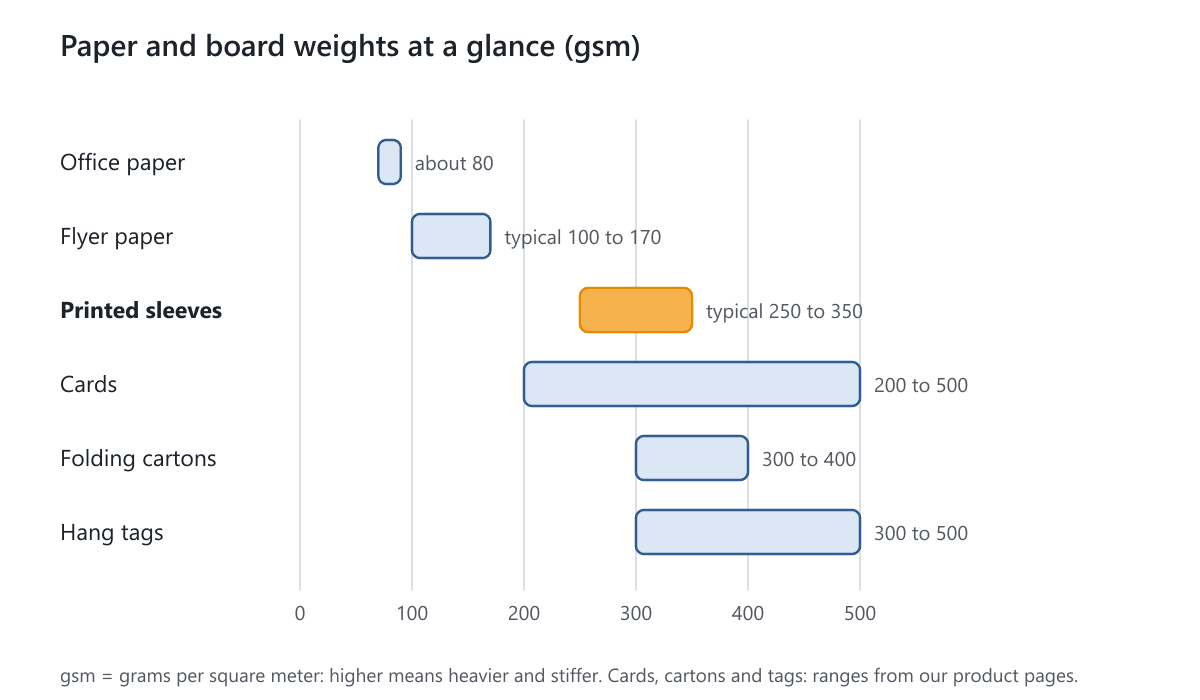
Printed sleeves usually sit in the middle, typically around 250 to 350 gsm. We confirm the right board for your size and use when we quote, because our sleeve weights are chosen around the sleeve dimensions, the shape of the product and the stiffness you need.
| Sleeve job | Suggested direction | Why |
|---|---|---|
| Narrow belly band on a light box | Toward the lighter end | Short span, little bending, saves material |
| Sleeve covering most of a box | Mid-range | Needs to stay square and slide on smoothly |
| Large sleeve on a heavy product | Heavier board | A thin board bows and sags |
| Premium gift look | Heavier board with a soft touch or matte finish | Stiffness reads as quality |
| Budget run of many sleeves | Lighter board that still holds its shape | Lower material cost |
These are starting points, not rules. The way to be sure is to hold a sample, so the Standard Sample Kit lets you feel real board before you decide.
Types of Board and Paper for Sleeves
Most printed sleeves start from one of two colors, and then differ in how the surface is made.
White Paperboard (SBS)
Solid bleached sulfate, called SBS, is a smooth white board. It gives the best base for photos, gradients and bright colors, because the ink sits on a clean surface. It is a common choice for cosmetics, supplements and gift packaging.
Brown Kraft
Kraft is unbleached board with a natural brown look. It suits soap, candles, coffee and handmade goods. Because the brown shows through the ink, light colors fade into it, and kraft works best with dark ink or white graphics.
Coated and Uncoated Surfaces
A coated board has a smooth layer on the printing side, which keeps ink sharp and bright. An uncoated board is more absorbent, so ink looks softer and flatter, and the surface is easier to write on. Both can be folded into sleeves. Ask which your supplier is quoting, because it changes how your colors look.
Recycled-Content Options
Recycled stock options are available on request for our sleeves, depending on the board and specification. Recycled board can look slightly less bright or smooth than virgin white board, so ask for a sample if the look matters.
| Stock | Look | Best for | Watch out for |
|---|---|---|---|
| White paperboard (SBS) | Bright, smooth | Photos, bright color, cosmetics, gifts | Fingerprints on dark solid colors |
| Brown kraft | Natural, earthy | Soap, candles, coffee, handmade goods | Pale colors fade; use dark ink or white |
| Coated surface | Sharp, glossy-ready | Detailed artwork | Can scuff without a protective coat |
| Uncoated surface | Soft, matte, writable | A natural or craft look | Colors look softer, ink can spread |
| Recycled-content board | Slightly less bright | Brands that want recycled stock | Check the look with a sample |
Grain Direction and Folding
Paper is made of fibers that line up in one direction as the sheet is formed. That direction is the grain. It matters for sleeves, because a sleeve is folded at every corner.
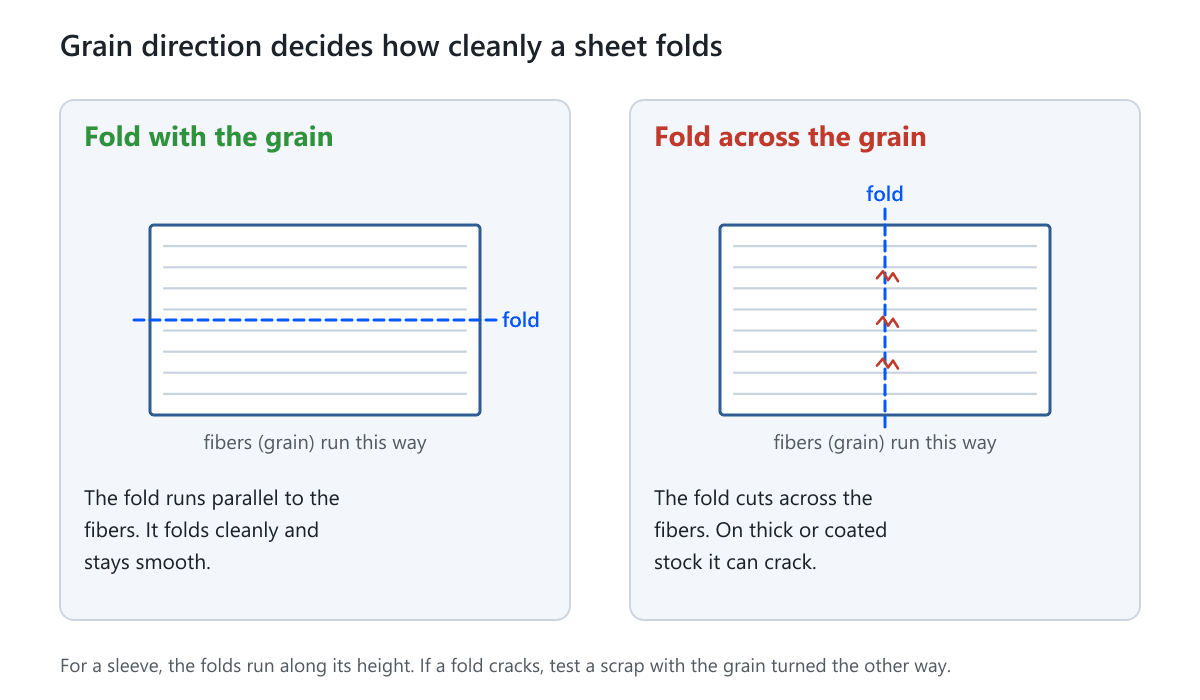
A fold that runs parallel to the grain is smooth. A fold that cuts across the grain is more likely to crack, especially on thick or coated stock and where the fold is sharp. For a sleeve the folds run along its height, so the best layout has the grain running the same way.
Scoring helps. Scoring presses a line into the board so it bends exactly there and the coating does not break. Ask your supplier to score the fold lines, and if you make sleeves by hand, score before you fold. Our guide to how to make packaging sleeves shows the steps.
Coatings and Finishes on Sleeve Paper
A coating is a thin layer added over the print. It protects against scuffs, moisture and fingerprints, and it changes how the paper looks and feels.
- Varnish is a thin liquid coat that dries on the surface. It is light and suits most sleeves.
- Lamination is a thin film bonded to the board. It protects more and adds stiffness, and it makes the sleeve harder to recycle.
The finish decides the look.
| Finish | Look and feel | Good for |
|---|---|---|
| Matte | Flat, soft, calm | A modern or understated brand |
| Glossy | Shiny, deep color | Bright photos; shows fingerprints |
| Satin | Between matte and glossy | A balanced, clean look |
| Soft touch | Matte with a velvety feel | A premium feel in the hand |
Foil stamping, embossing or debossing and spot UV can be added for detail, such as a shiny logo or a raised pattern. Our varnish vs lamination guide explains when to choose which.
Printing on Sleeve Paper
We print in CMYK or Pantone. CMYK is the four-color process and suits photos and gradients. Pantone matches a specific brand color and suits logos that must stay consistent. Our color systems guide helps you choose.
A few habits make the printed sleeve better.
- Keep text and key marks away from folds and edges. About 1/8 inch is a safe margin.
- Extend the background past the cut line. This extra, called bleed, stops a white edge showing if the cut shifts. See our guide to bleed in packaging.
- Check colors on the real board. The same file looks different on white and kraft, and on coated and uncoated stock.
- Use a proper dieline. The free packaging sleeve dieline draws the flat pattern from your sizes, so the artwork lines up with the folds.
How to Choose the Right Sleeve Paper
Answer these in order. Together they narrow the choice to one or two boards.
- What is the sleeve for? A band for a message needs less stiffness than a full cover.
- How big is it? The larger the sleeve, the heavier the board needs to be to stay flat.
- How heavy is the product? A heavy item pulls on the sleeve when it is handled, so choose a stiffer board.
- What look do you want? Bright and detailed points to white. Natural and earthy points to kraft.
- What finish? Matte, glossy, satin or soft touch change both look and handling.
- How will you pack it? Machine or hand packing allows more variety. A pre-glued sleeve slides on, and the board must stay smooth through the glue seam.
- What does recycling mean to you? Choose plain paperboard with a light coating, and ask about recycled stock.
If you have a box already, measure it before you choose the board. See our guide to measuring the dimensions of a box.
Uses of Sleeve Paper
The main use of sleeve paper is the packaging sleeve itself, and the board is also used in nearby jobs.
- Belly bands and wraps on boxes, books, bundles and gift sets.
- Slide-over box sleeves that cover a plain box with a printed design.
- The sleeve of a tray and sleeve box, where the board is part of the structure. See our tray and sleeve boxes.
- Product wraps for items without a box, such as soap bars or stacked cards.
- Cup and bottle sleeves that grip or add a label.
If you want printed sleeves, our packaging sleeves come in paperboard and kraft, in pre-glued, with adhesive and flat styles.
Recycling and Paper Sleeves
Paper and cardboard are widely collected for recycling where facilities accept them. A plain paperboard sleeve with a light coating is generally the easiest to recycle. Laminations, foils, windows and heavy coatings can make recycling harder, and rules differ by town, so check yours. We can say a sleeve may be recyclable where local facilities accept it, depending on the board, ink, coating and adhesive. Recycled stock options are available on request.
Common Mistakes When Choosing Sleeve Paper
- Choosing thin paper that sags or bows.
- Folding against the grain on thick stock and getting cracked corners.
- Printing pale colors on kraft and being surprised that they fade.
- Picking glossy lamination and then needing to glue the sleeve, which does not hold on a slick surface.
- Not scoring the fold lines.
- Choosing a board by looking at a screen, not at a sample.
Next Steps
Decide the job of the sleeve, then pick white or kraft, a weight range and a finish. Hold real board before you commit: the Standard Sample Kit costs $50 with shipping included. When you know your size and quantity, get a free quote and tell us what the sleeve will go on. We offer free design support, and production takes 5 to 7 working days after artwork approval and payment.
Frequently Asked Questions
What is sleeve paper used for?
Sleeve paper is the paperboard used to make packaging sleeves: bands and wraps that slide over a box or product to carry branding and information. The board is also used for cup sleeves, tray and sleeve boxes and product wraps.
What weight of paper is used for packaging sleeves?
Printed paperboard sleeves typically use roughly 250 to 350 gsm, with lighter board for narrow bands and heavier board for large sleeves or heavy products. We confirm the board when we quote, based on the size and use.
What is the difference between white and kraft sleeve paper?
White paperboard is bright and smooth, so photos and bright colors show well. Kraft is brown and natural, so pale colors fade into it and dark ink or white graphics work best.
Does paper grain matter for a sleeve?
Yes. A fold that runs with the grain is clean, and one across the grain can crack, especially on thick or coated stock. Scoring the fold lines also helps.
Should I choose varnish or lamination for a sleeve?
Varnish is a light protective coat and suits most sleeves. Lamination is a film that protects more and feels stiffer, but it is harder to recycle. See our varnish vs lamination guide for the details.
Can sleeve paper be recycled?
Plain paperboard can be recycled where local facilities accept paper and cardboard. Laminations, foils and heavy coatings can make recycling harder, and rules differ by town. Recycled stock options are available on request.
Can I use ordinary printer paper to make a sleeve?
Only with a stiff backing. Plain printer paper is about 80 gsm and is too thin to hold a loop, so it sags and wrinkles. Cardstock of about 216 to 300 gsm is a better choice for a handmade sleeve.
Written by the PacksDo Team
We make custom printed packaging, from boxes and mailers to bags, labels and inserts. Questions about this guide? Ask us.